
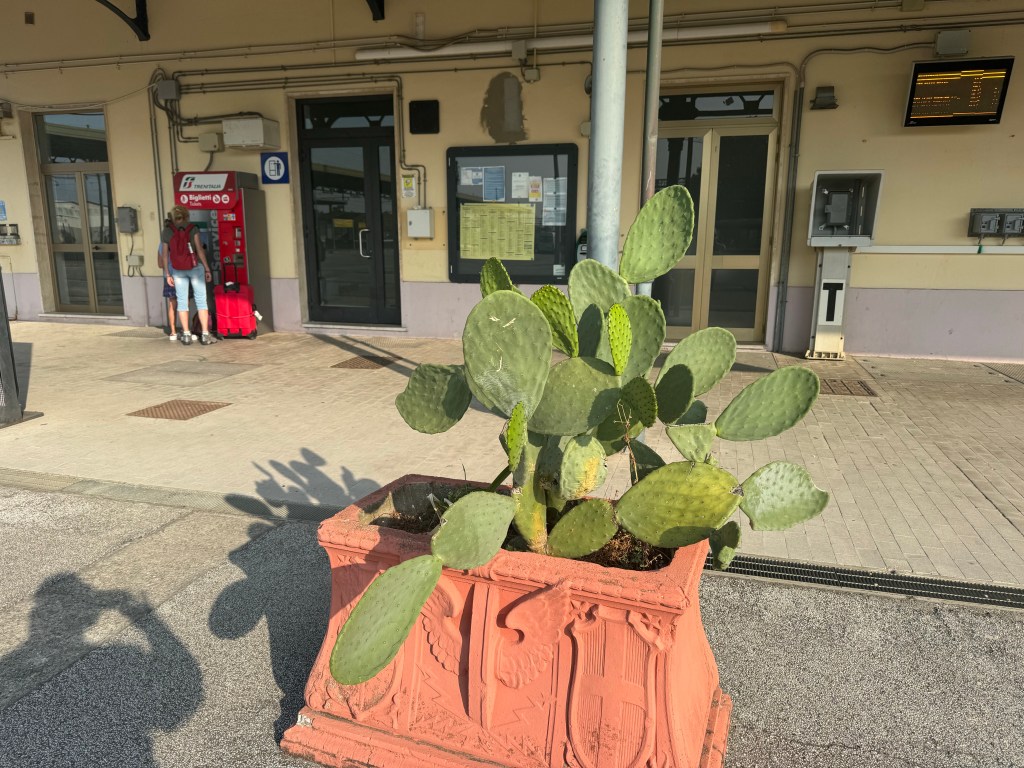
This was Graham’s birthday and I had left it up to him to choose what we do that day. He had chosen to return to Lucca that day. We got up at around 9:00 and got ready. We were on our way to the station at 09:30. Graham went off with a great sense of purpose and I just followed him. I thought he knew where the station was and the fact that we soon saw tracks was encouraging. At one stage he stopped, and he mentioned that the was hoping to turn right at this point, but it looked like a dead end. We went a bit further, but encountered a huge fence. His original instinct was in fact correct. Even though it was a dead end for cars, there was a footpath that led straight to the station. I was surprised how quickly we got there as my research indicated that the station is about a mile from the hotel. It turned out that there is more than one station in Pisa and the one we ended up with served a branch line to Lucca, which is where we were heading. This worked out fabulously. Not only was this closer to the hotel, but it also shaved a few minutes of the train journey. There was a train due a few minutes later. I got our tickets and then we went to the platform to wait for our train.
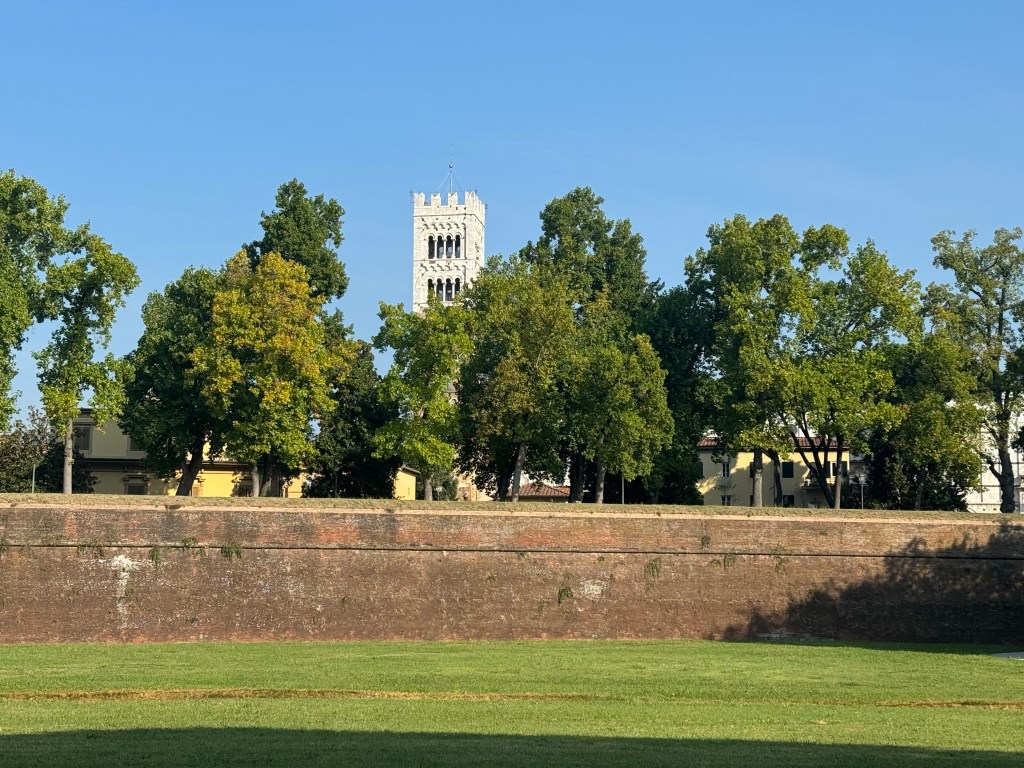
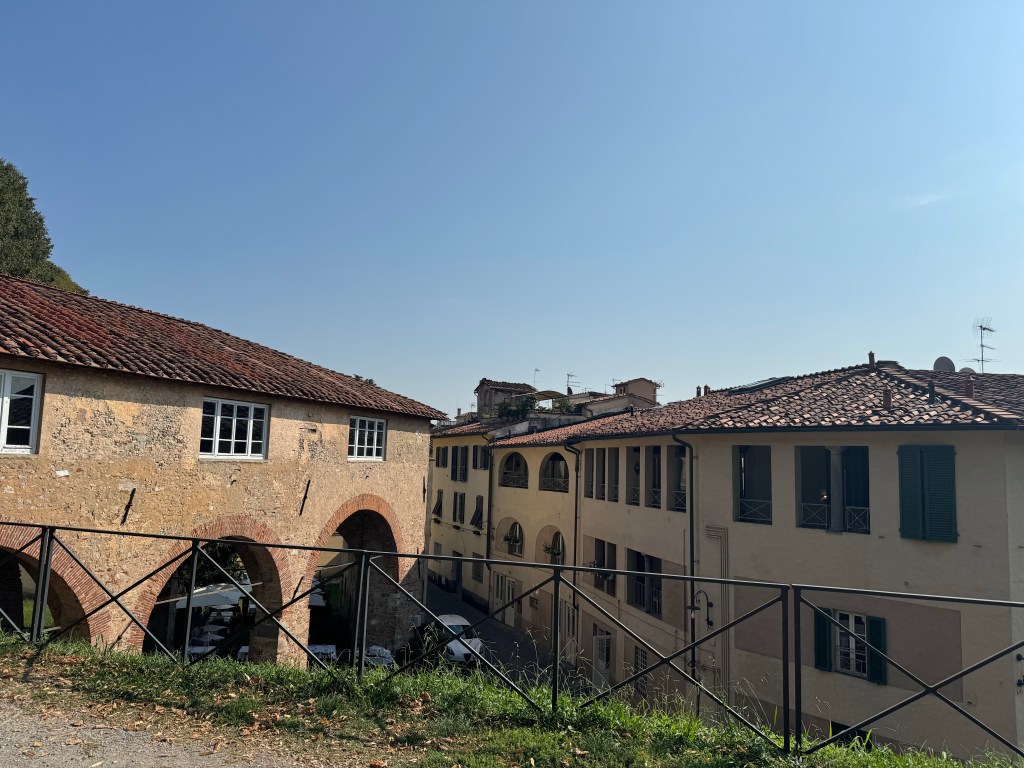
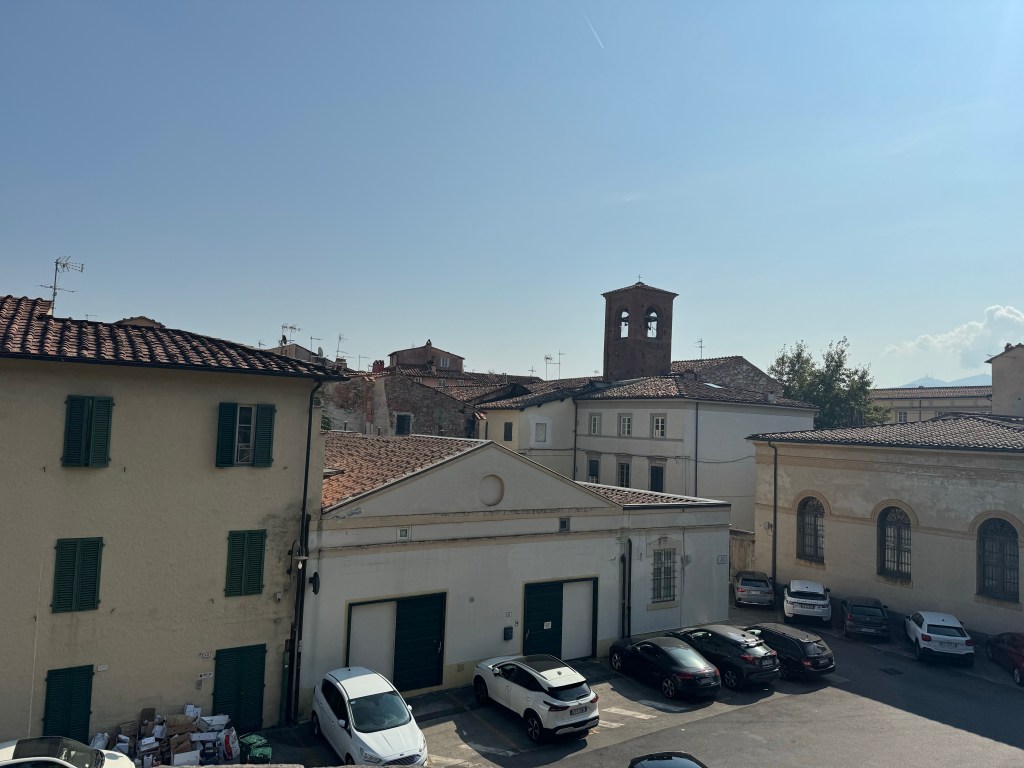
The train arrived pretty much on time and the journey to Lucca only took about 25 minutes. We went past some very pretty villages, but photos proved impossible as the windows were so dirty. This was the case throughout our travels. The Italian railway could really do with cleaning their windows once in a while. Still, I got my fill of photos later. When we arrived into Lucca, we initially retraced our steps walking through a small park near the station and a larger park near the city wall. We then went up on the city wall and down the other side to enter the old town of Lucca. However, this is where we were done retracing our steps for the time being. Instead of going straight ahead towards the cathedral, we headed to the right and down one of the probably 100s of narrow streets and alleys in Lucca.
We did not have breakfast that morning and tea was a distant memory. Not long after we entered the first narrow street, I spotted a bakery that also served coffee and had a few chairs against a counter. That looked good to me. I was not sure how far I would get with English. Lucca is quite touristy, but not the same scale as Florence, Pisa, or Rome. I decided to play it safe and practice my Italian. I am sure I sounded like a toddler, but I made myself understood. We had a croissant filled with pistachio each and a cup of coffee. This set us back about €6. This was a bit of a bargain. It was also absolutely delicious.
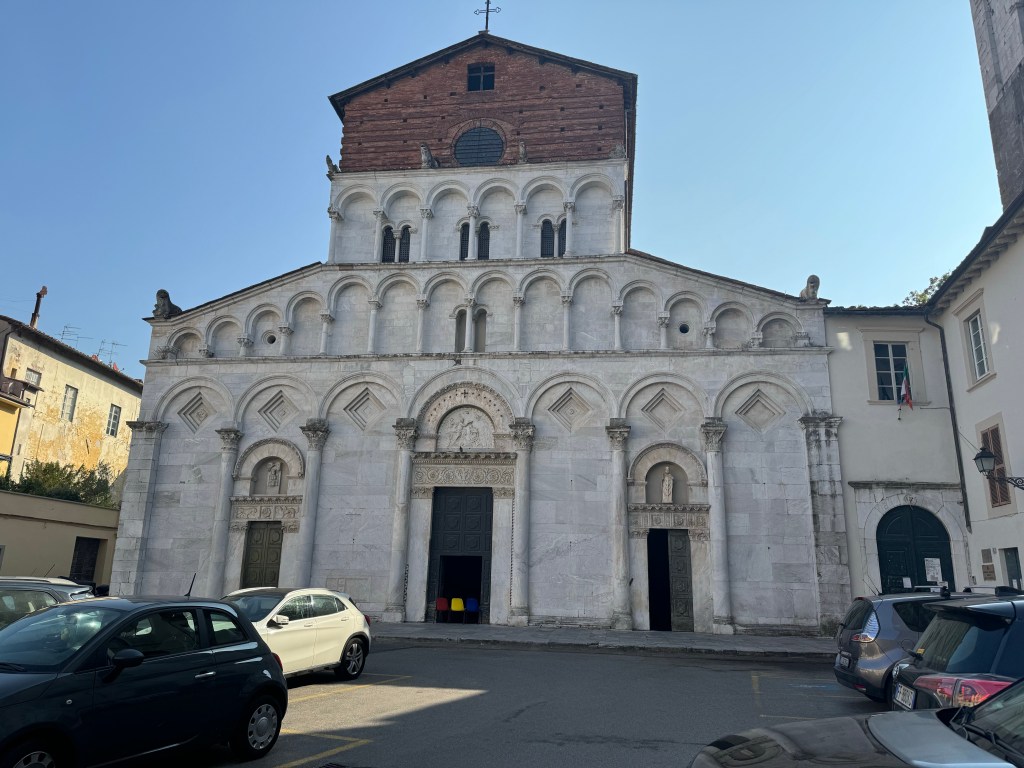
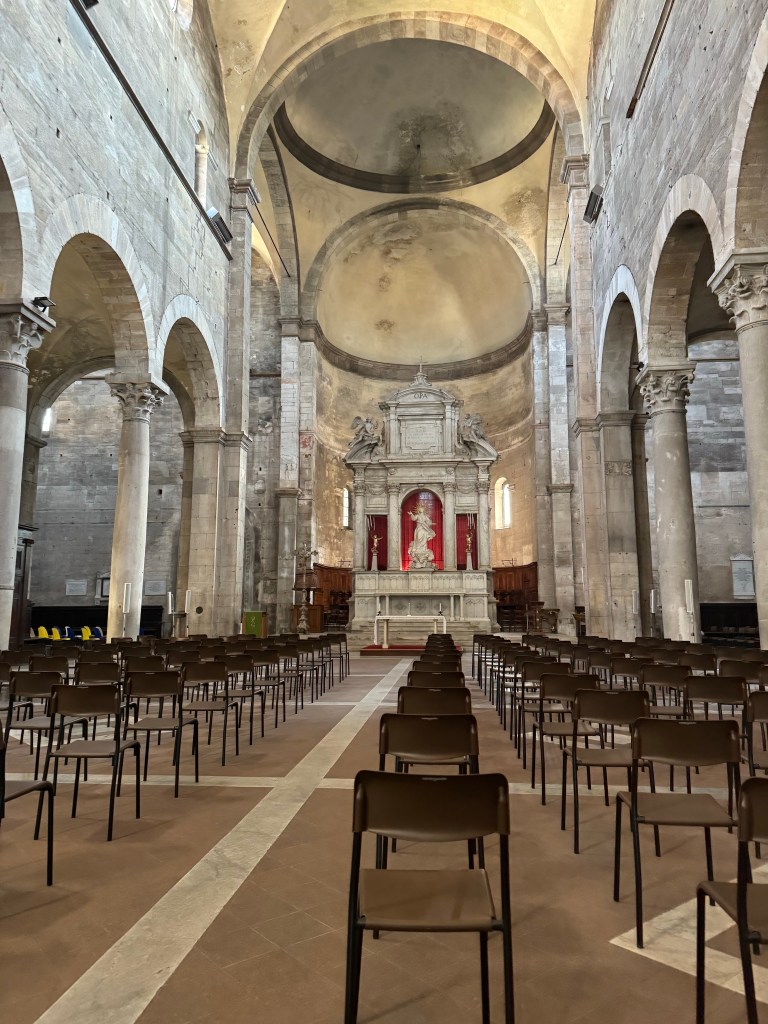
Lucca may have 100s of alleys, but they also have about as many squares. On the first square we encountered, there was a church with an open door. We decided to do some exploring. The church in question was Santa Maria Forisportam. There has been a church at this site by the 12th century when it was enclosed inside the walls of Lucca. The church is modelled after the Cathedral of Pisa. The exterior remains incomplete, and a belltower was added in 1619. The church is quite dark and plain, but it also is very beautiful. They appear to have had some recent water damage. There was a basket for donations, and we left them the coins we had.
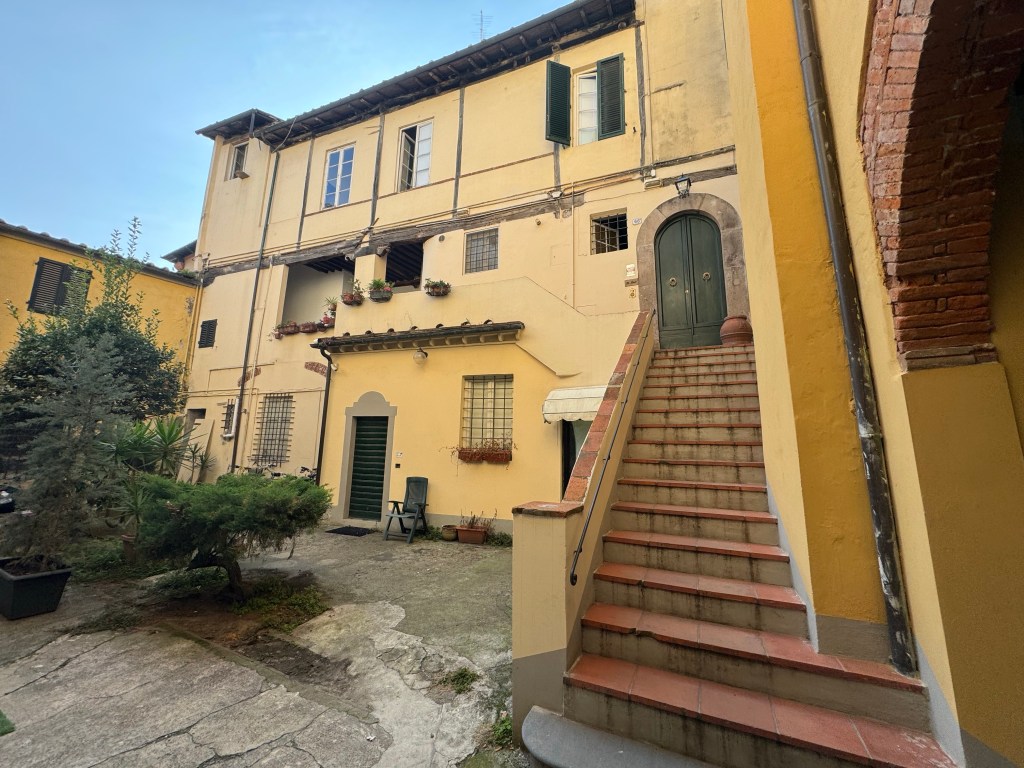
There was one thing in Lucca I particularly wanted to see, which is the Piazza dell’Anfiteatro. On the way there, we saw another famous landmark. The Torre Guinigi is a typical example of local Romanesque-Gothic architecture. The tower is 45 meters high with a total of 233 steps to reach the top. The tower dates from the 1300s, when a number of wealthy families were building bell towers within the walls of Lucca as status symbols. It is one of the few remaining towers within the walls. It is known for the tall trees (holm oaks) growing on top of the tower. When we saw the tower, I could not get a clear angle on it as there was a whole rabbit warren of little alleys between us and the tower. I figured we would get closer on our wanders, and I would get a photo then. Unfortunately, we never got close to the tower again.
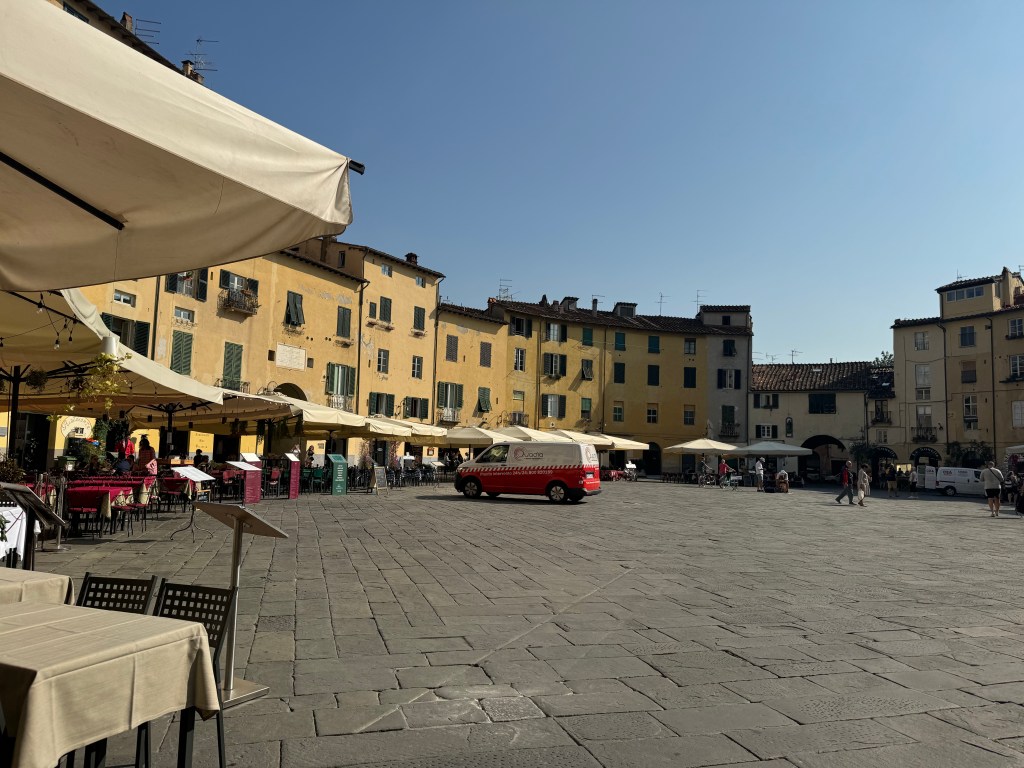
On our way to Piazza dell’Anfiteatro, we managed to find a cashpoint and were able to stock up on some Euros. I also spotted a chemist. I had noticed the beginnings of a cold when I arrived in Pisa the previous evening. I was absolutely fine during the day when I was out in the sunshine, but when I was inside, I felt quite congested. I picked up some Vicks Vaporub to help me sleep at night. Then we finally visited Piazza dell’Anfiteatro. Piazza dell’Anfiteatro is a public square in the northeast corner of the walled centre of Lucca. In the second century, the Roman amphitheatre was in this location. The amphitheatre is now some 3 meters below the surface. The buildings surrounding the square follow the elliptical shape of the amphitheatre. The amphitheatre was a seriously impressive space. It had 18 rows of seating and was able to hold around 10000 people. Today, the Piazza dell’Anfiteatro can be accessed through four gates. The buildings that cover the entire perimeter of the old amphitheatre are residential buildings, but there are cafes and restaurant on the ground floor and there is a lot of outdoor seating. I can imagine that this is an amazing place to live. I also rather liked the idea of having dinner sitting out on the square. Unfortunately, we had other plans for later in the day. Maybe next time.
As we continued our wander, we spotted a church with a beautiful mosaic. We decided to have a look inside. There was an admission fee of €4 per person and we were happy to pay this. As I have mentioned before, I do have a bit of an uneasy relationship with the concept that churches charge admission, but I also appreciate their uphill struggle to raise sufficient funds to keep the often very old buildings in a good state of repair. If the church appeals to us, we just pay our admission. However, we were still near the table where they sold the tickets when somebody wandered in and had a look around in the area near the door. The person at the table had a right old go at him advising him he is not allowed to be there if he does not pay for a ticket. This really rubbed me up the wrong way. After all, this is still a house of God, and this reaction was completely undignified and not appropriate for a church.
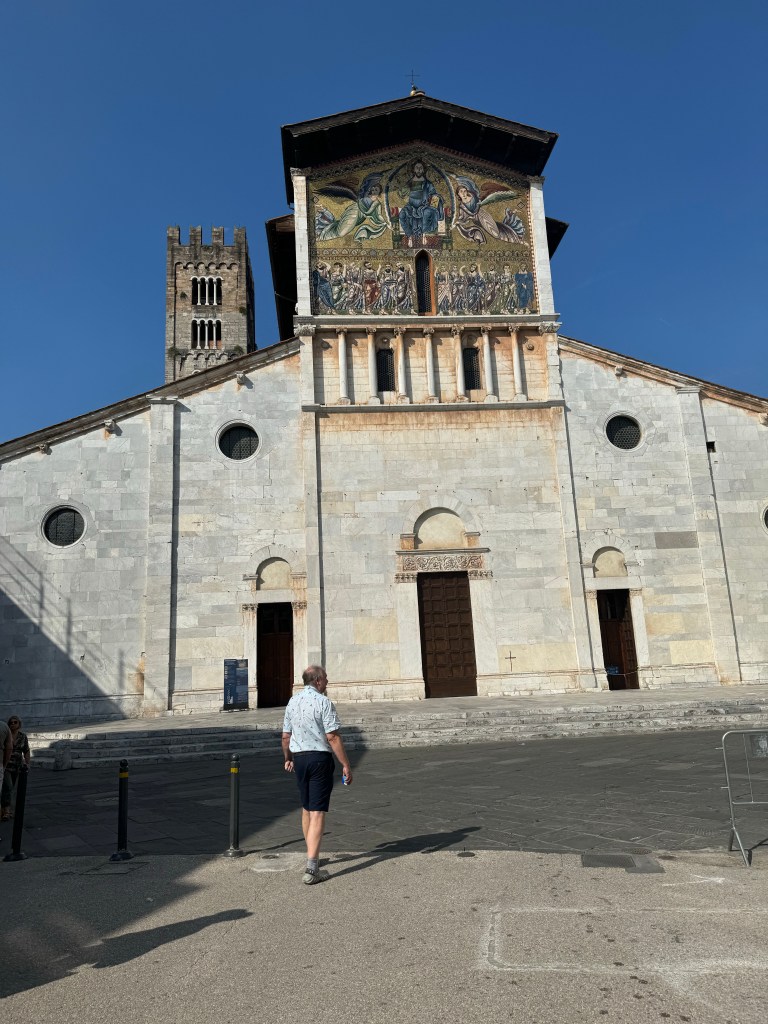
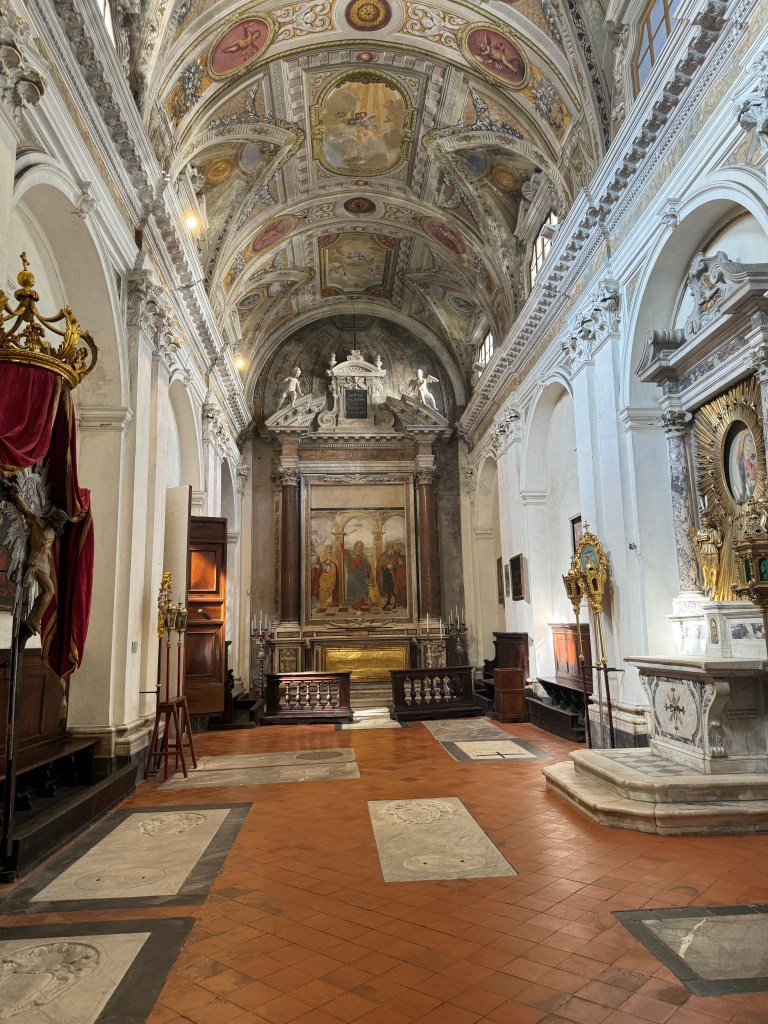
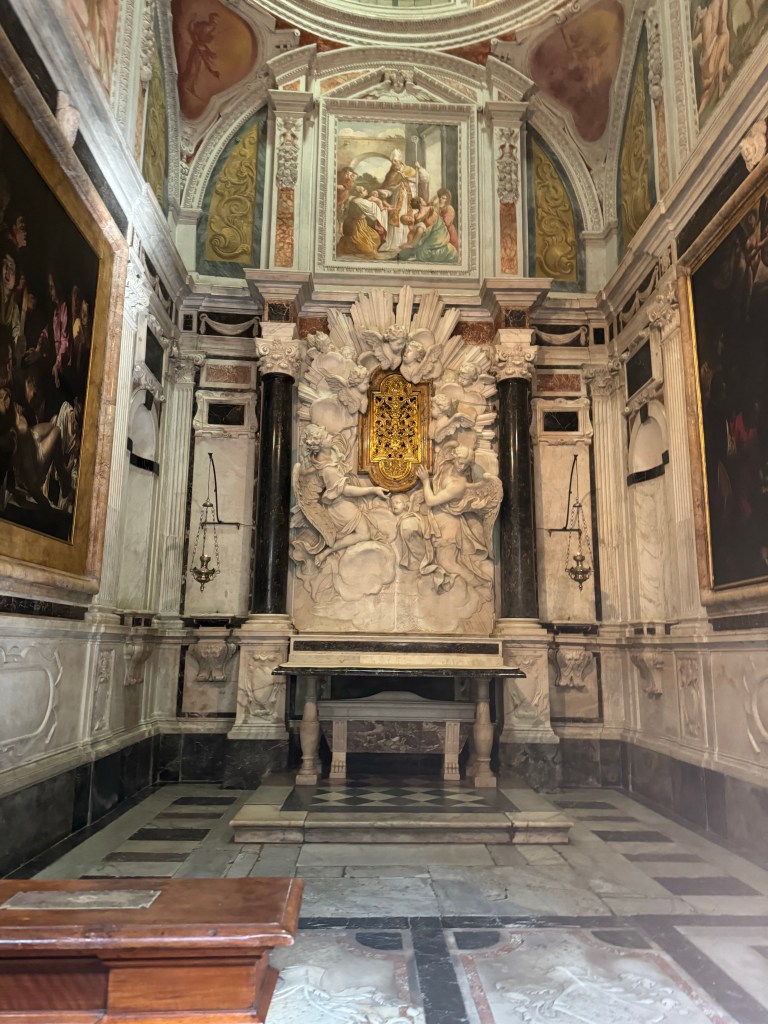
The church was the basilica of San Frediano, which is built in the Romanesque style. The original church on this site was built by the Irish bishop of Lucca, Fridianus. The church acquired its present appearance of a typical Roman basilica during the period 1112-1147. In the 13th and 14th centuries the façade was decorated with a huge golden 13th century mosaic representing The Ascension of Christ the Saviour with the apostles below. The interior of the church is white marble. It always amazes me when I see that much marble in one place, but even some of the pavements in Lucca are made from marble. I suppose as marble is mined close to Lucca, this may actually have been cheaper than other building materials.
As soon as we entered the church, we saw a beautiful baptismal font that dates from the 12th century and was the work of three separate sculptors. Apparently, there is extensive damage to this, but I did not notice any damage. I did however notice how beautiful it is. Unfortunately, it is in rather dark corner, and I could not get any decent photos. Behind the baptismal font is the Chapel of the Cross. This features some very beautiful frescos that would fit right in at the Vatican museum.
The next chapel along was relatively plain. This was the chapel of St. Zita. There were some paintings on the walls, but the main focal point was the altar and more specifically the glass box on top of the altar. It is the final resting place of St. Zita. St. Zita is the patron saint of Lucca, of domestic servants and of lost keys. She died in 1272. When she was exhumed in 1580, her body showed no sign of decomposition. Graham had no idea what he was looking at. I think he thought it was some kind of statue that he was looking at. When I told him what it was, it totally creeped him out. It did not bother me. Although I find it a very strange concept to have bodies or worse still body parts openly on display, I have seen things that are a lot creepier linked with religion. St. Zita was beautifully dressed and looked at peace.
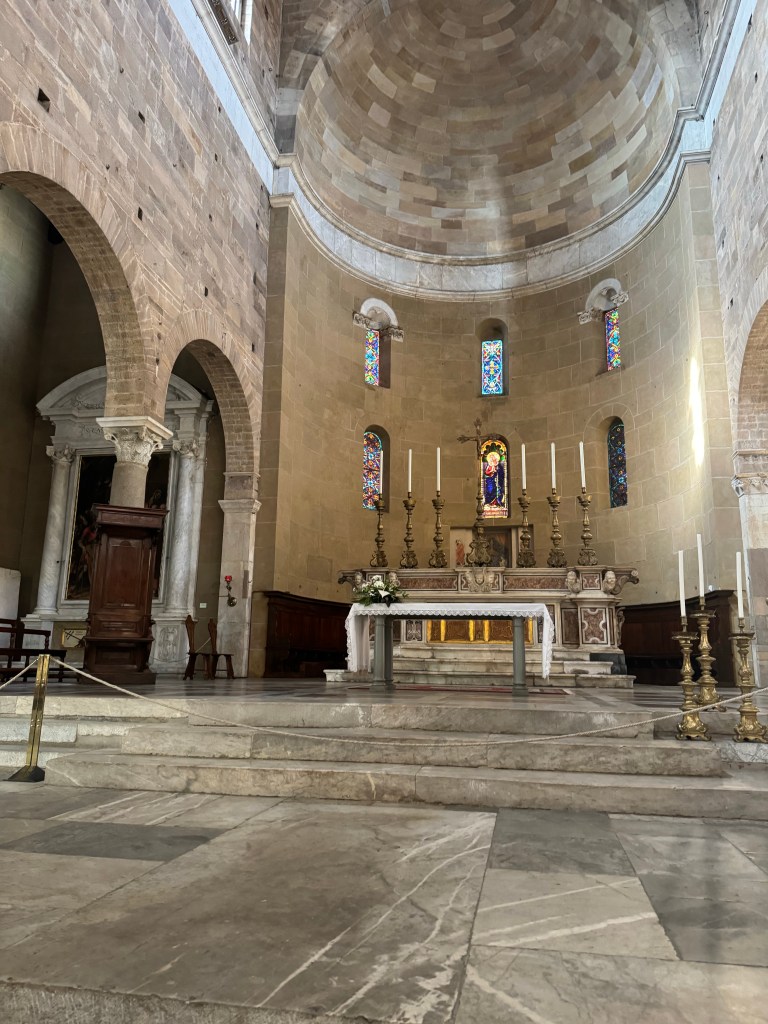
After checking out the chapels, we sat down in the main part of the church for a while. There it was very obvious that the church was extended at some stage. In the original part of the church, the windows are tiny, but on what came later, the windows are a lot bigger.
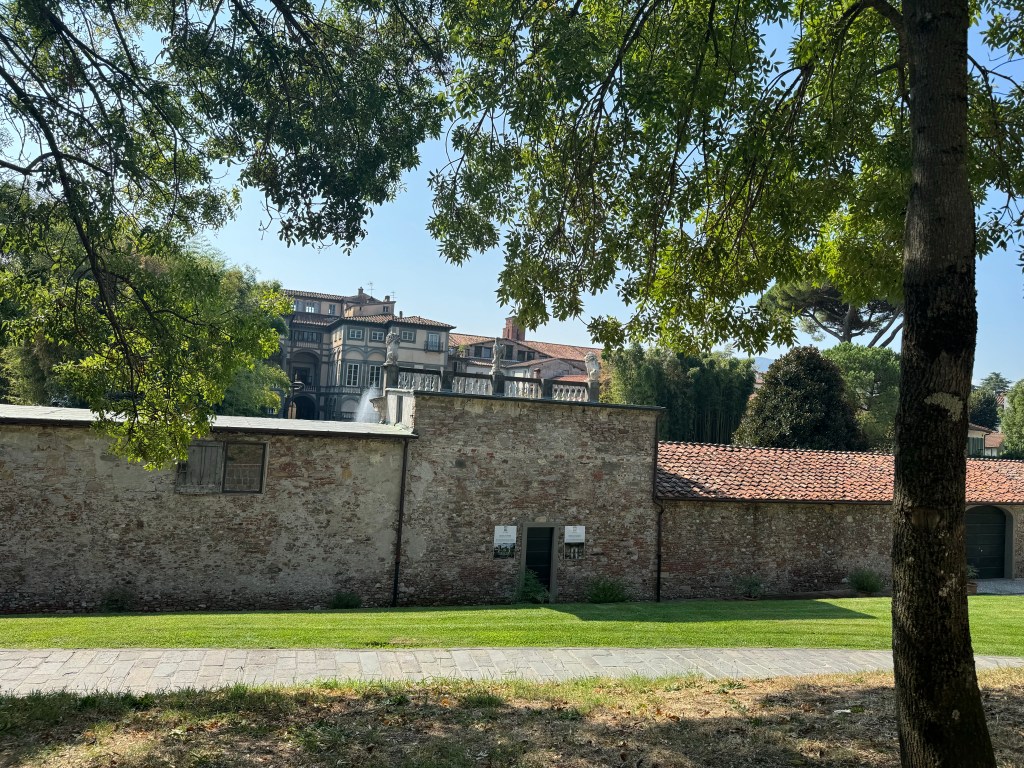
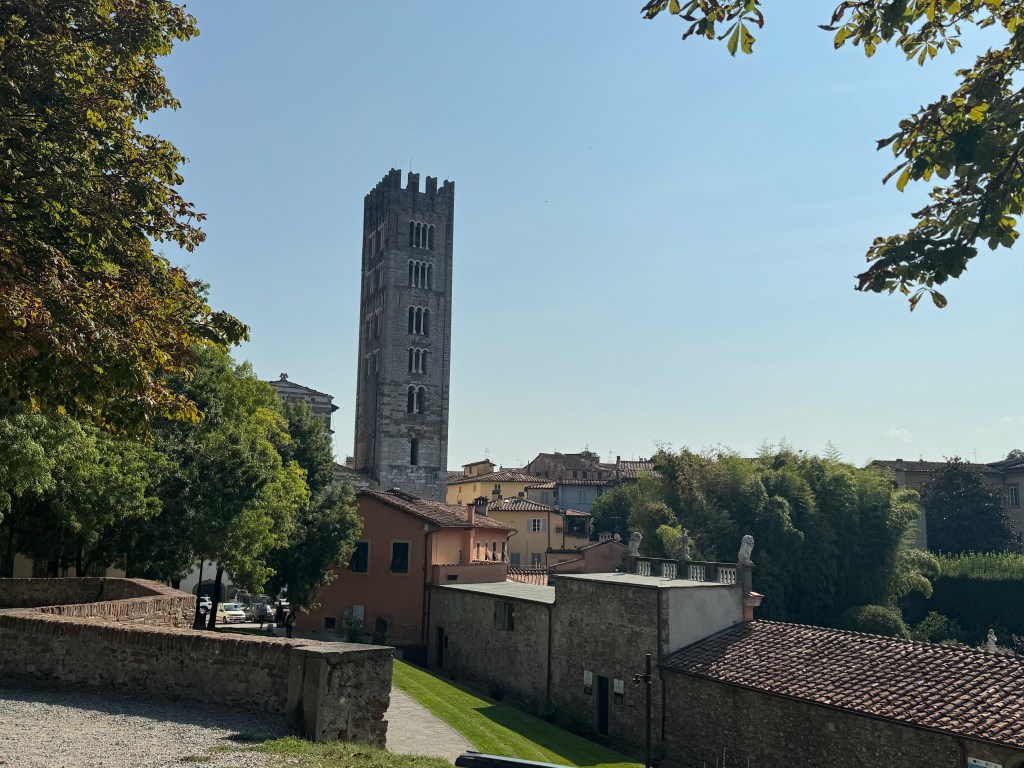
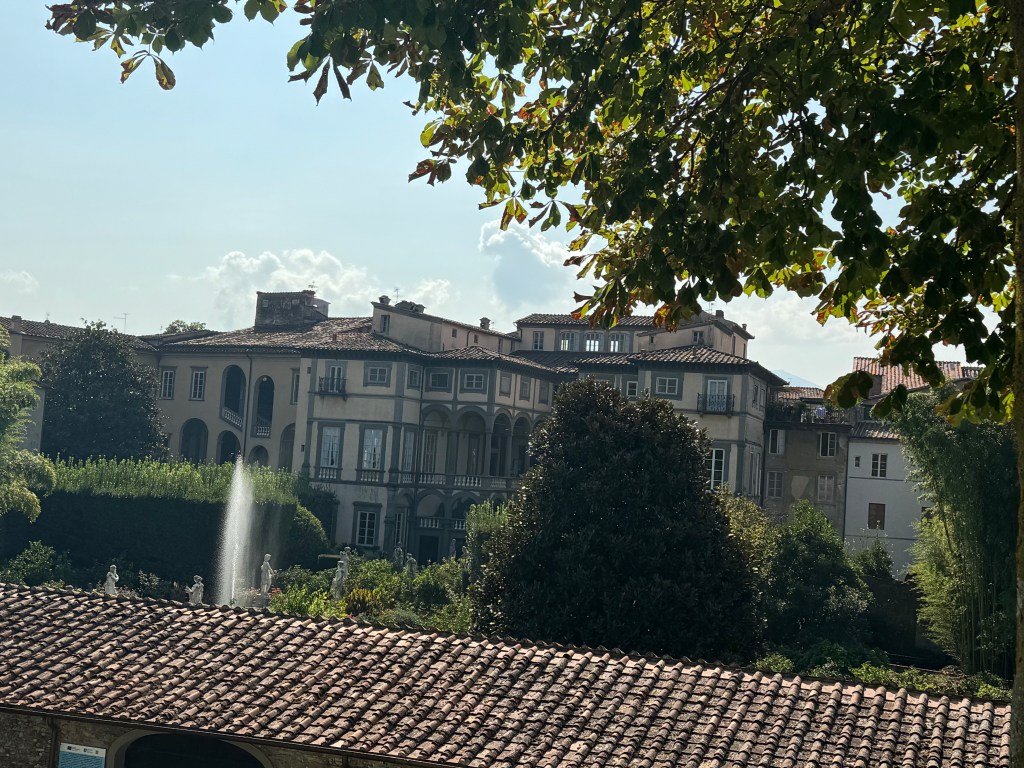
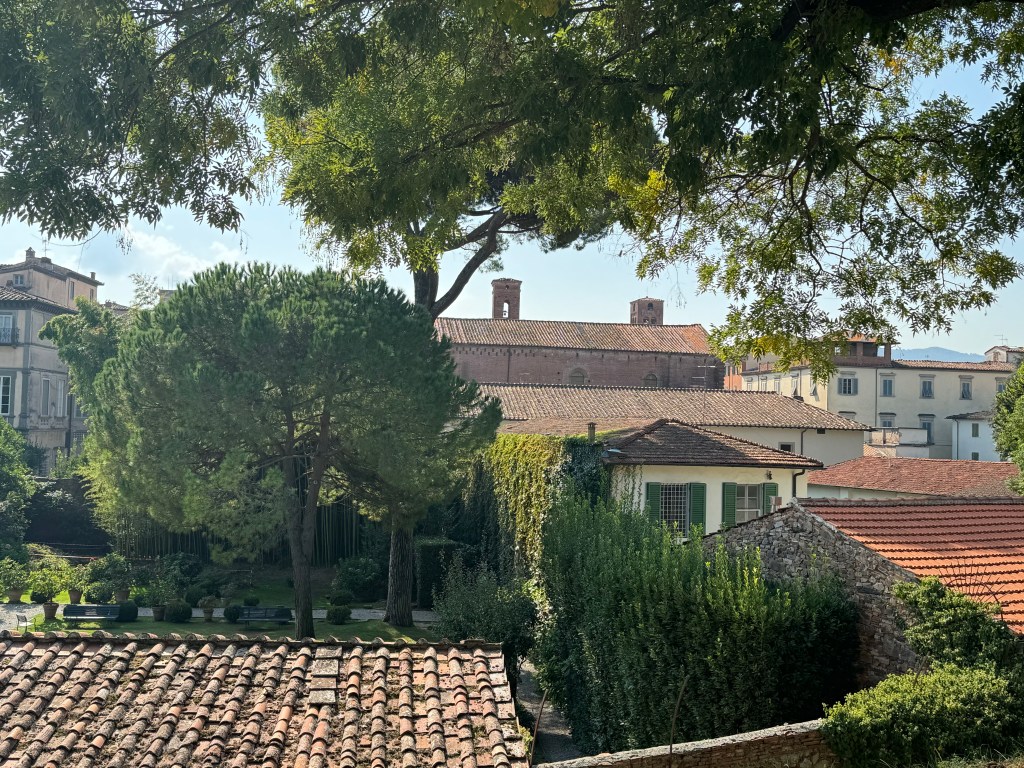
When we had seen enough, we headed out again. Near the basilica of San Frediano was an access point to the city wall. Originally, we had planned to do a full lap of the city wall. However, even though the temperatures were pleasant in the shade of the buildings, we figured it may be a different story up on the city wall where there was absolutely no shade. As a compromise, we decided to take a short stroll along the city wall and come back down at the next exit. This is what we did. We soon found out that our assessment that it would be hot up there was correct. We were also visited by every fly in Tuscany. It was still an interesting walk, but the half a mile or so that we covered was quite enough. I did get some nice photos though. From the wall we saw the Palazzo Pfanner. This was originally the home of wealthy silk merchants, but it now an art museum. We saw other beautiful buildings as well as remnants of the original Roman wall. We also saw an egret having a rest during his migration.
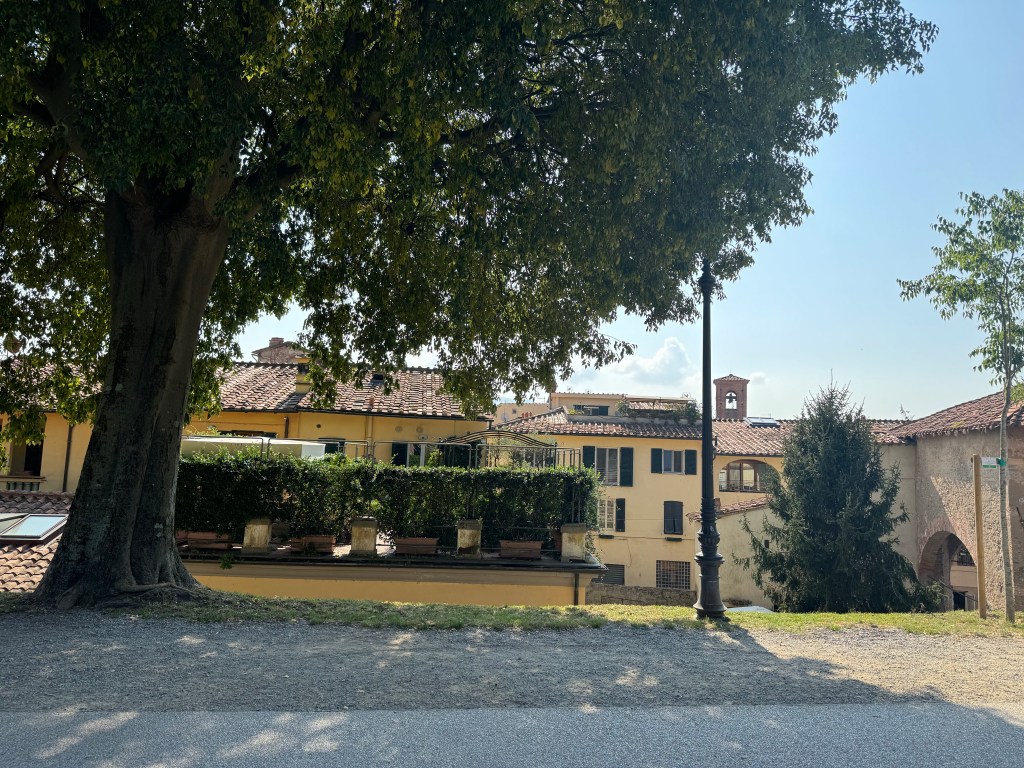
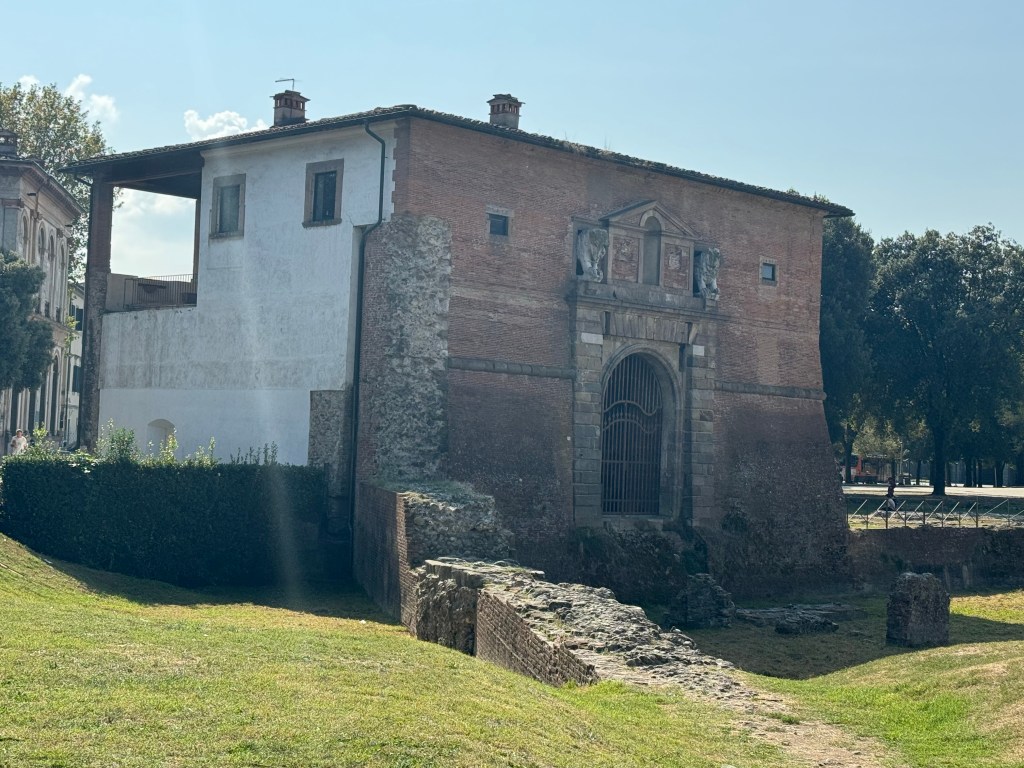
We went back to the ground level at the next exit. I spotted an unusual building that was sitting there by itself and did not seem to have any purpose. I liked the way it looked though and took a photo. I found out afterwards that this was the Antica Porta San Donato. The Antica Porta San Donato is a westward gateway in the ancient walls of Lucca. It was built in 1590 and originally had a drawbridge. The gate was only in use for about 50 years before a new gate was built. We pushed on and found the tourist information office. I wondered if they had public bathrooms and went in. Not only did they have public bathrooms, but the tourist information office was also built around the foundations of the city wall and part of this was exposed. I found the utterly captivating. What I had not realised until we were back home is that part of the building is actually the inside of Antica Porta San Donato.
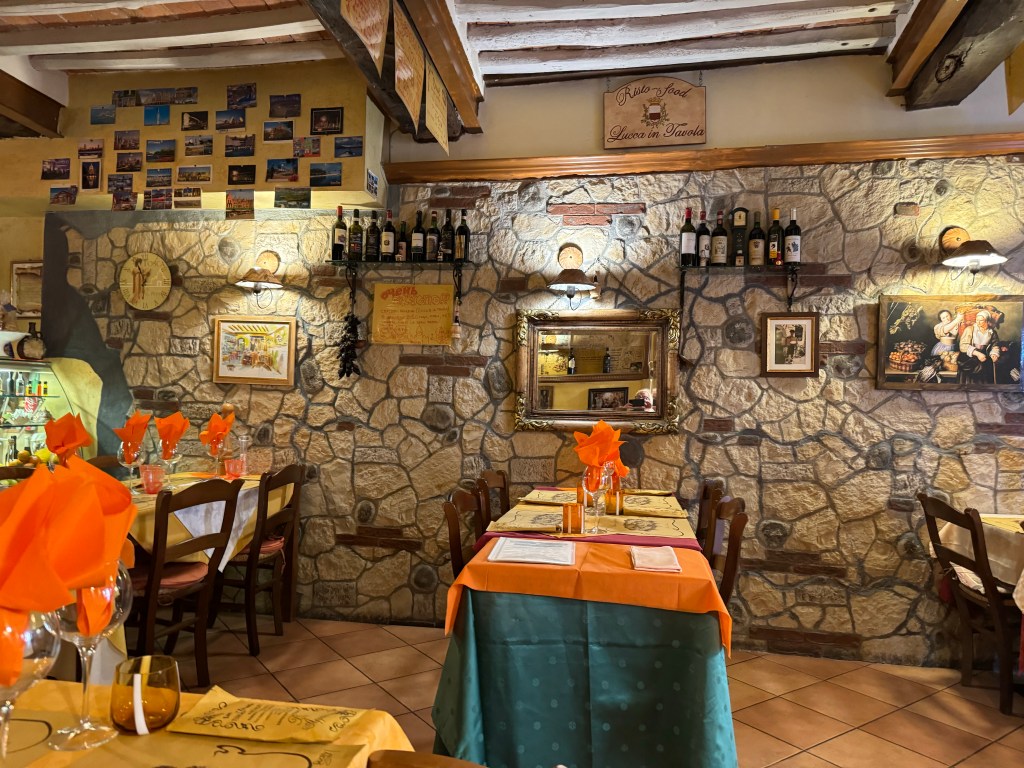
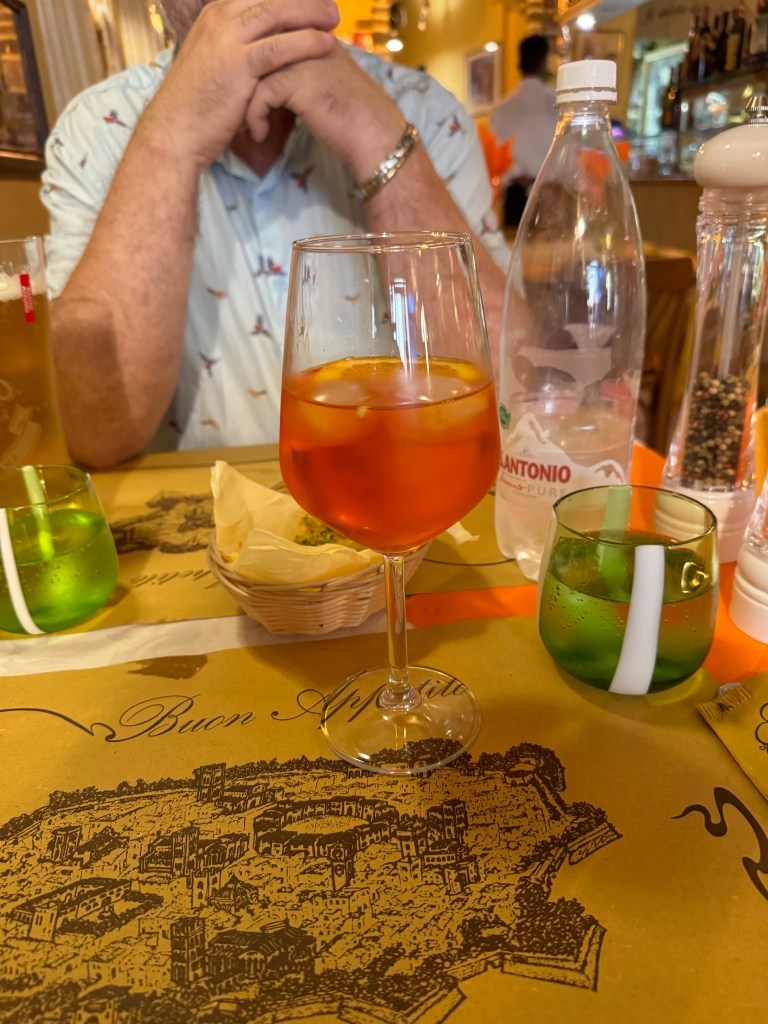
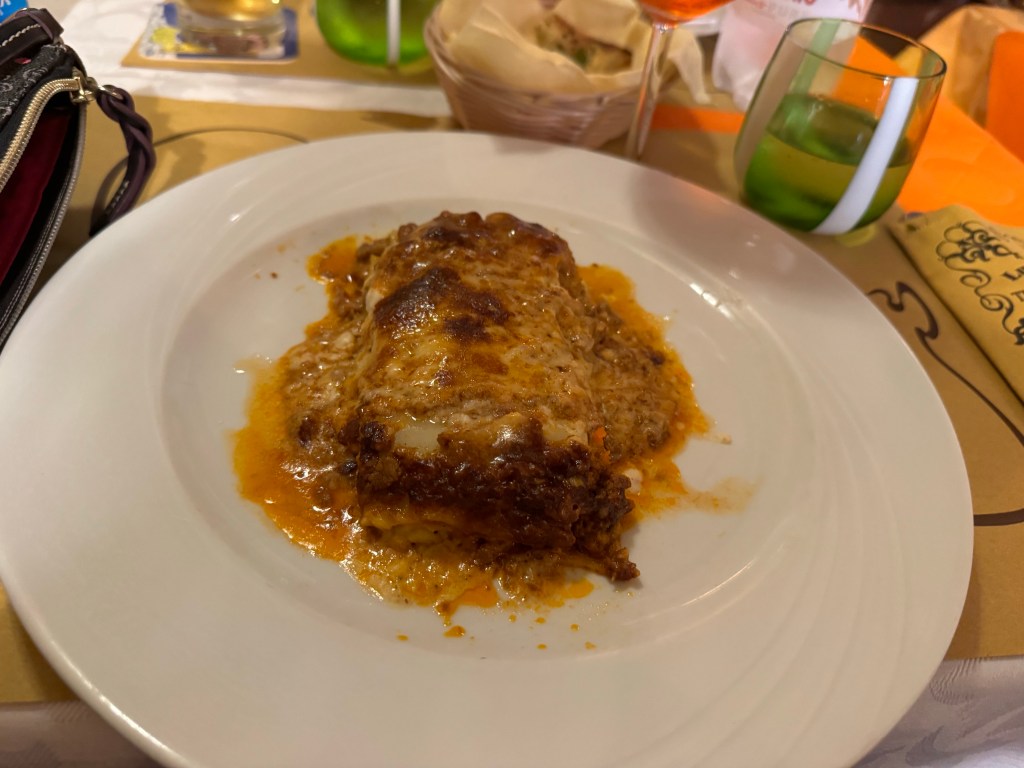
We decided it was time for lunch. We found a lovely little restaurant in one of the narrow streets. As soon as we were seated, we were brought a basket of focaccia with courgettes and herbs. We shared a bottle of sparkling water. Graham had a local beer, and I had a glass of Aperol Spritz. Graham had their pasta sampler, which consisted of tagliatelle with some kind of sauce, gnocchi with peas and ham and some lasagne. I had the lasagne. The food was great as was the service. We were also given a glass of limoncello on the house.
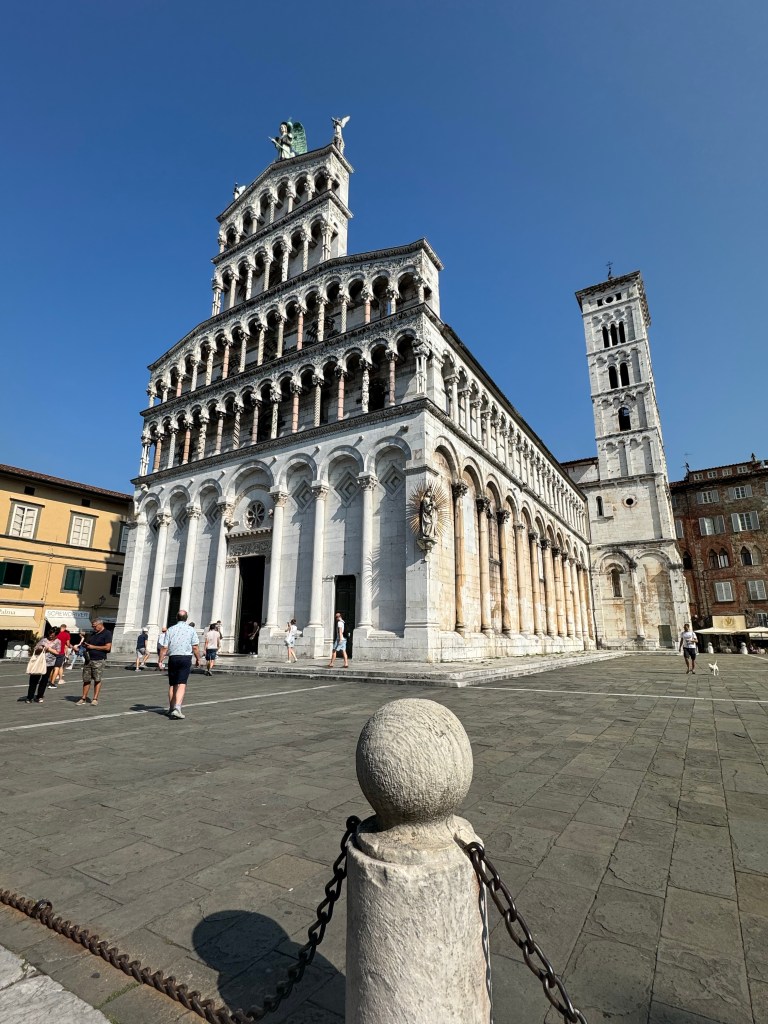
After lunch, we decided to wander in the general direction of the station taking in some more of the beautiful alleys and squares. We soon came to a square with a beautiful church. The church was San Michele in Foro. It was built over the ancient Roman forum. Until 1370 it was the seat of the Consiglio Maggiore (Major Council), the town’s most important assembly. The first record of the church goes back to 795 and it was rebuilt around 1070. The distinctive façade goes back to the 13th century although much of it was recreated in the 19th century. The outside of the church was influenced heavily by the architecture of the cathedral in Pisa. The interior is quite plain by Roman Catholic standards, but nonetheless very beautiful. It is also quite dark and therefore I have no photos. One thing that stands out inside the church is the altar. This is built around a glass box. After his traumatic experience in the morning, Graham realised what this probably meant and gave this area a wide berth. He went to sit down towards the back of the church. He was not wrong in his assumption either. The altar is indeed the resting place of another saint, San Davino. I read about him on an information plague that was just before you got to the altar area. San Davino was born in Armenia on the 11th century. He was on an extended pilgrimage that had taken him to the Holy Sepulchre in Jerusalem, and the tombs of the Apostles Peter and Paul in Rome. He was on his way to his final destination, Santiago de Compostela, when he fell ill in Lucca. He was hospitalized in a small hospital near the church of San Michele in Foro and was ultimately taken in by a widow nearby. It was in her house that he died in 1050. He was originally buried in the cemetery of San Michele in Foro, but after a number of miracles were attributed to him, he was then taken to his final resting place in the altar. Because it was quite dark in church, you could not see him clearly, which is a blessing. His body is nowhere near as well preserved as that of St. Zita and the attempt of the church to make him presentable for liturgic purposes in the 16th or 17th century resulted in something rather creepy.
We decided that it was time to return to Pisa. On the way back to the station, we made a slight detour to take in the cathedral. Graham had his fill of churches in one day and found somewhere to sit on a ledge on the square while I went to explore the cathedral. There was an admission fee again, but €3, this did not break the bank.
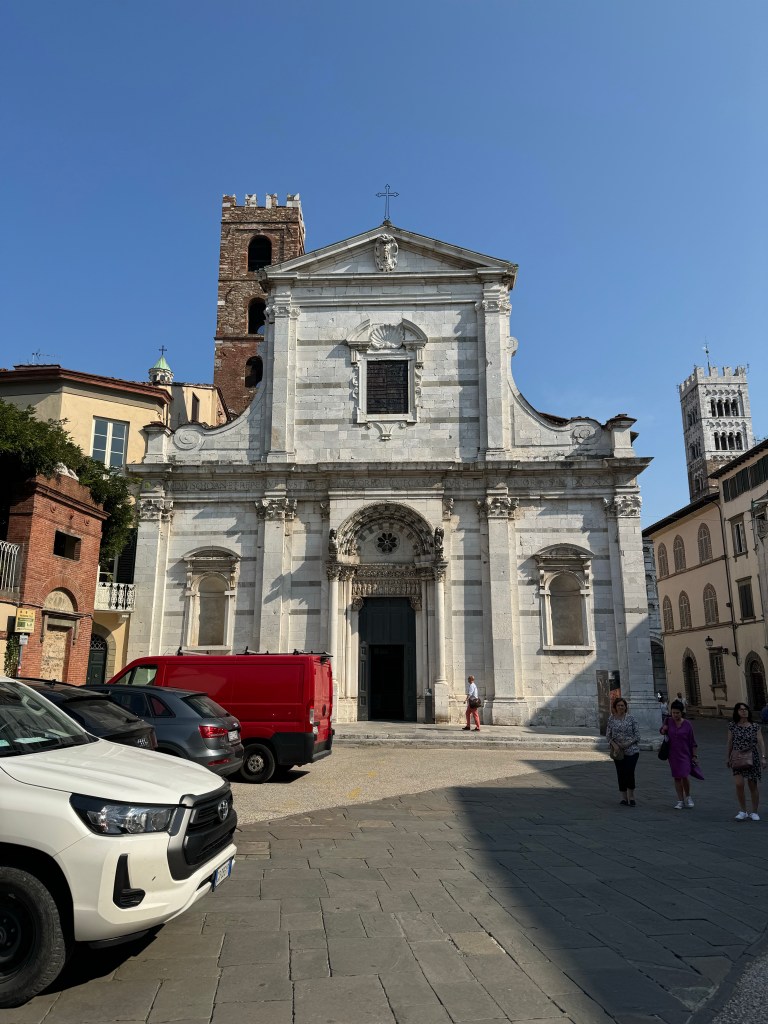
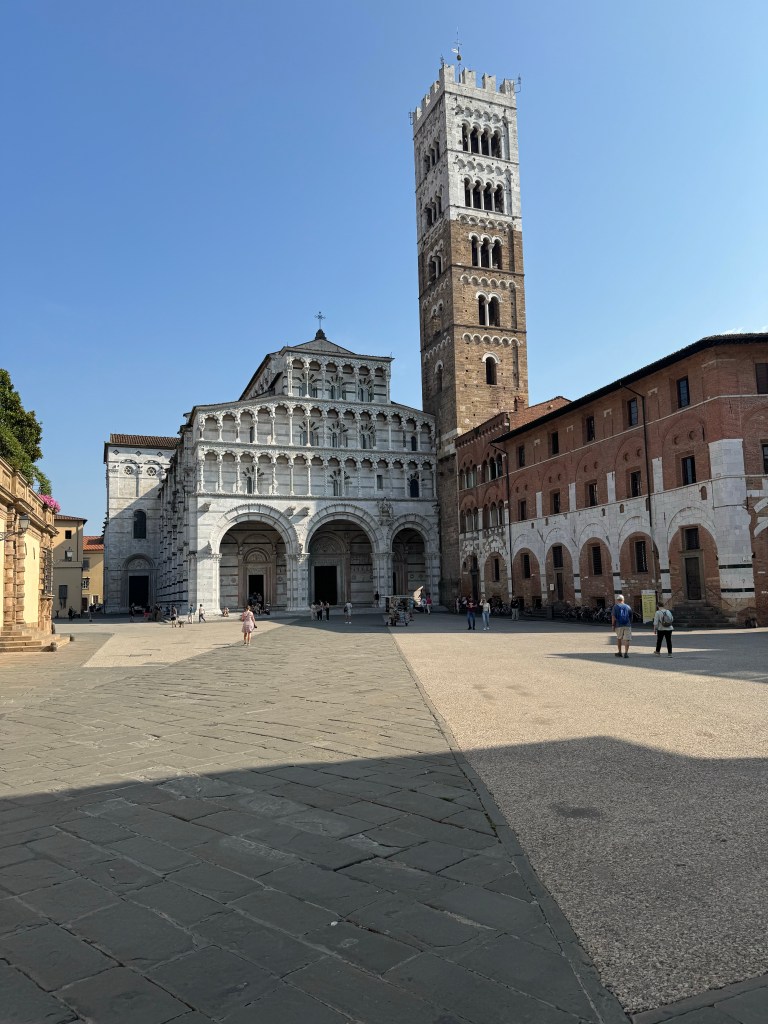
Lucca cathedral is dedicated to Saint Martin of Tours. The feast day of Saint Martin is a big deal for children in Germany that is celebrated with a procession of lanterns led by “Saint Martin” on his horse. There is usually a re-enactment of key parts of his life and then the festivities end with a huge bonfire during which sweet yeast pastries and mulled juice for the children and mulled wine for the adults is served. I have many treasured memories of those celebrations from when I was a child, but also when I helped with the festivities as a teenager. Visiting a church dedicated to Saint Martin brought back some of those memories.
Lucca cathedral is the seat of the Archbishop of Lucca. Construction of the cathedral was begun in 1063. This is another church that is more ornate on the outside than on the inside. It is however a very beautiful building. What stands out is a small octagonal temple or chapel shrine In the nave that contains the most precious relic in Lucca, the Holy Face of Lucca. This cedar-wood crucifix and image of Christ was according to the legend carved by his contemporary Nicodemus, and miraculously arrived in Lucca in 782.
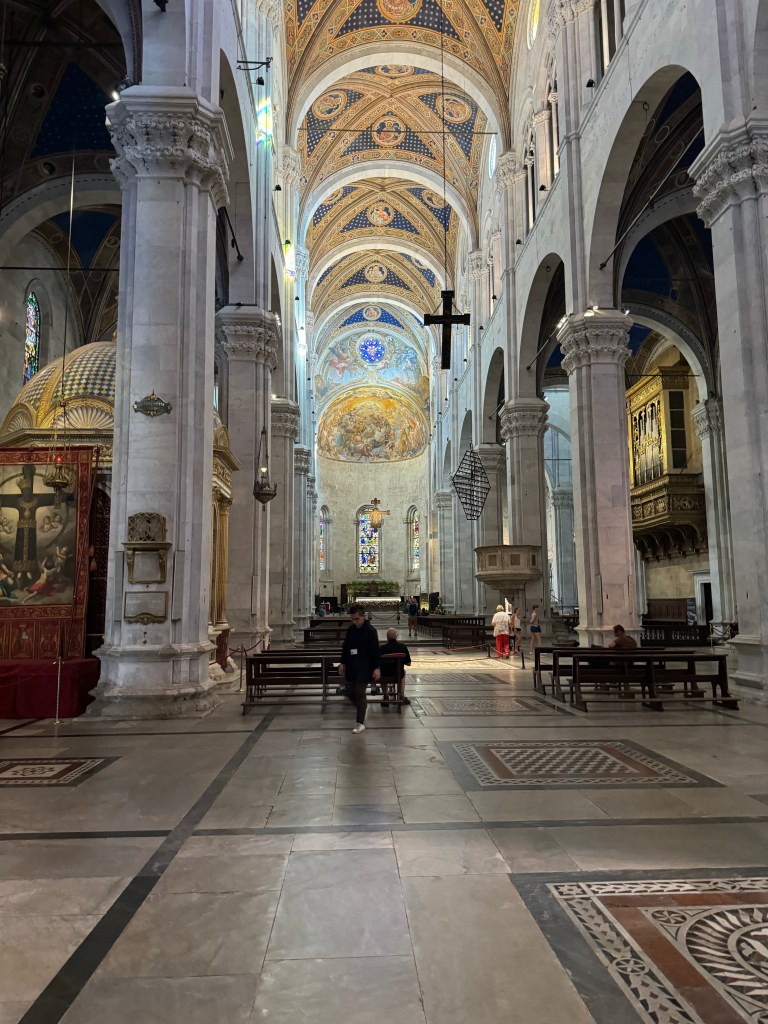
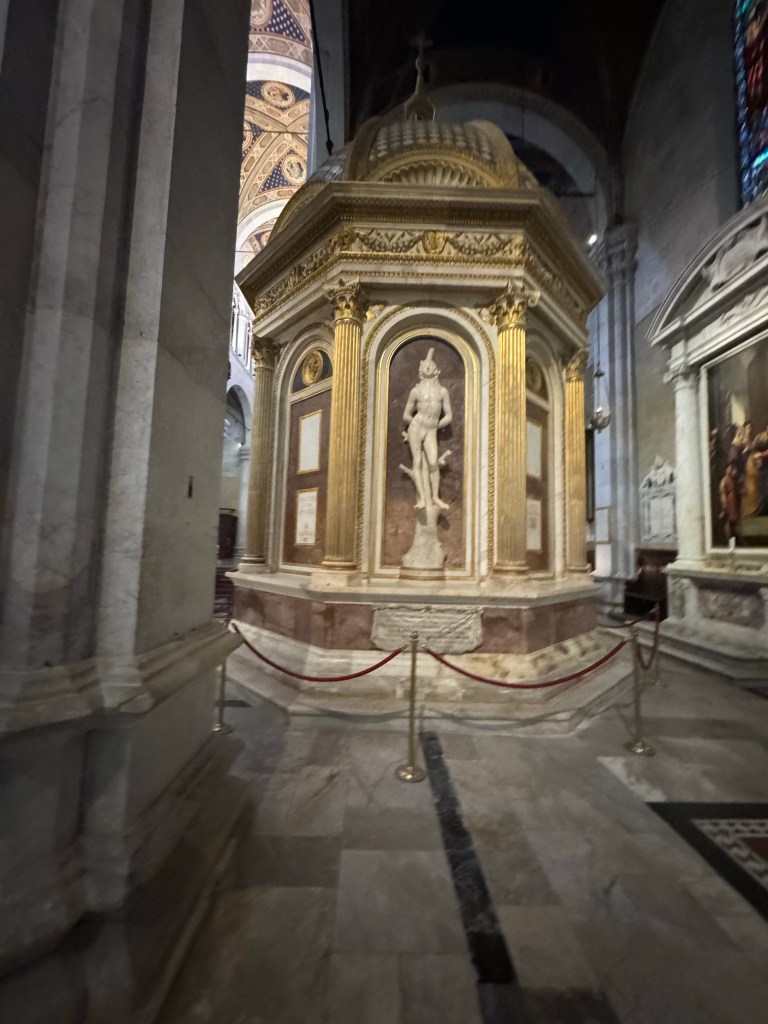
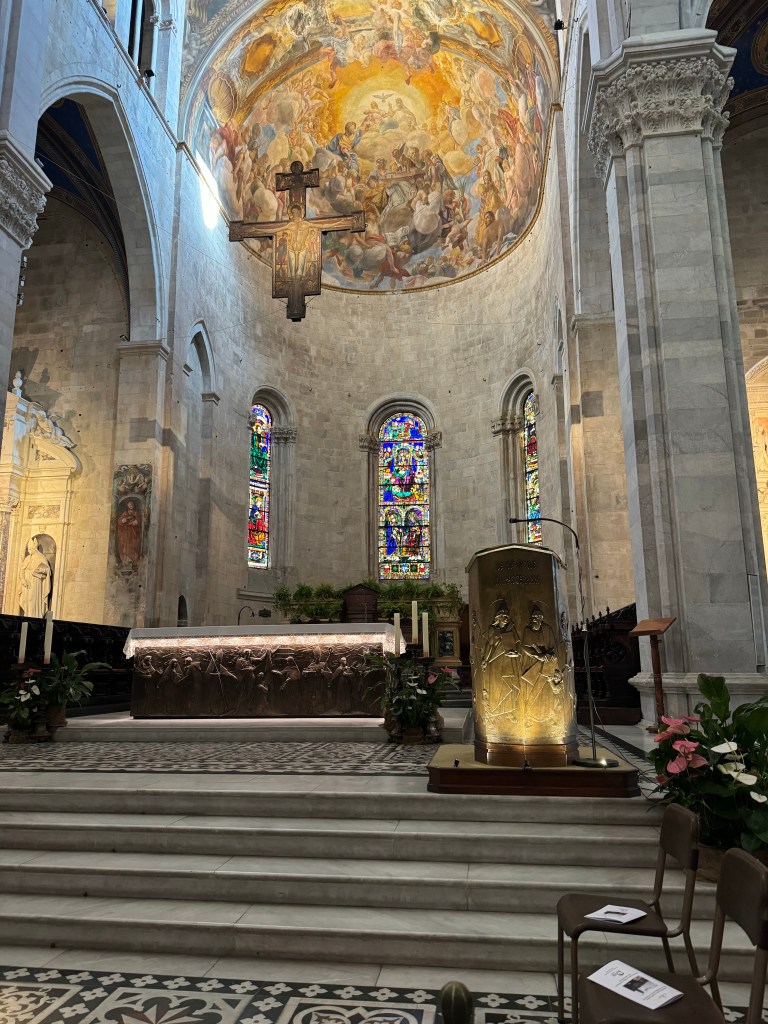
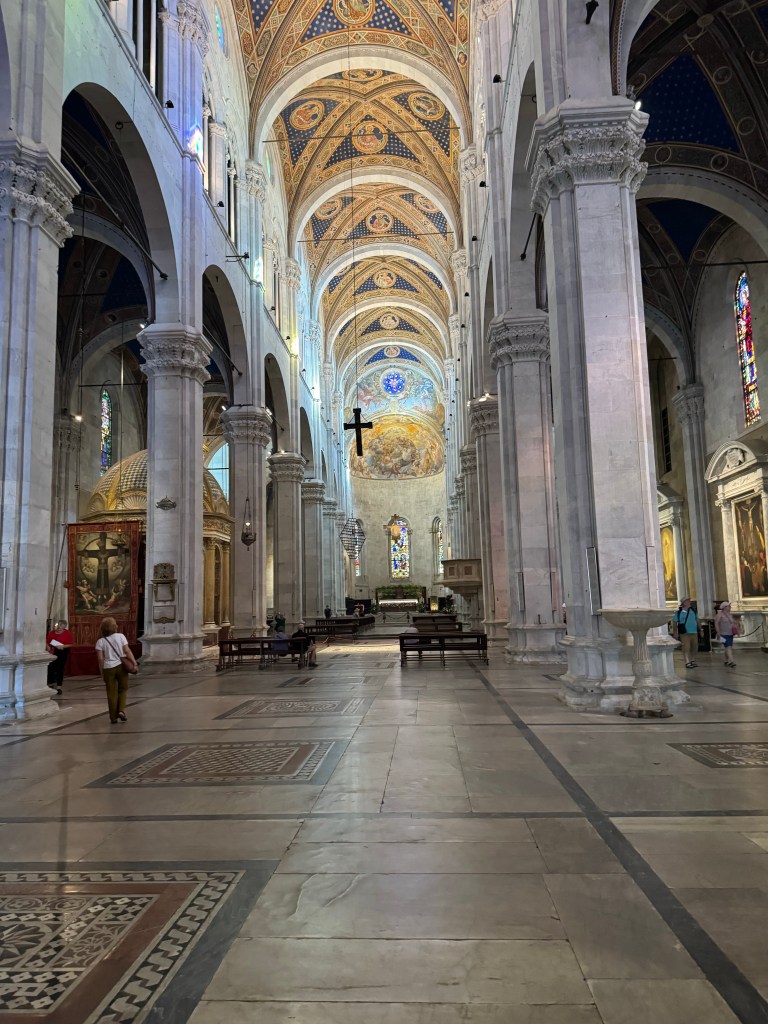
I had a good look around the cathedral and then I went back to find Graham. We then went back to the station.
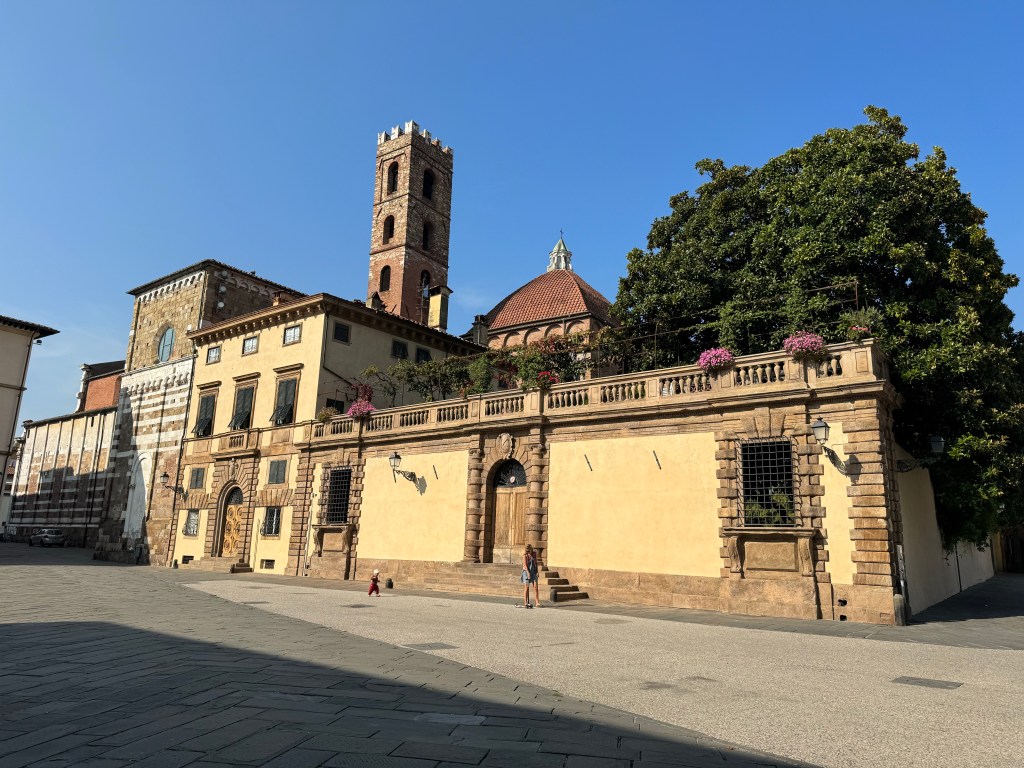
We did not have very long to wait for a train back to Pisa. I did however have enough time to check out which station in Pisa is closer to the Piazza dei Miracoli. It turned out that it was the station that we had found in the morning. The journey back to Pisa did not take long and the leaning tower was signposted as soon as we left the station. It did not take long until we got our first look at the leaning tower that was peeking out behind the city wall. I actually think that this shows off that it is in fact leaning the best. The reason for this is probably because even though the leaning is not as pronounced on the other buildings on the square, they are not entirely straight either.
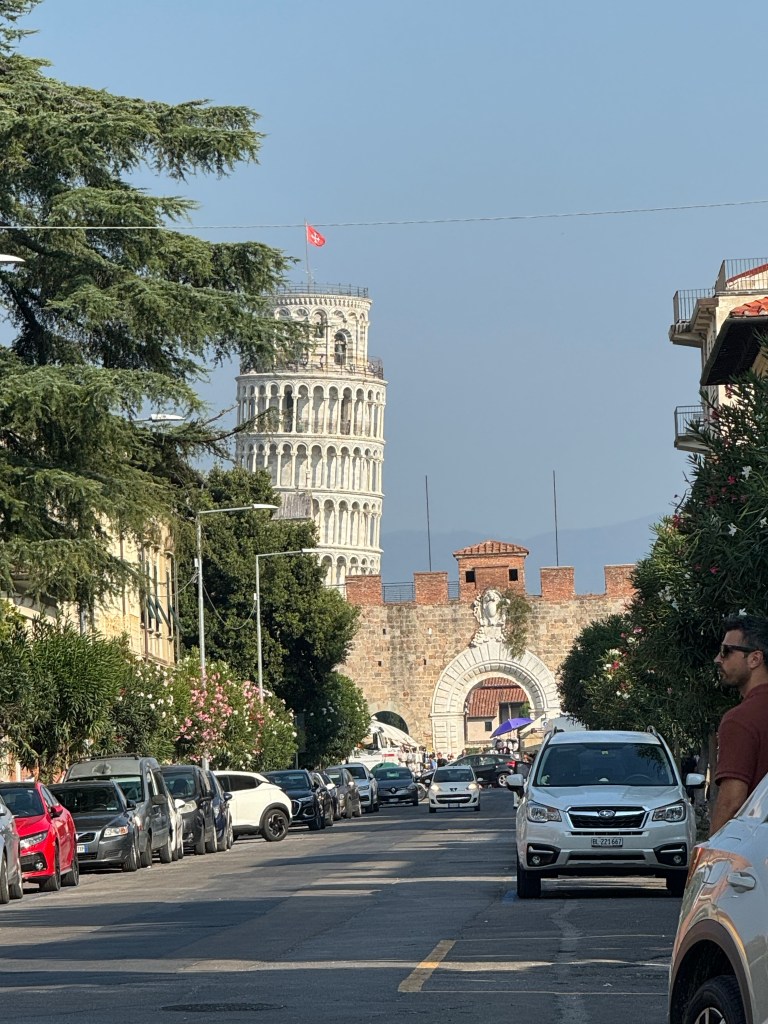
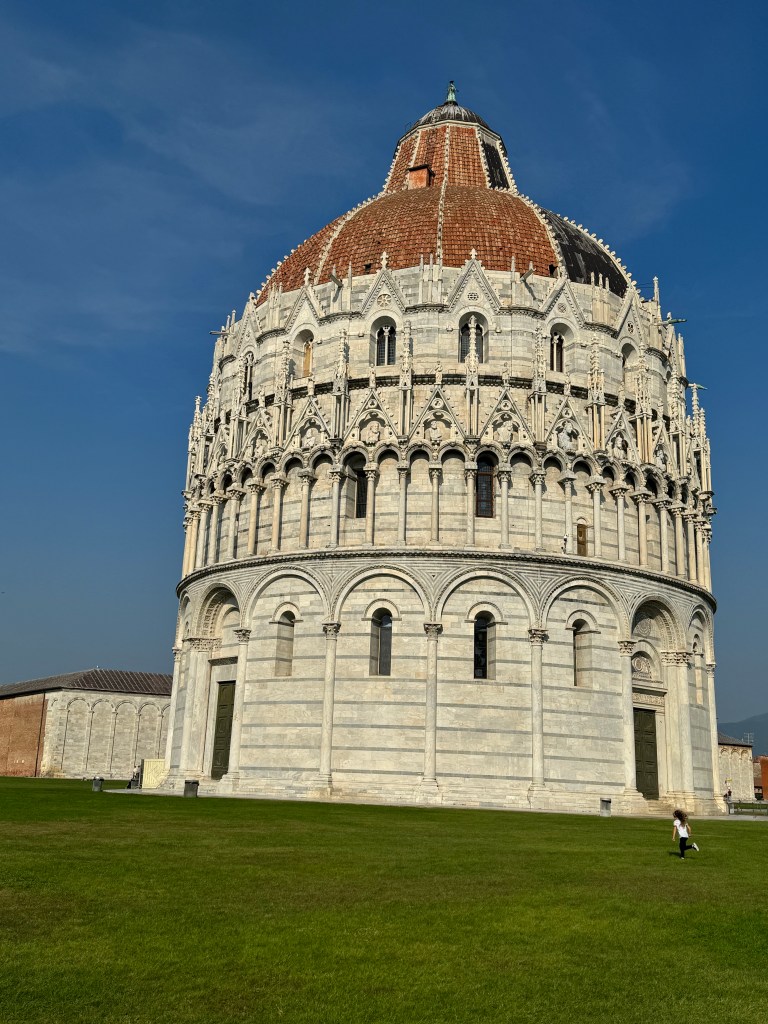
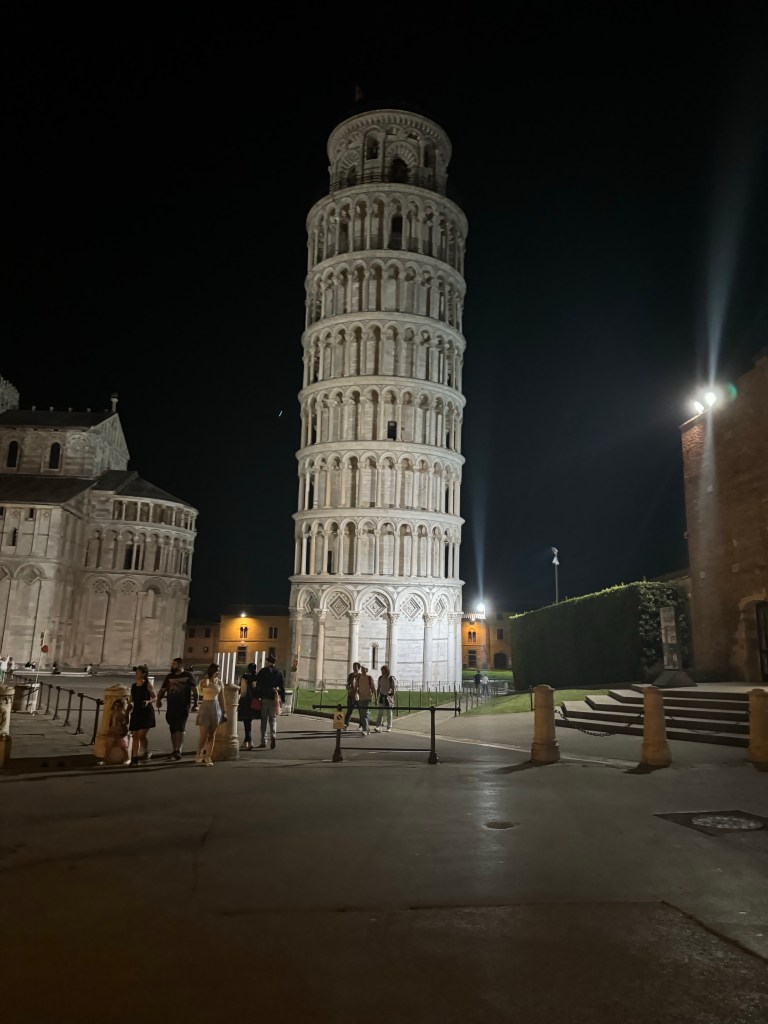
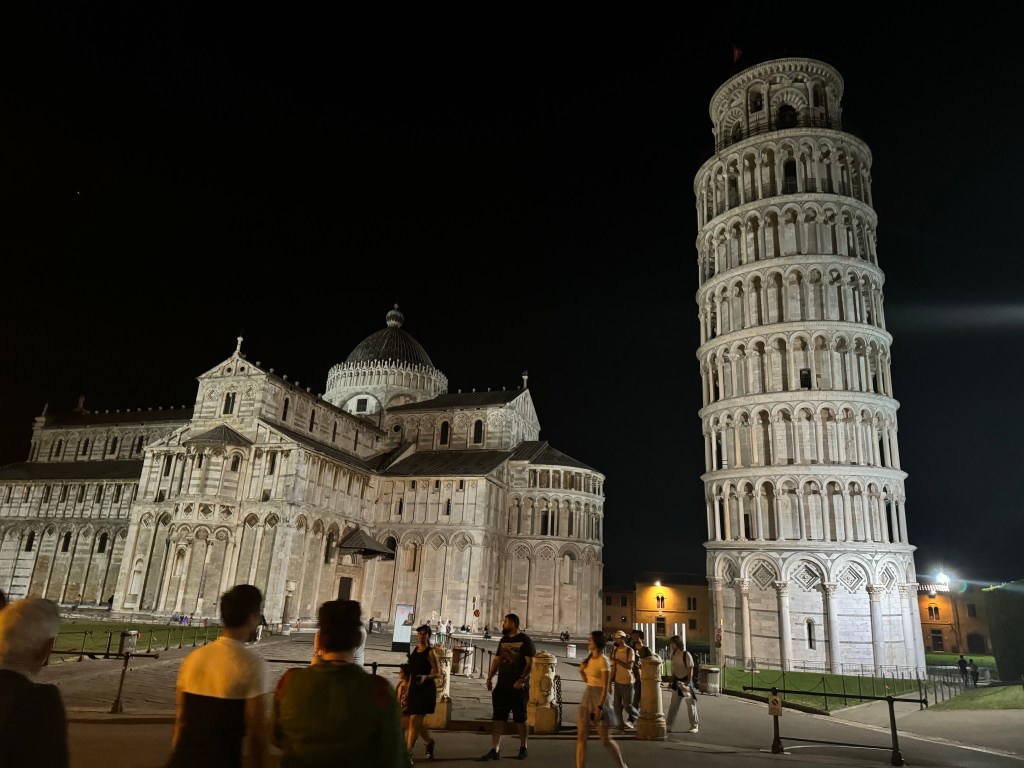
The Piazza dei Miracoli, which translates to Square of Miracles and is also known as Piazza del Duomo is what Pisa is famous for. It is a walled area that is home to four important religious structures: the Pisa Cathedral, the Pisa Baptistery, the Campanile, and the Campo SantoMonumentale, which is also known as the old cemetery.
The baptistery is what I had been most excited about. This is a very beautiful building and from the photos I had seen, it is just as stunning on the inside as it is on the outside. Unfortunately, this was going to be the closest I would get to it as there was a sign on the door that it is closed until early December.
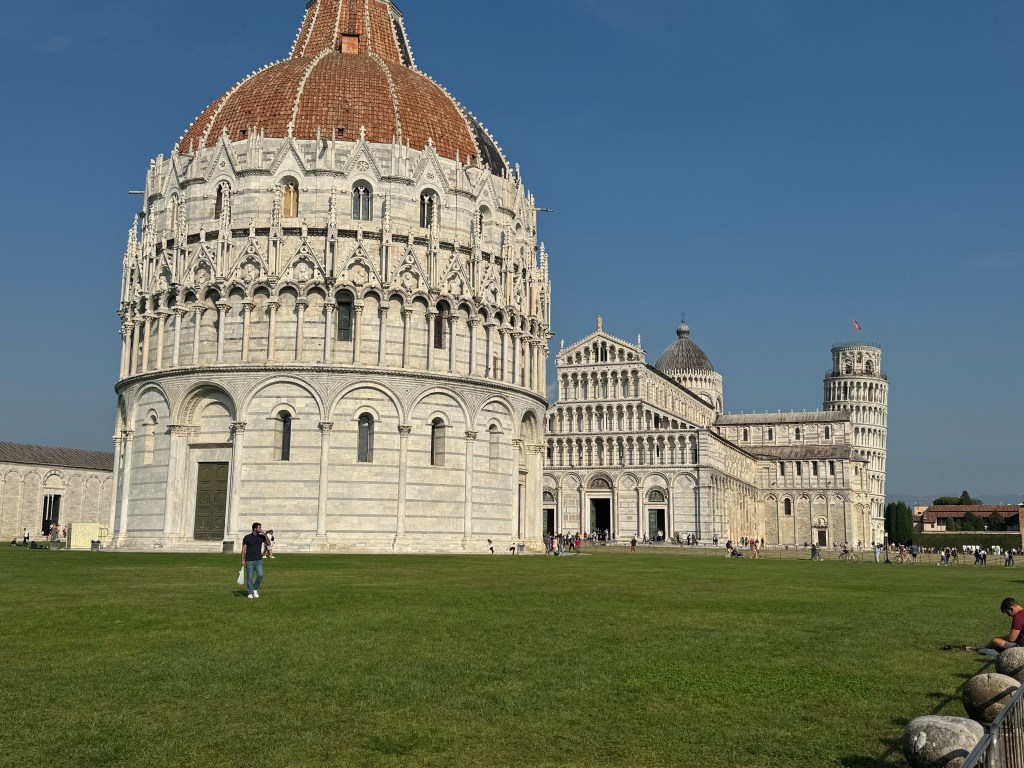
In the end, we did not go inside any of the buildings. The line for the leaning tower was worthy of an e ticket ride at Walt Disney World at Christmas. If I am quite honest, climbing up 296 steps did not appeal anyway. I could not even see the end of the line to get tickets for the cathedral. You can buy tickets online and there is a separate entrance for people with online tickets. However, they only sell combo tickets online and they are not cheap. As the baptistery was closed and there were plastic barriers where the entrance to the Campo Santo should have been, I passed. I did not love the idea to pay for things I could not actually visit. I had a quick peek through an open door at the cathedral and then we headed towards the old town.
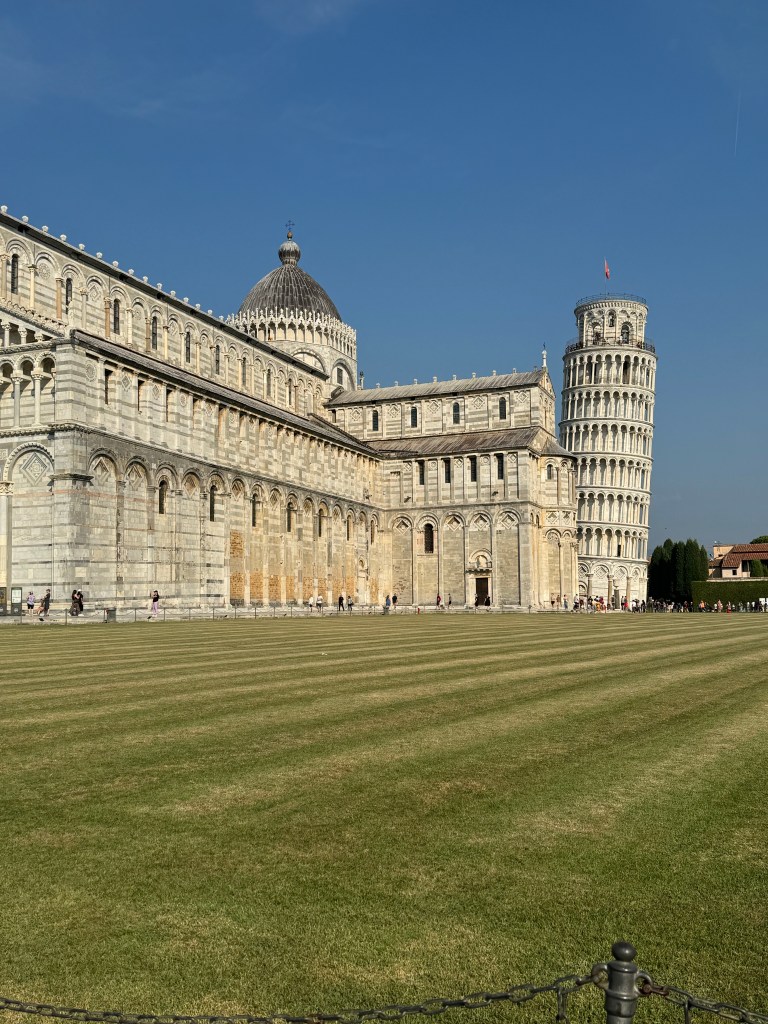
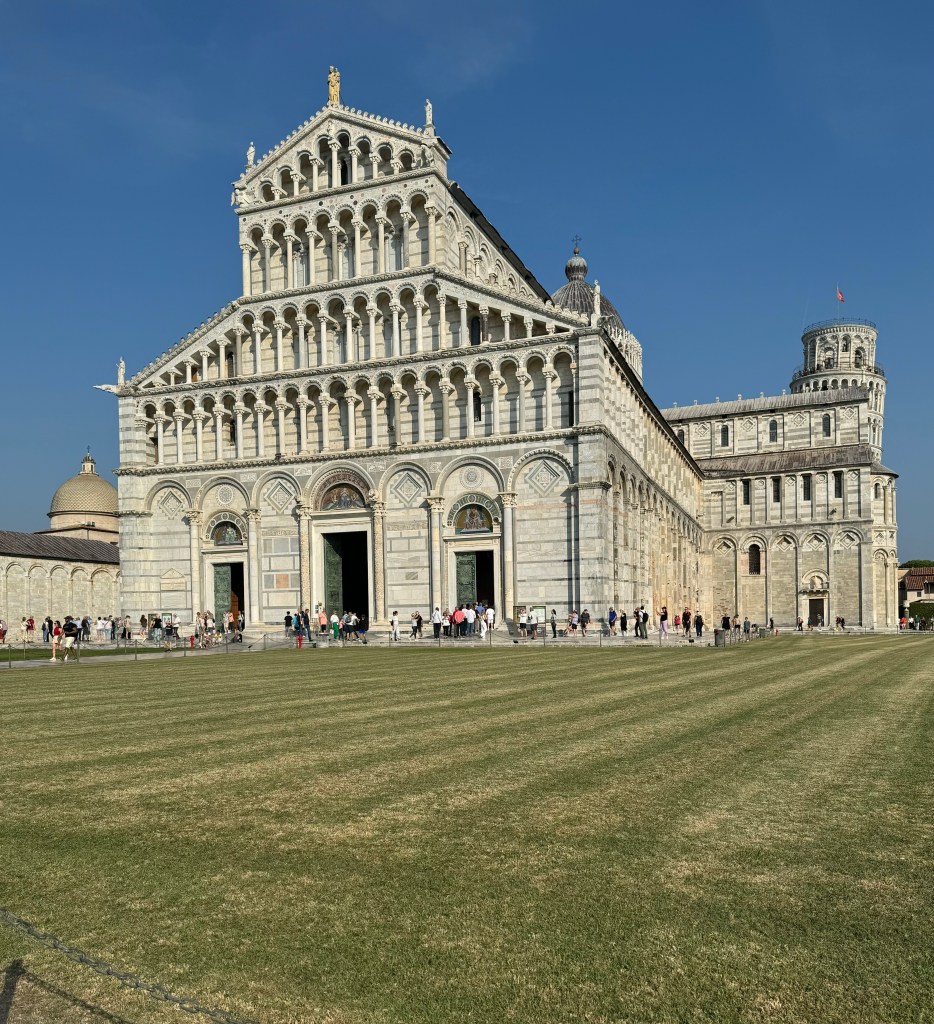
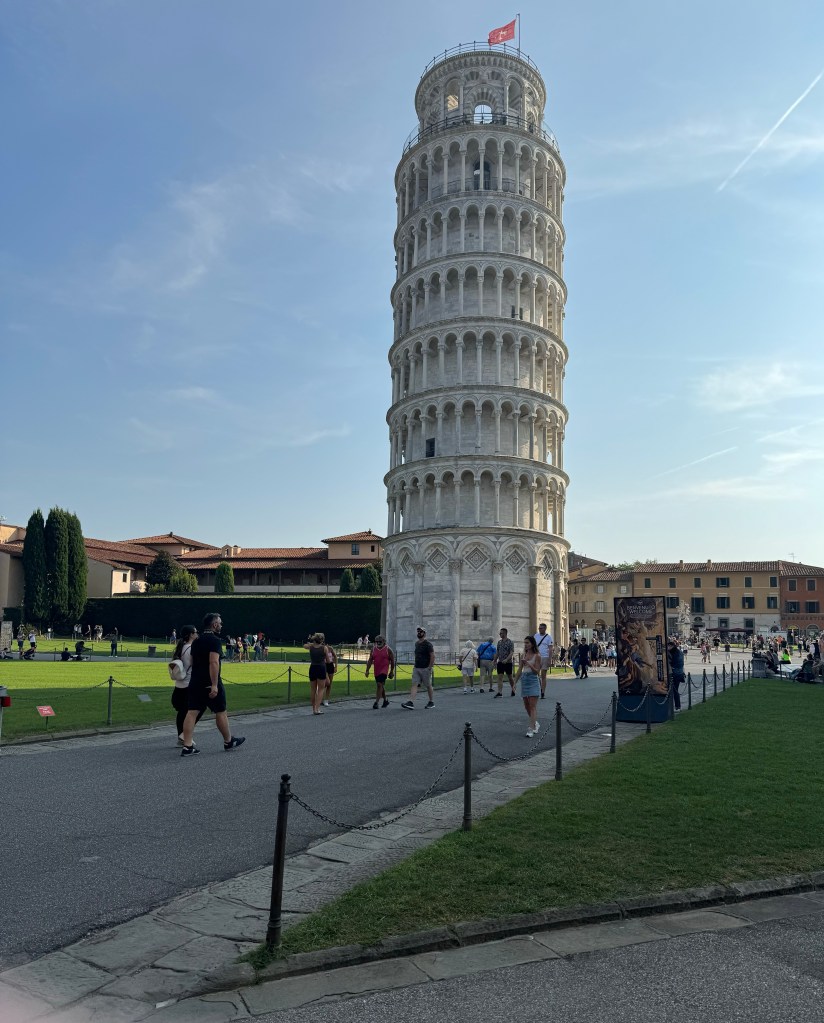
The old town in Pisa was definitely one of those places for which the term „tourist trap“ was invented. The Piazza dei Miracoli is stunning and has definitely deserved its status as a UNESCO World Heritage Site. I am really grateful that I got to see this. The rest of the old town is nothing to write home about and the aggressive street vendors and equally aggressive staff of the restaurants with outside seating did not tempt us to linger. We stayed around long enough to have some pistachio gelato and then we headed back to the hotel.
Pisa itself may not have a great deal of appeal, but I would not hesitate to make it a base to explore places like Lucca, Siena, and San Gimignano.
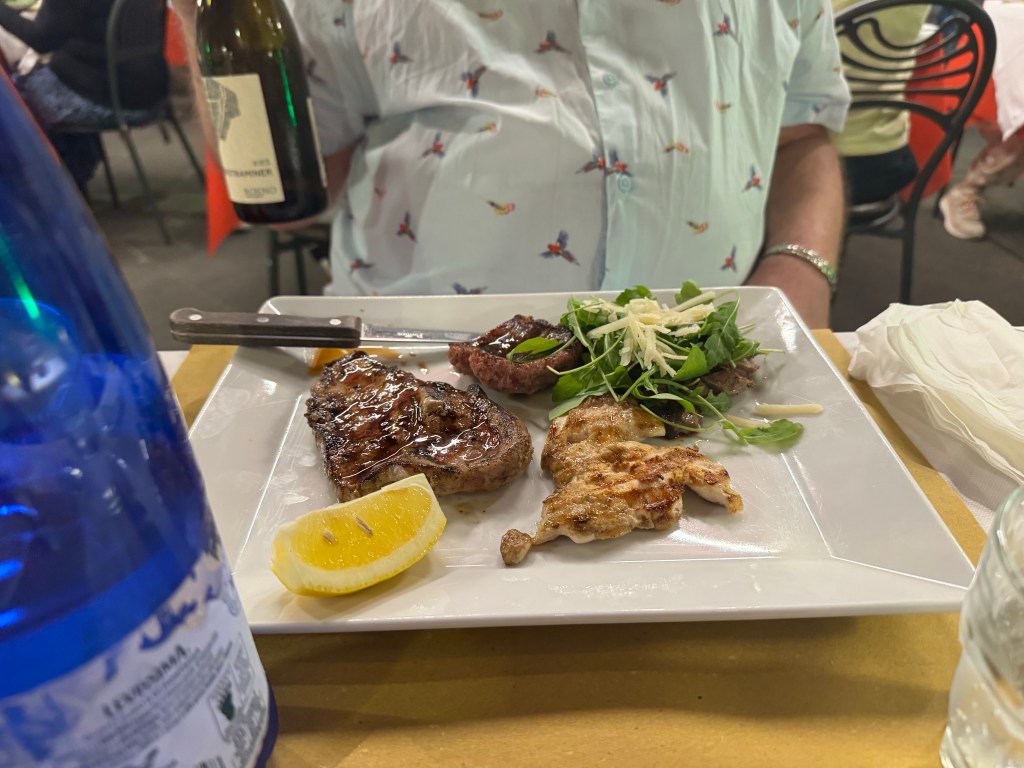
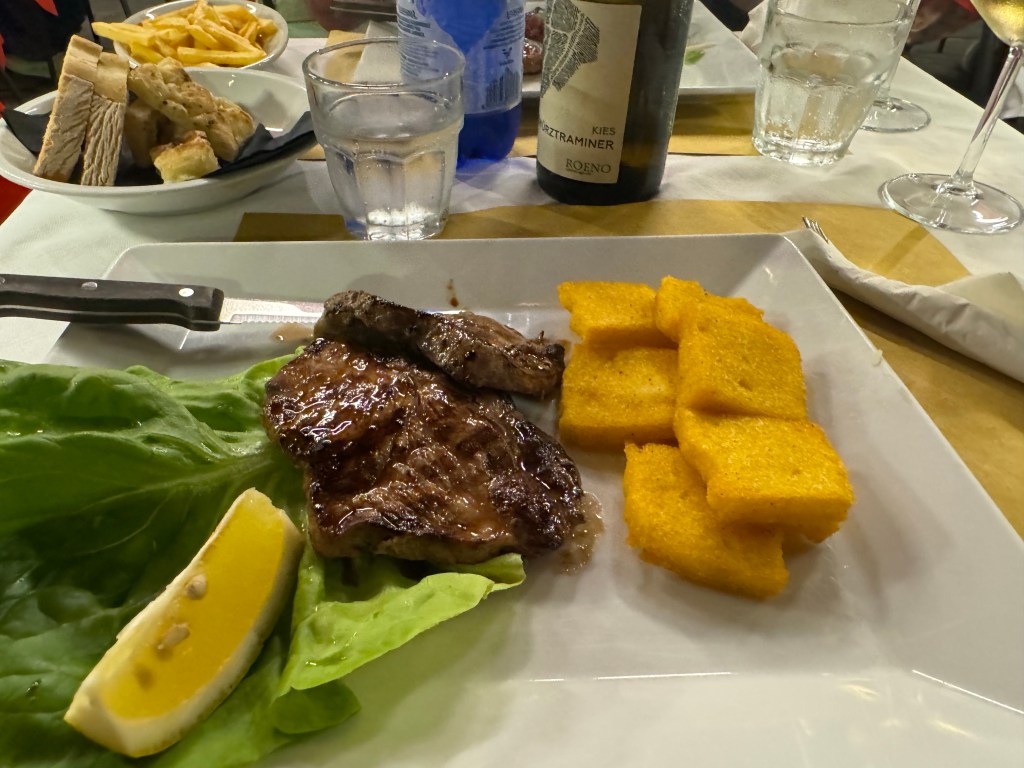
When we got back to the hotel, we had a nap. I had set an alarm just in case, but we were awake just before the alarm went off. We checked with the front desk where the closest restaurants were. We were advised near the leaning tower. We set off and found a restaurant with outside eating our end of the old town. They brought us some plain focaccia with the menu. We shared a bottle of sparkling water. Graham spotted Gewürztraminer on the menu, and we had a bottle of this. I had been surprised to find this in Italy the previous year. This time round I checked where it is produced. Suddenly all became clear. It came from Trentino, which is an area of Italy that has heavy German influences to the point that German is the primary language. The same is true of the Alsace region of France, which is also a significant producer Gewürztraminer. Graham had the mixed grill with fries,and I had grilled pork steaks with fried polenta. We were given the dessert menu, and something caught my eye. They had homemade biscuits to dip into dessert wine. We were going to share this, but they had a sudden rush, and nobody came back to take our order. We waited about 30 minutes and then we gave up. I went inside to pay.
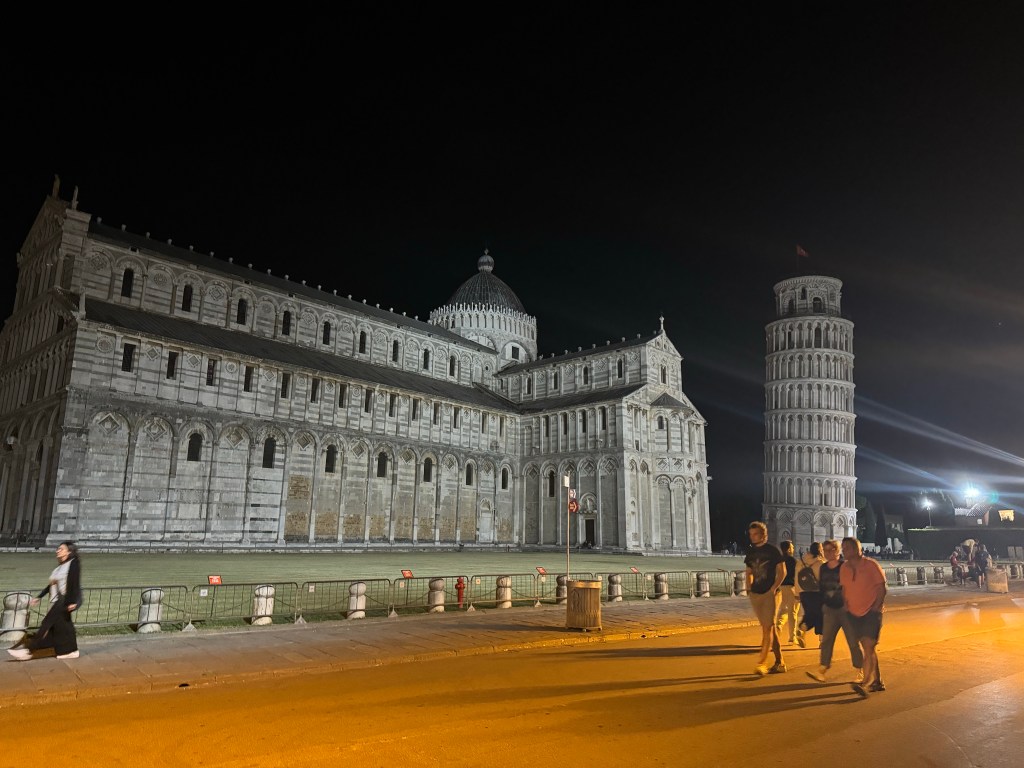
We went back to the hotel via a different route that took us past the Piazza dei Miracoli. I took a few photos. This is when I realised how much of an improvement my new phone is. I only had this since the previous Saturday, and this was the first time I was taking photos after dark. With the old phone, night-time photos were always a little grainy and these were completely clear.
When we got back to the hotel, we got ready for bed. I had every intention to read for a while, but I only read a couple of pages before my eyes started to feel heavy.


 Dolphingirl’s Travels
Leave a comment