
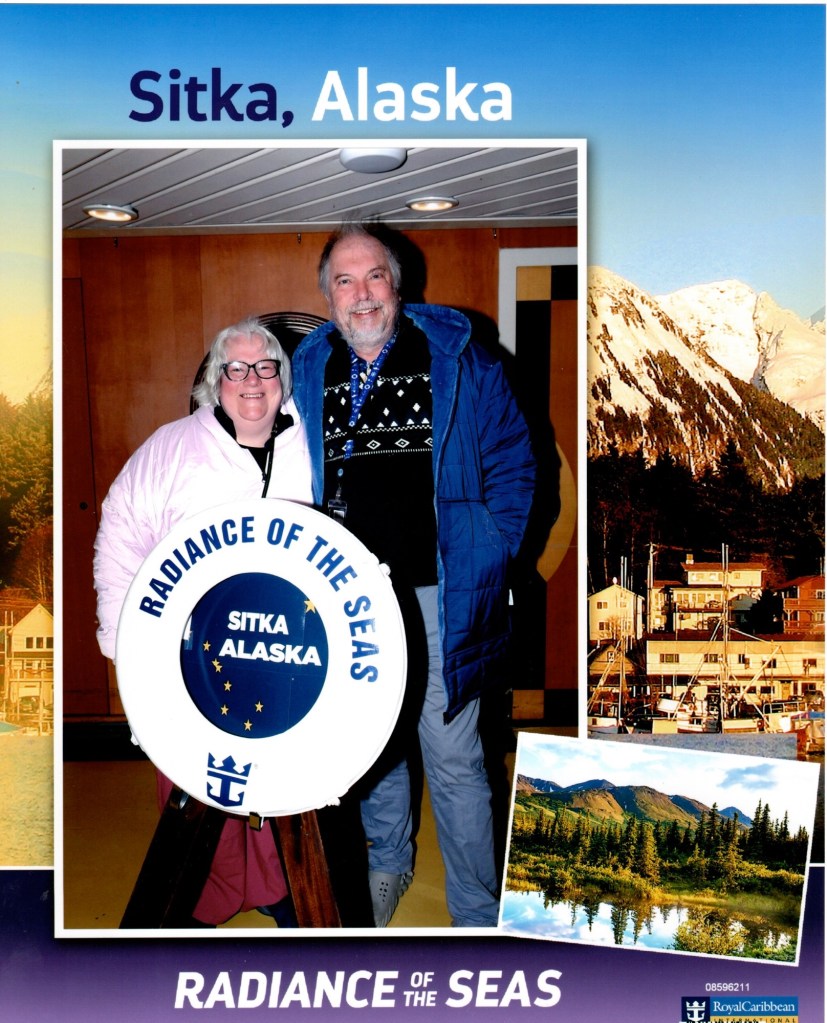
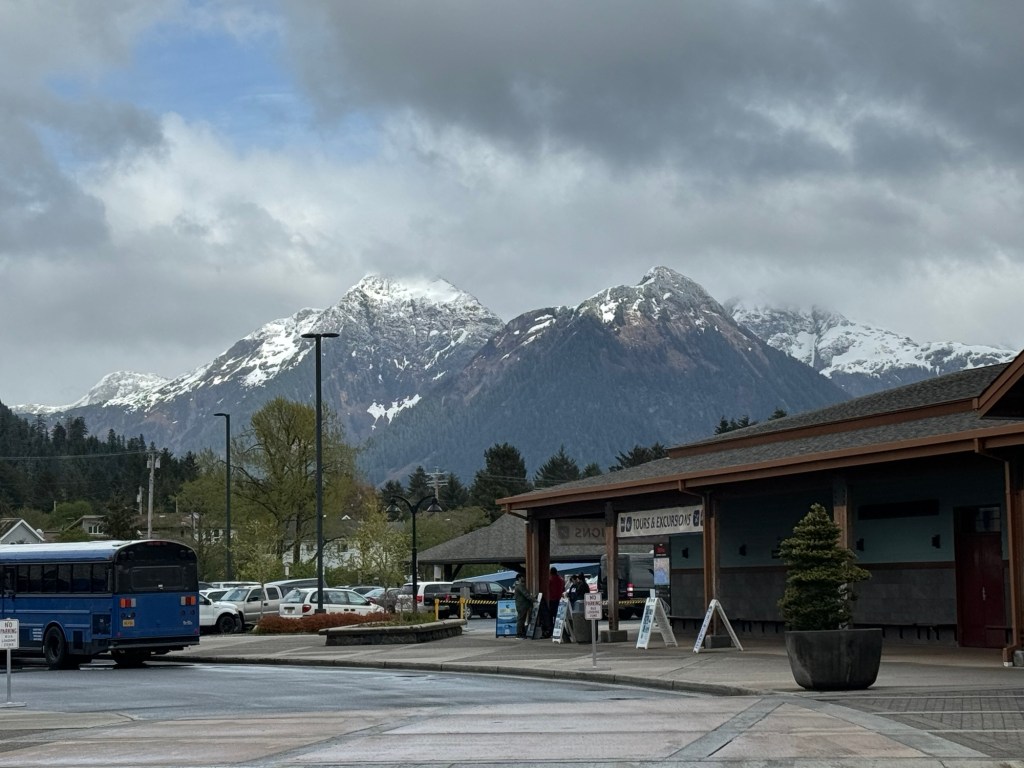
We were awake bright and early again. Once we were up and ready, we went to the Windjammer for some breakfast. Graham had fruit followed by oatmeal and I had congee and sausages. We both had apple juice and some coffee. After breakfast, we quickly headed back to the cabin to pick up what we needed for the day. Then we headed out. We stopped for the port photo and then we headed towards the shuttle stop. Our port that day was Sitka. Back in 2022, we had to make a choice between Icy Strait Point and Sitka. We went with Icy Strait Point, and I have absolutely no regrets about this, but I was glad that we had the opportunity to visit Sitka on this occasion. The larger cruise ships, which includes Radiance by Sitka standards, use a floating dock outside the main town. The port authority provides shuttles that take cruise ship passengers into town where the drop off point is the Centennial Hall. I had read all kinds of horror stories about long lines for the shuttles at both ends. Fortunately, this was not our experience. I suppose it helps that by modern cruise ship standards, Radiance is just a baby, and we were the first ship in that day. When we got to the shuttle stop, we were sent straight to a shuttle and a couple of minutes later, we were on our way.
We had a very knowledgeable driver, and he used the 15 minutes that it took to drive into modern day Sitka to give us a crash course in history. I say modern day Sitka as the original settlement was actually further out in the area where the port of Sitka is today. Sitka is located on the west side of Baranof Island and the south half of Chichagof Island. The north half of Chichagof Island is where Icy Strait Point and Hoonah are located. Like Hoonah, Sitka was originally a settlement of the Tlingit people. They originally settled there as the fishing was good and there was an abundance of sea otters. Back in the day of the original settlement, sea otters were hunted for their fur, which was the most valuable of all furs. Russian explorers settled Old Sitka in 1799, naming it Fort of Archangel Michael. In June 1802, Tlingit warriors destroyed the original settlement, killing many of the Russians, with only a few managing to escape. Baranov returned to Sitka in August 1804 with a large force. Initially the attack was not successful, but after two days of bombardment, the Tlingit surrendered. Sitka was the site of the transfer ceremony for the Alaska purchase on October 18, 1867. Sitka was the capital of Alaska until 1906. The seat of government was relocated north to Juneau in 1906 due to the declining economic importance of Sitka relative to Juneau, which gained population in the Klondike Gold Rush.
By Alaska standards, Sitka is still a significant town. It is the fifth biggest town in Alaska with a population of around 8500. It is home to the Southeast Alaska Regional Health Consortium, which operates the hospital in Sitka. It is also home to the University of Alaska Southeast-Sitka Campus, located on Japonski Island in an old World War II hangar and the Alaska State Trooper Academy. Considering the size of Sitka, it has a surprisingly high number of schools. This includes a State of Alaska-run boarding high school for rural, primarily Native students, which is located on Japonski Island. The most significant sector of the economy is seafood.
We had a tour booked for 09:00, which departed from the Centennial Hall. We found our tour operator and checked in. We were given our bus number. They advised us to come back at 08:45. We decided to go exploring. To our delight, Sitka is actually a proper town. Sure, there are some tourist focused shops, but those only play a small tole. Sitka is home to 22 buildings on the National Register of Historic Places and has two wildlife rehabilitation centres that act as significant tourist attractions, three museums and the Sitka National Historical Park. There are also activities like hiking, kayaking, fishing charters and whale watching. There is plenty to do for tourists. I rather suspect that you can spend a week in Sitka and still not manage to do and see everything on offer. However, the downtown area mainly consists of shops and services for the residents, and you do not have to go very far to encounter residential communities.
On our wander, we spotted two churches opposite each other. They were still closed, but would be open after the tour and we decided to come back. While we were exploring, it started to rain. We were checking out the windows of a shop and the owner invited us in even though the shop was not yet officially open. I found some lovely tops and magnets. Graham finally found some underwear. He had not packed enough. We had tried before and all we came across was socks, even in the general store in Hoonah. We did not want to carry the shopping with us, but we decided we would come back later. We headed back to the Centennial Hall, used the bathroom there and checked in with our tour operator. Our driver guide arrived shortly afterwards, and it was not long until we were on our way.
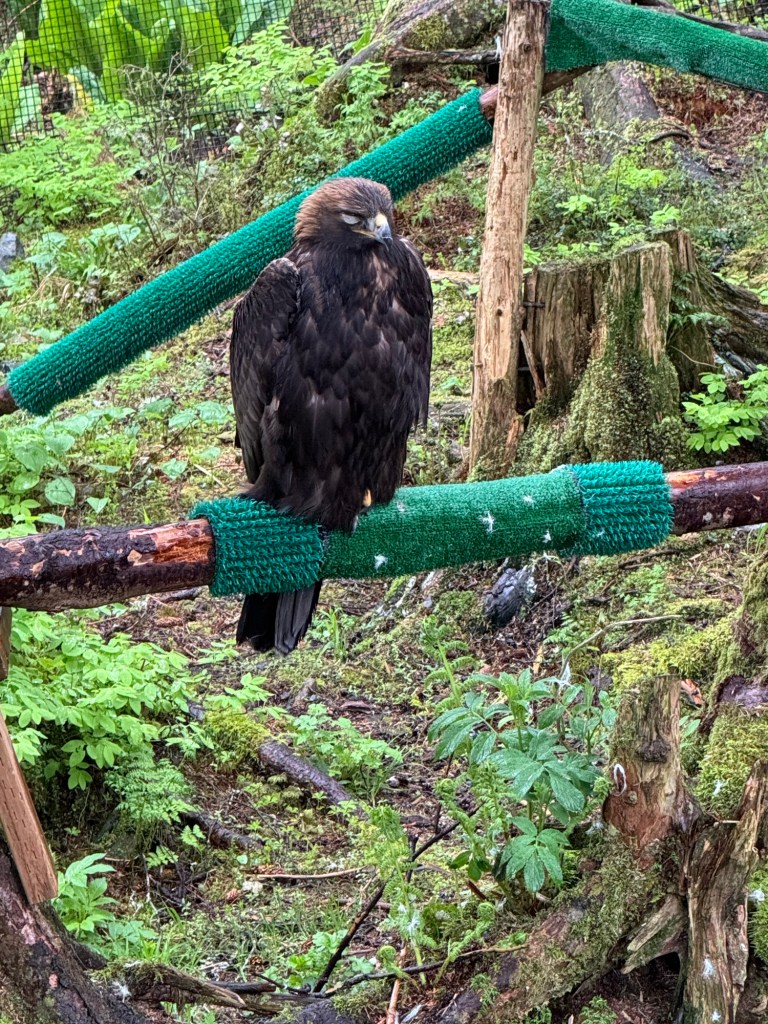
We had booked the Best of Sitka Premium tour through Viator, which would take us to both the wildlife rehabilitation centres, the Sitka National Historical Park and a couple of other local landmarks. Our first stop was the Alaska Raptor Centre. This was originally founded in 1980 by two locals that rescued an injured bald eagle. Initially volunteers care for injured birds in their respective homes. In 1983, the Alaska Raptor Centre moved to a small shed on campus of a now defunct college before moving to their present location in 1991. Nowadays they care for about 200 injured birds a year. Their objective is to treat and rehabilitate the birds and release them back into the wild. Some of the birds that are too severely injured to survive in the wild join the Raptors-in-Residence team where they are involved in various educational activities for schools and the general public.
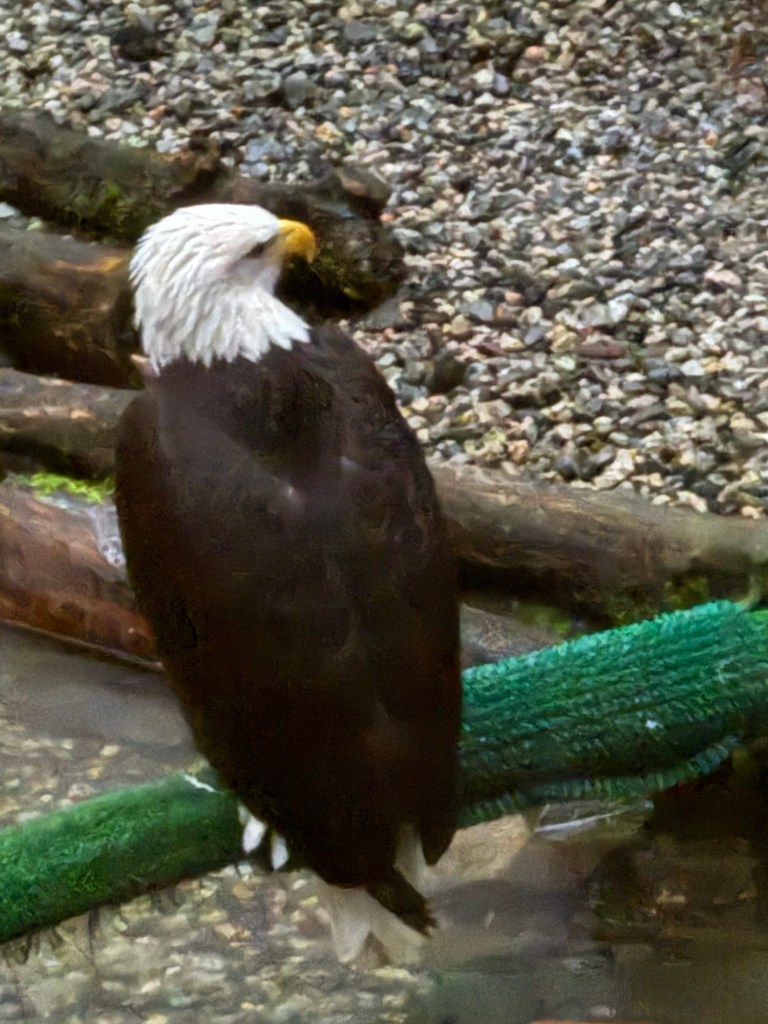
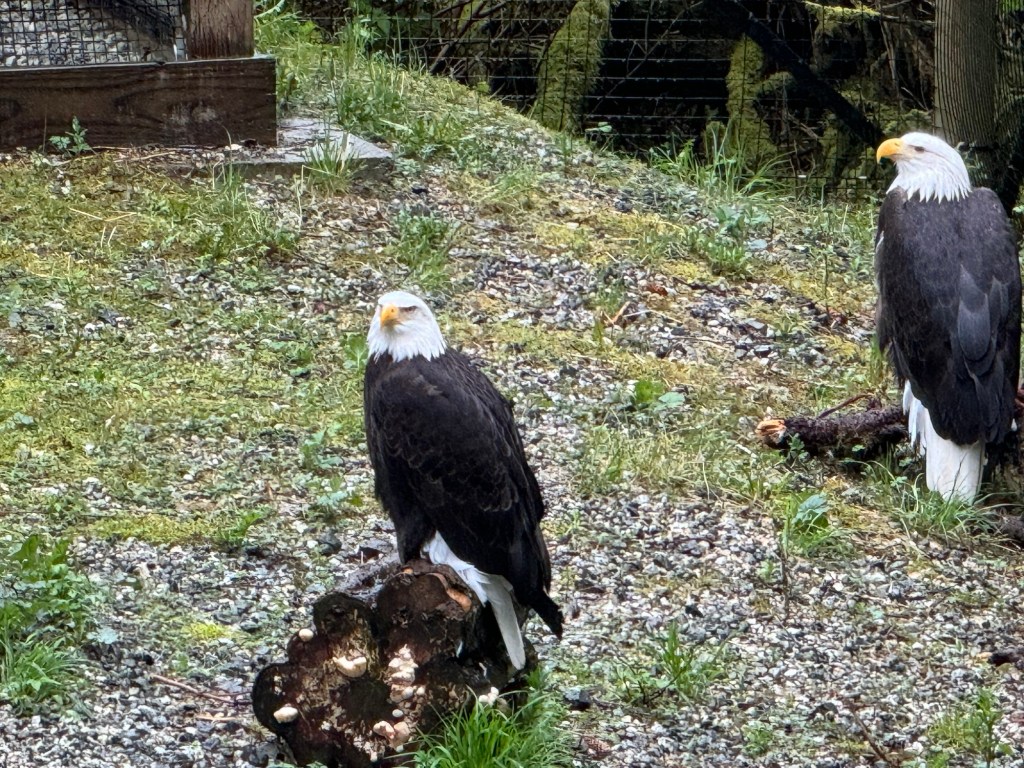
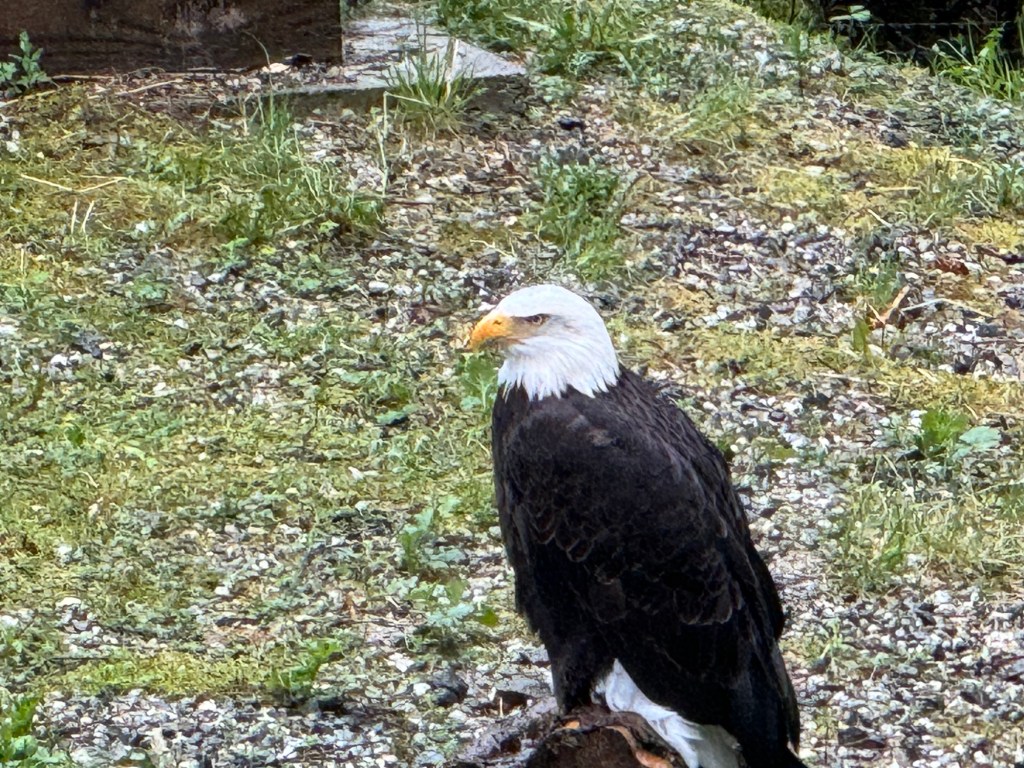
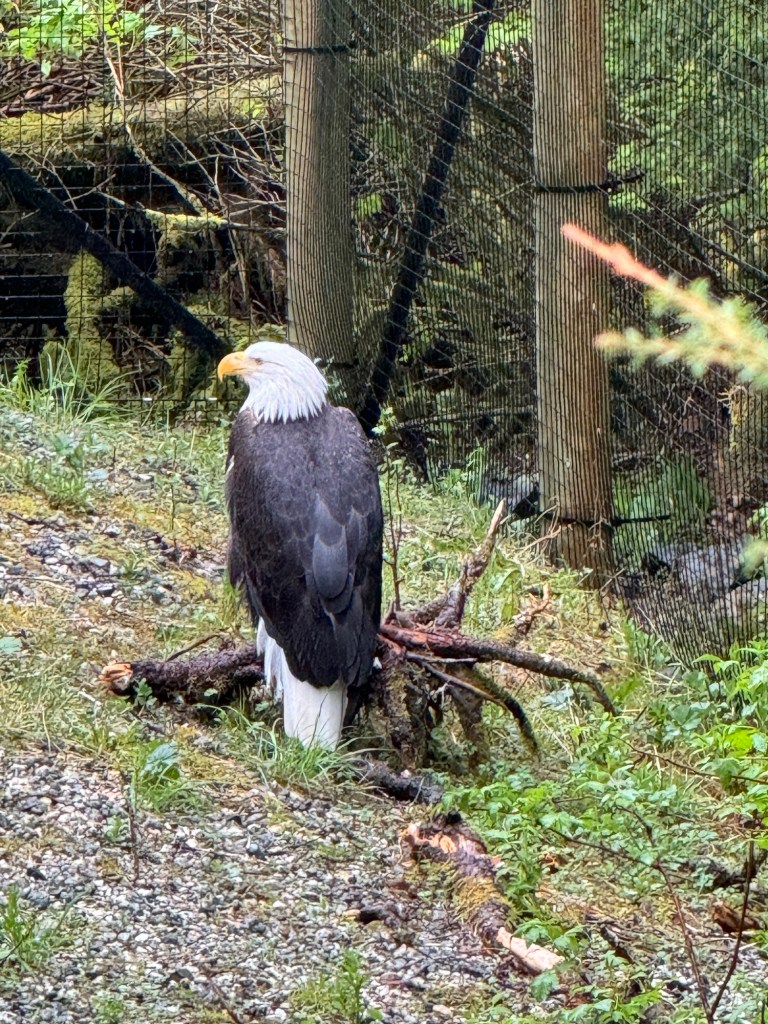
The heart of the operation and our first stop was the flight training centre. Once the injuries have been treated, birds get transferred to this space which is essentially a big warehouse with a corridor in the middle where visitors and staff can observe the birds, but the birds cannot see or hear the people. The birds spend up to year in this space and then have to prove their stamina and manoeuvrability in a clinical aerobic flight tube before they can be released into the wild. If the birds have not shown any inclination to fly or are unable to pass the flight test after one year, it is determined that they will never be able to return to the wild. If they still have a decent quality of life, they then become residents at the Alaska Raptor Centre. Some of those birds are in open plan areas in the forest and some are in aviaries that are dotted around on the perimeter of the building. I made friends with one bald eagle that lives in one of the aviaries. Luci has been at the Alaska Raptor Centre since February 2016. She had damage on both wings, but fortunately no internal injuries. They are not entirely sure what happened to her, but based on the spread of the injuries, it is likely that she got tangled up in power lines and got electrocuted. They have some other residence with gunshot wounds. After a few days of observation, Luci was transferred to the flight training centre. Unfortunately, it very quickly became apparent that she had suffered some tendon damage as she could glide, but not fly. She therefore can never be released into the wild. She is one of their dedicated education eagles. She was three years old when she was brought to the Alaska Raptor Centre. We definitely had a moment. I just felt a deep connection with her. I have since found out that she is part of their adopt a raptor program. I may well adopt her.
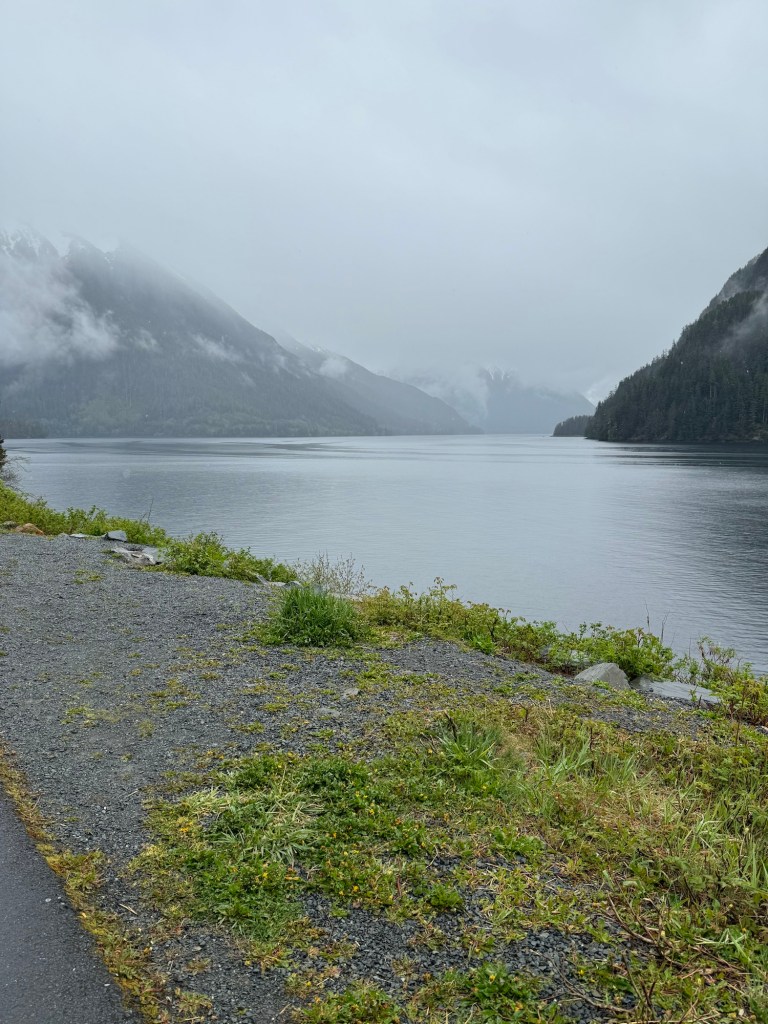
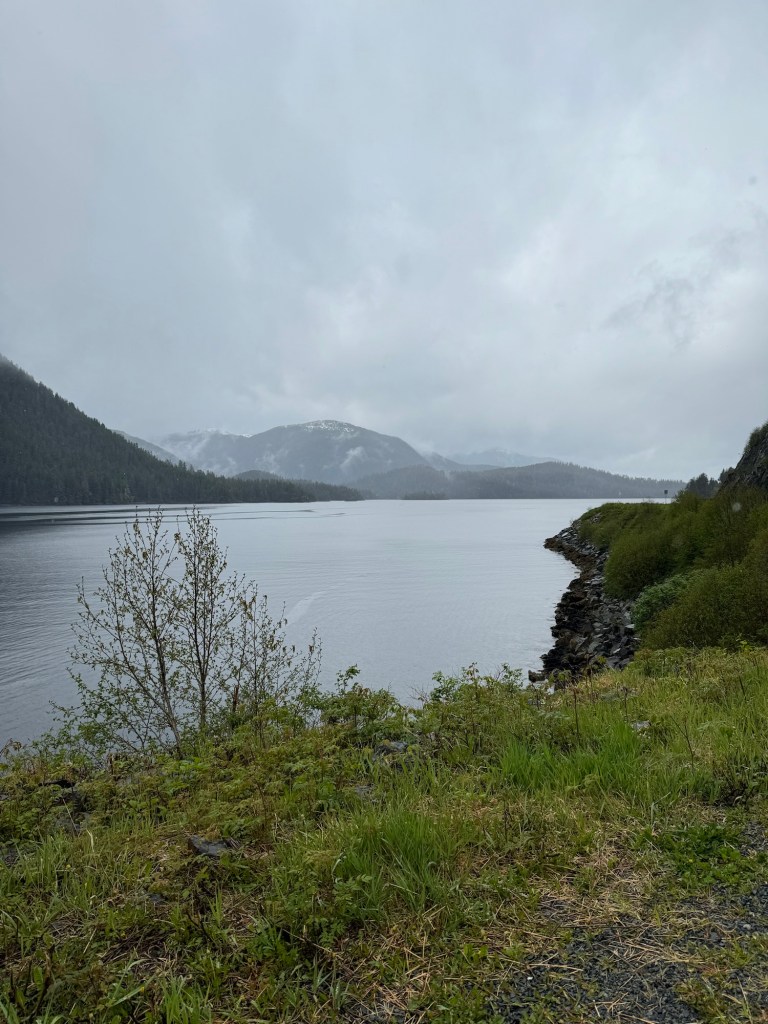
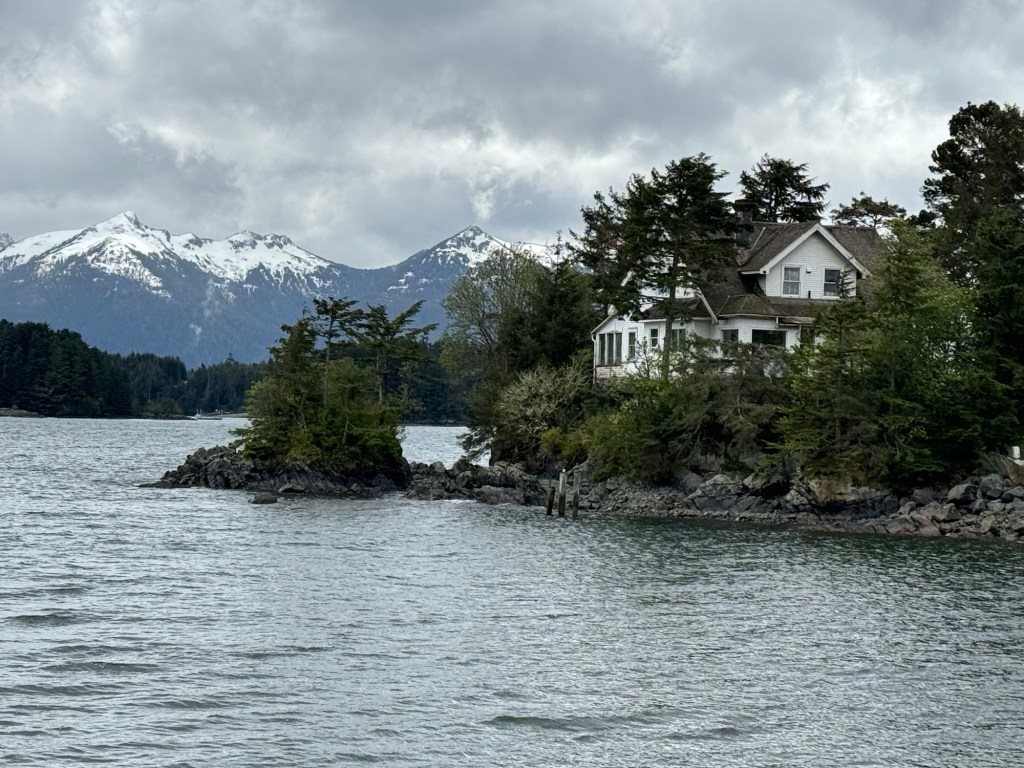
Our next destination was an overlook for Silver Bay. Silver Bay is a deep-water fjord located southeast of Sitka. It is very pretty. It is also meant to be a good spot to see whales. However, at this point it was raining pretty heavily and everybody just took a few quick photos and then returned to the minibus.
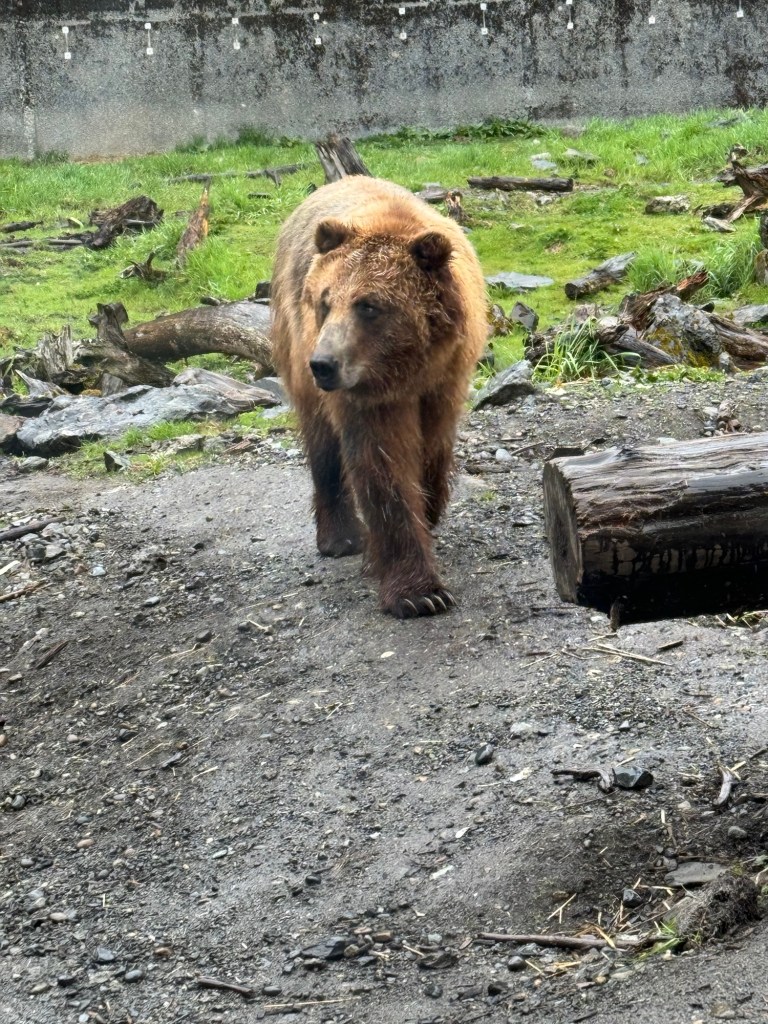
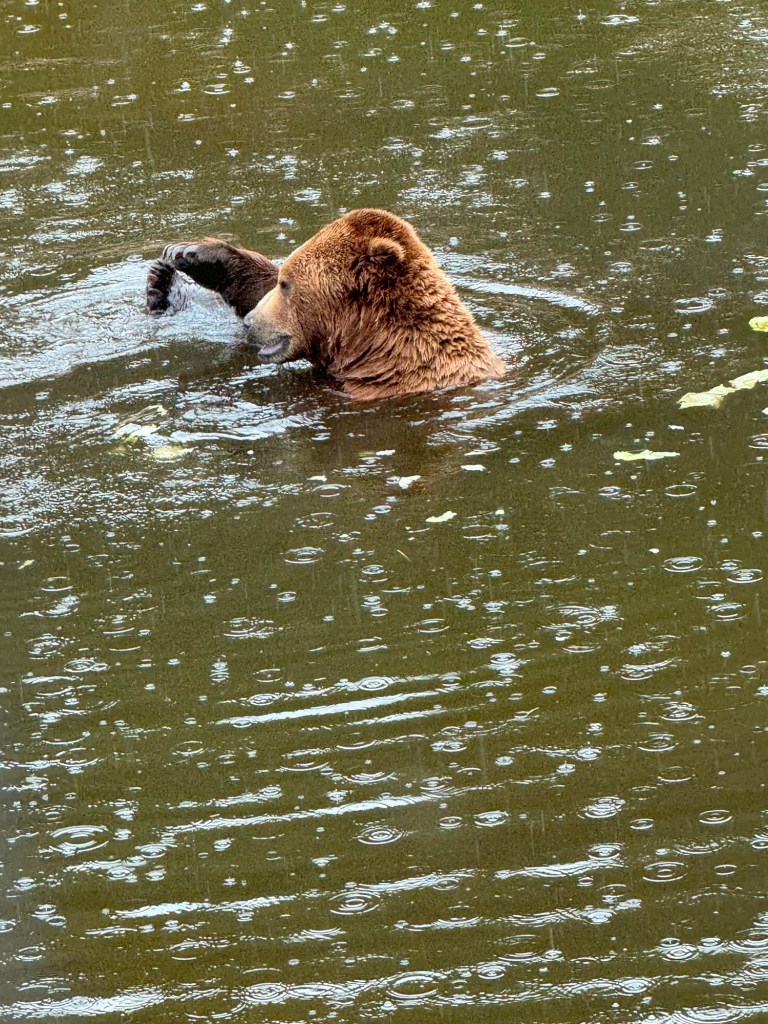
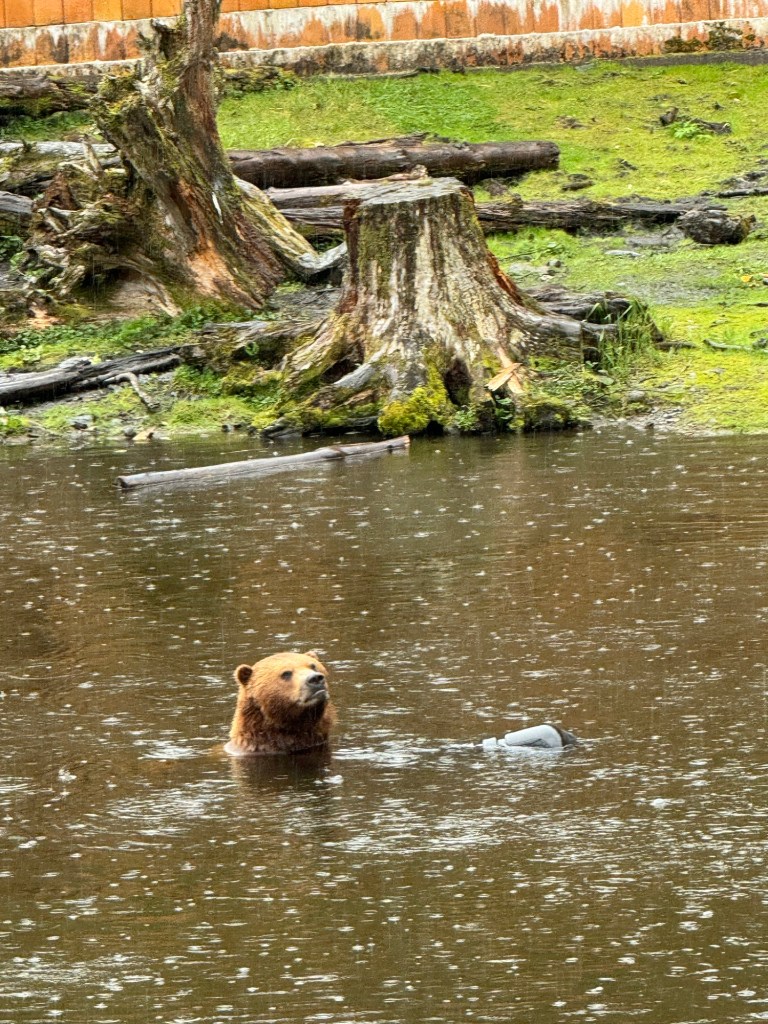
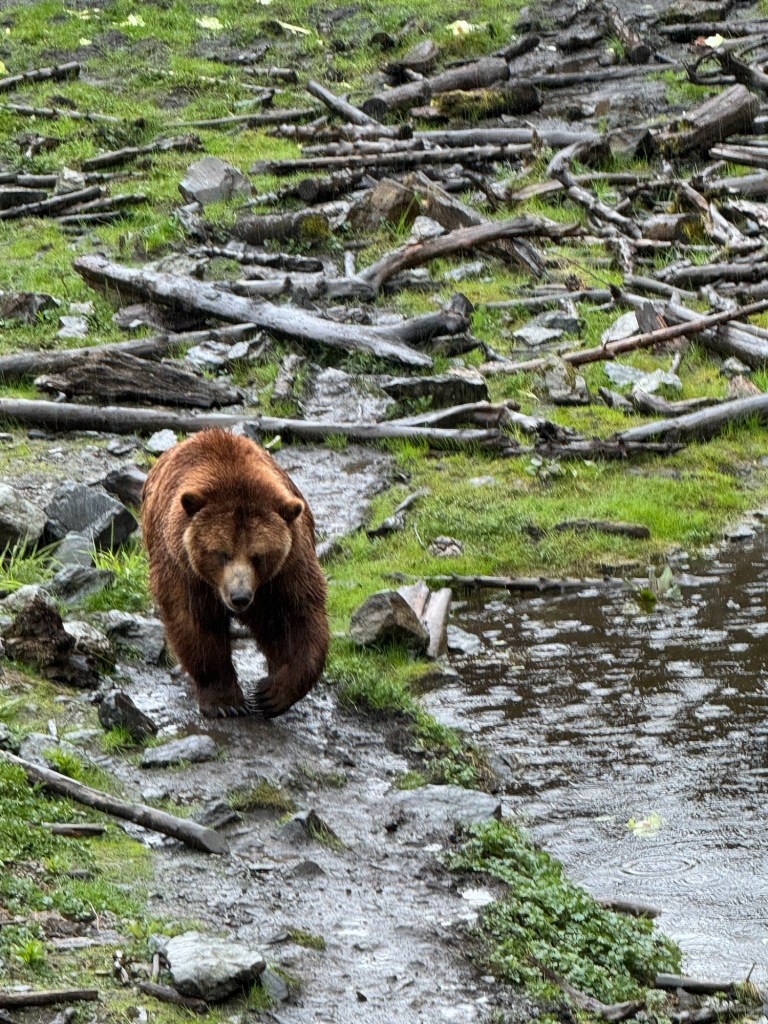
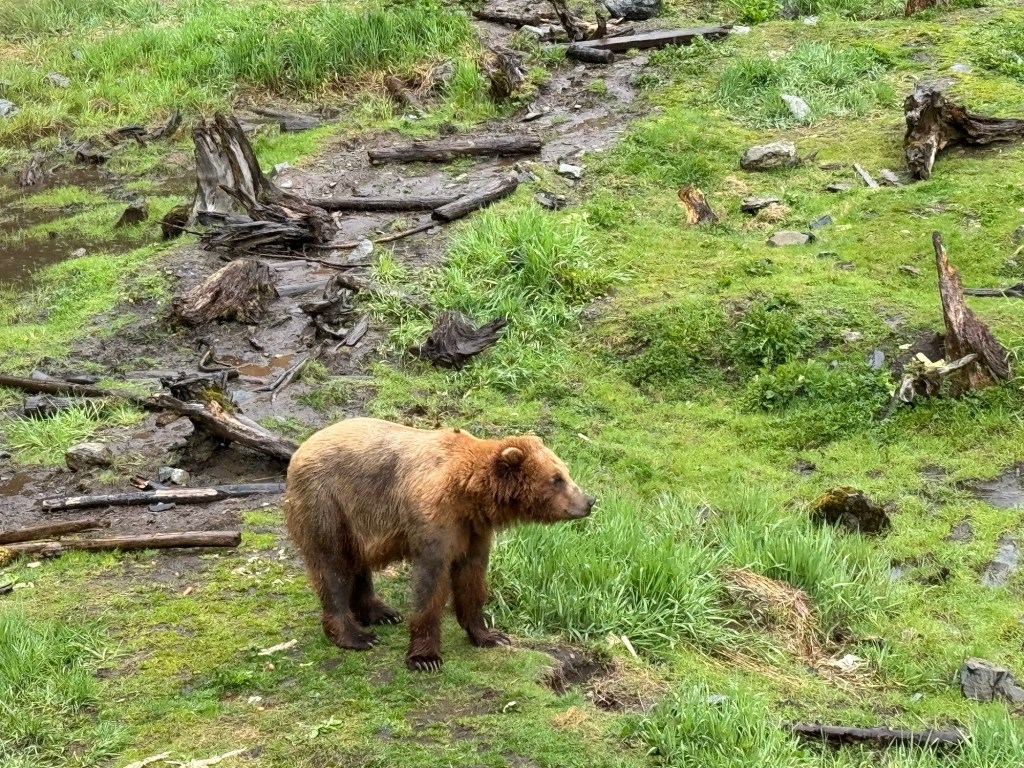
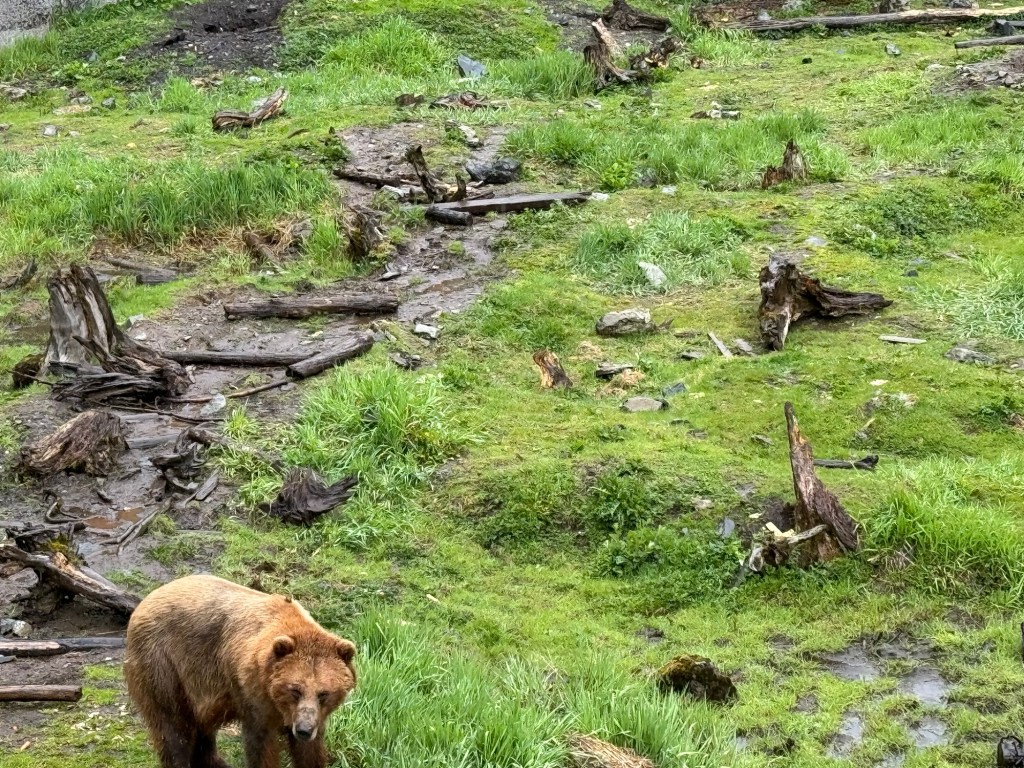
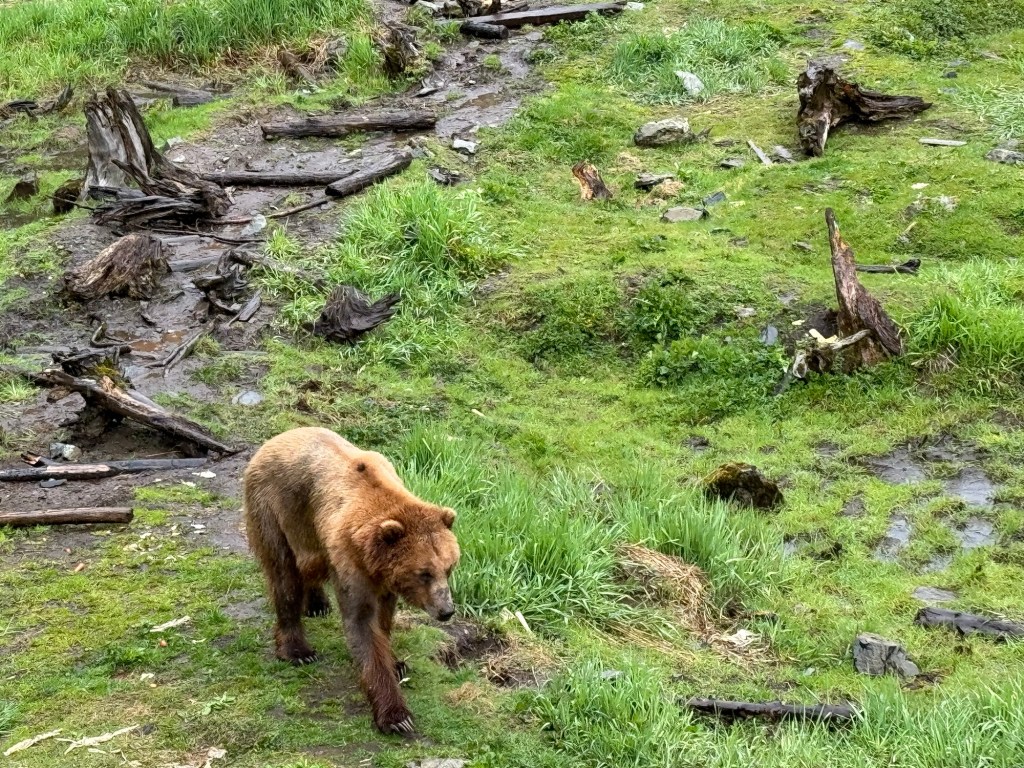
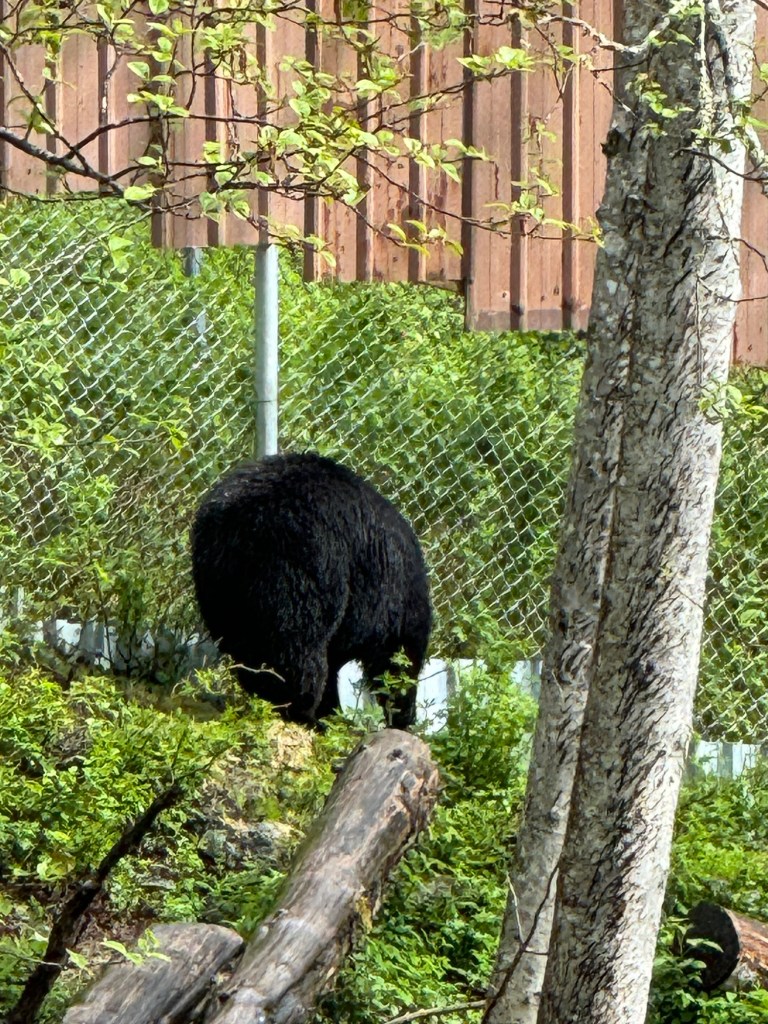
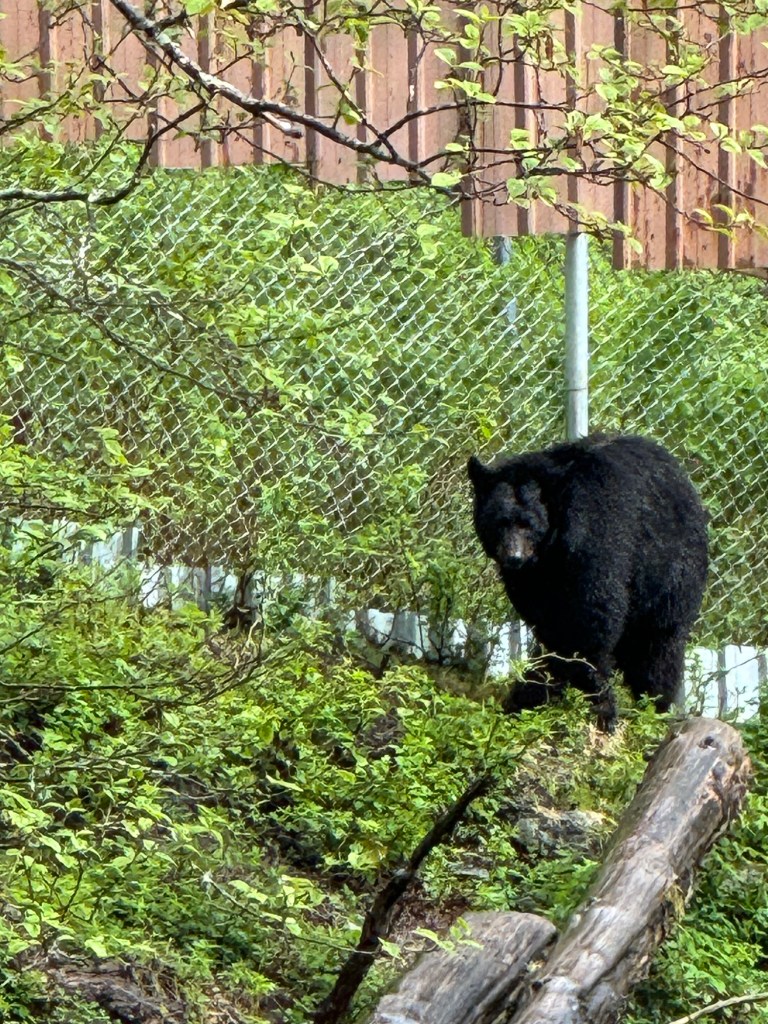
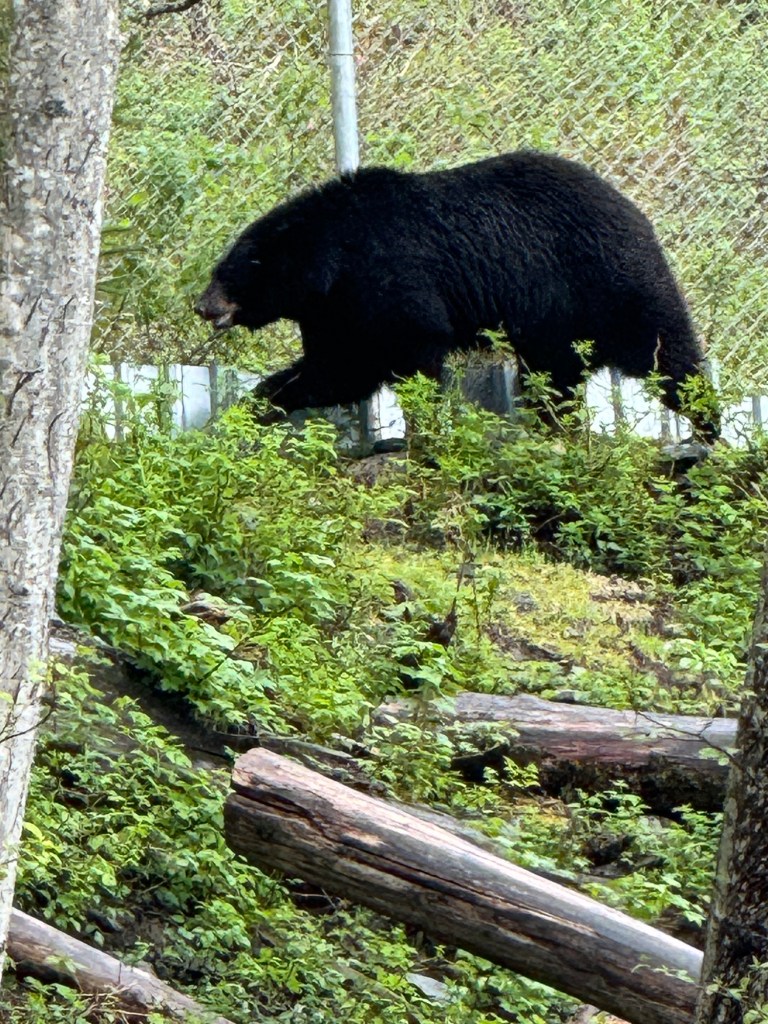
Our second big attraction was Fortress of the Bear. Fortress of the Bear is a sanctuary for orphaned bears that is located in a former pulp mill 6 miles out of Sitka. It was founded by a hunting guide from Oregon and his wife. The idea was born when the Alaska Department of Fish and Game asked him to kill two orphaned brown bear cubs and he could not bring himself to do it. The policy at the time was to euthanise orphaned cubs. Unfortunately, this was an uphill struggle. The Alaska Department of Fish and Game, as well as a number of local conservation organisations were fiercely opposed to the idea of having a bear sanctuary. There were also some concerns about the suitability of the site for housing animals. The first step was when the state of Alaska brought in a bear expert from Houston zoo to evaluate the site. She thought what the founders wanted to do was achievable, but the Alaska Department of Fish and Game mandated that the couple had to prove over a 12 months period that they have the ability to nurture animals there. Initially they decided to take care of pigs on the site and eventually added a range of other farmyard animals. Even after this proved to be a success, they were repeatedly denied a permit to house bears. The turning point came when a bear and her three cubs walked into the then empty bear habitat and temporarily made themselves at home. The Department of Fish and Game tagged them. The necessary permits were issued, and the first bear took up residence in 2007. The three cubs that started it all joined in 2010 after their mum died as a result of ingesting plastic. Today Fortress of the Bear is home to 5 coastal brown bears and 3 black bears. Three of the brown bears are local and the other two were rescued in Seward. Two of the black bears also came from Seward and the last one came from Juneau.
The brown bears are housed in a habitat that is centred around two concrete tanks that were used for industrial wastewater treatment when the pulp mill was active. The black bears are towards the back and their habitat includes a woodland area which means they are not quite as easy to see. There are multiple view platforms and a boardwalk linking the habitats. Fortunately, there is a roof above most of the viewing platforms and above the boardwalk, which means that we could watch the bears without getting wet even though it was still raining.
Our last major stop was Sitka National Historical Park. They have a totem pole trail there, which I would have loved to see. However, we headed away from the coastal path where the totem poles are located. At least there were some totem poles near the entrance to the park. Sitka National Historical Park is full of Sitka spruce and western hemlock trees. However, under the shelter of those majestic trees there is a wide variety of other plants that are harvested by the Tlingit people for food and medicine. Our guide pointed out various plants and told us what they were used to. We walked as far as bridge over Indian River. This is not far from where the Battle of Sitka took place. However, the reason she took us there is because this is where a little later in the season the salmon congregate. Apparently, there are so many salmon there at the peak of the salmon run that you would not need the bridge to cross the river without getting your feet wet. This must be quite a sight.
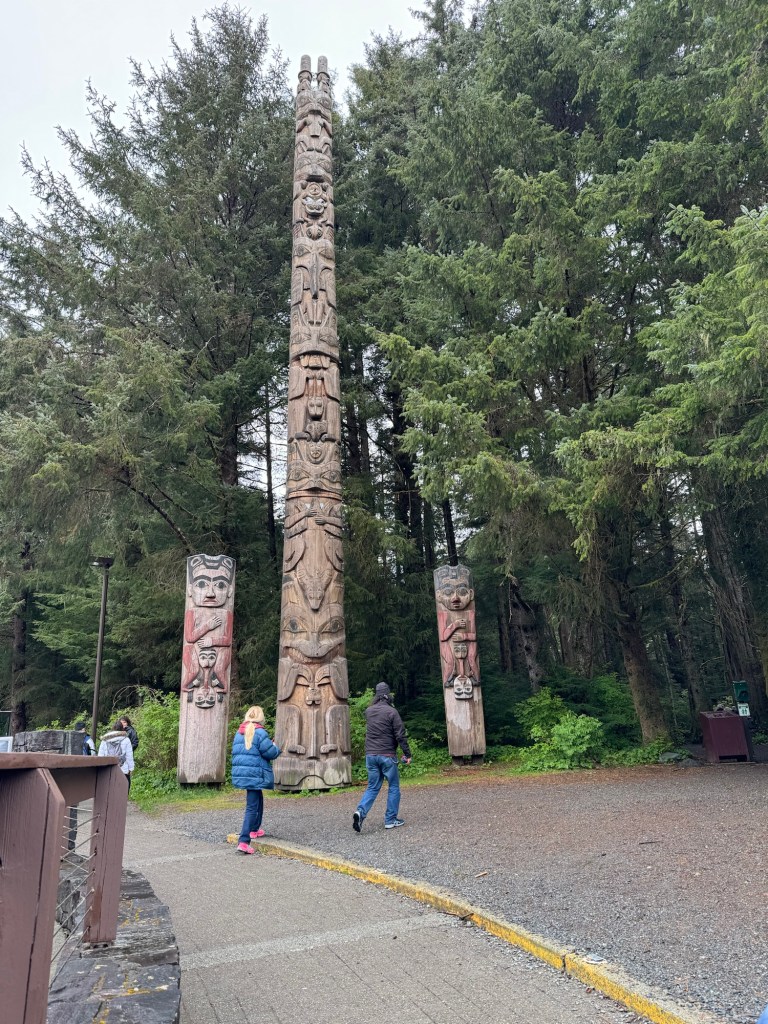
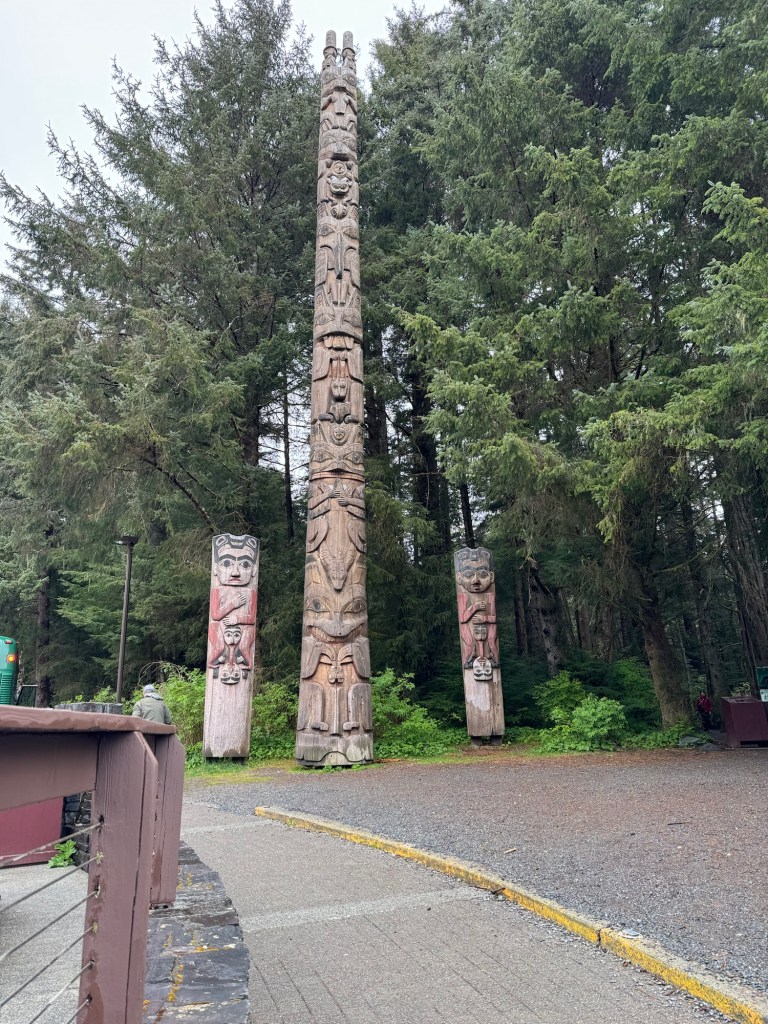
We headed back to the minibus and drove to our last stop, Japonski Island. Japonski Island is connected to Baranof Island and Sitka by the O’Connell Bridge. Japonski Island is home to the airport, the hospital, the university, one of the high schools and a coast guard station. It also provides some nice views across to Sitka. Our guide offered us that we could get out and take some photos, but the rain had picked up again and we all passed. After this we headed back to the Centennial Hall where we said goodbye to our guide and our group.
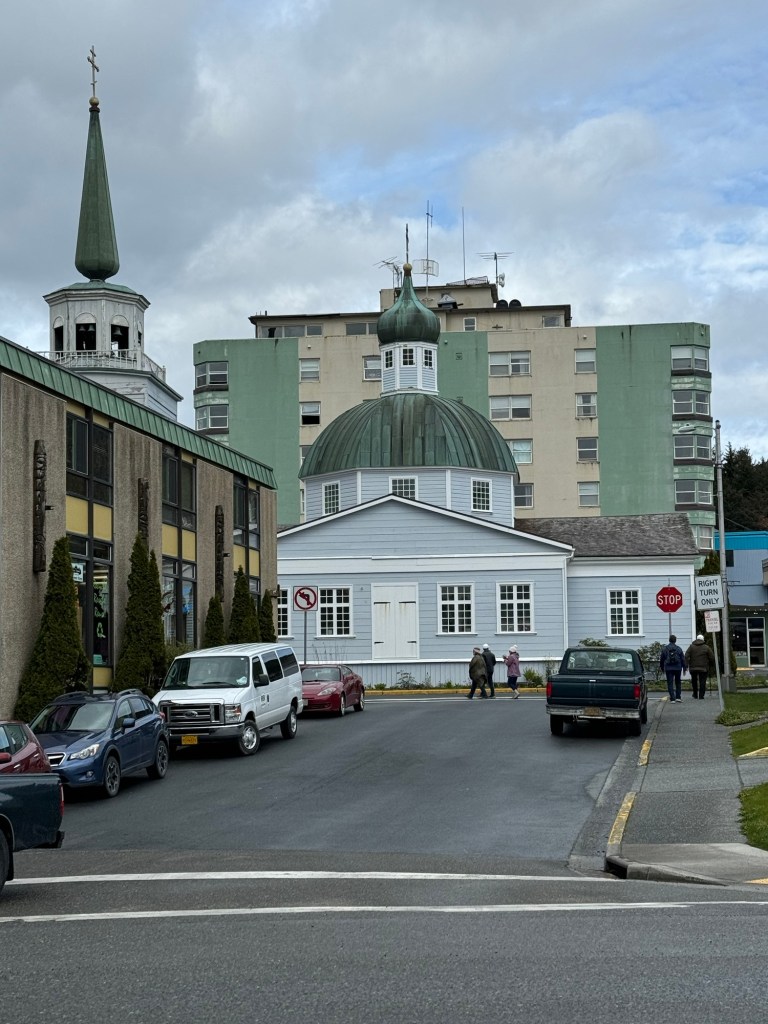
Fortunately, the rain had stopped again, and we headed over to where the two churches are. On the way, we stopped by the shop that where we browsed earlier. I got a couple of long-sleeved tops and a couple of fridge magnets and Graham got his underwear. Then we stopped at the Lutheran church. I was raised in the Lutheran church and Alaska is about the last place I would expect a Lutheran church. The original building was built in 1843 and the congregation founded on the say so of the Russian governor of Alaska who came from Finland and was Lutheran. The original church was the first Protestant church on the west coast of North America. When Alaska was sold to the United States, a lot of the congregation moved back to Europe and the building fell into disrepair. The original building was demolished in 1888 and the plot where it once stood remained empty for 54 years. Fortunately, Sheldon Jackson, a Presbyterian missionary, visited the abandoned church shortly before it was knocked down and preserved the furnishings and organ by taking them to the museum he had established at the Presbyterian Mission. In 1940, the congregation was re-established, and a new church was built. That church burned down in 1966 when much of downtown Sitka was destroyed, It was rebuilt a year later, but once again suffered serious fire damage in 1993. Fortunately, the furnishings and the organ survived both fires. We met a lovely couple at the church, and they were fascinated by the fact that I was raised Lutheran in Germany. They showed us round the church and also showed us a diorama of historical Sitka that was in the vestry. I wish we had been there on a Sunday, and I could have attended a service there.
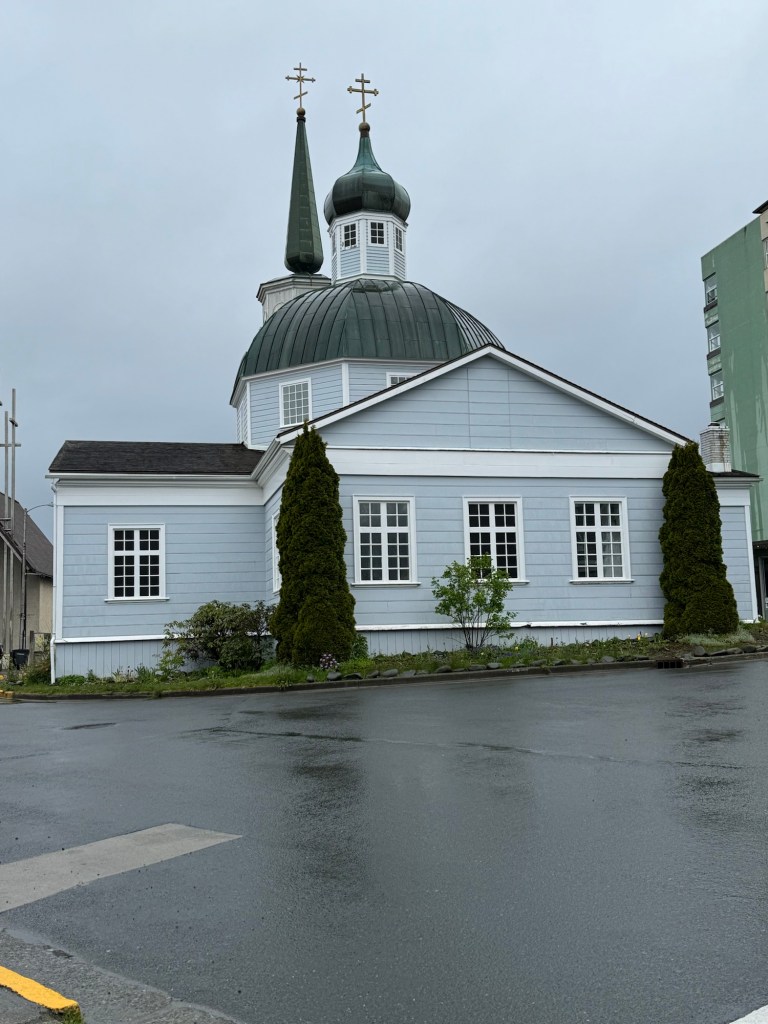
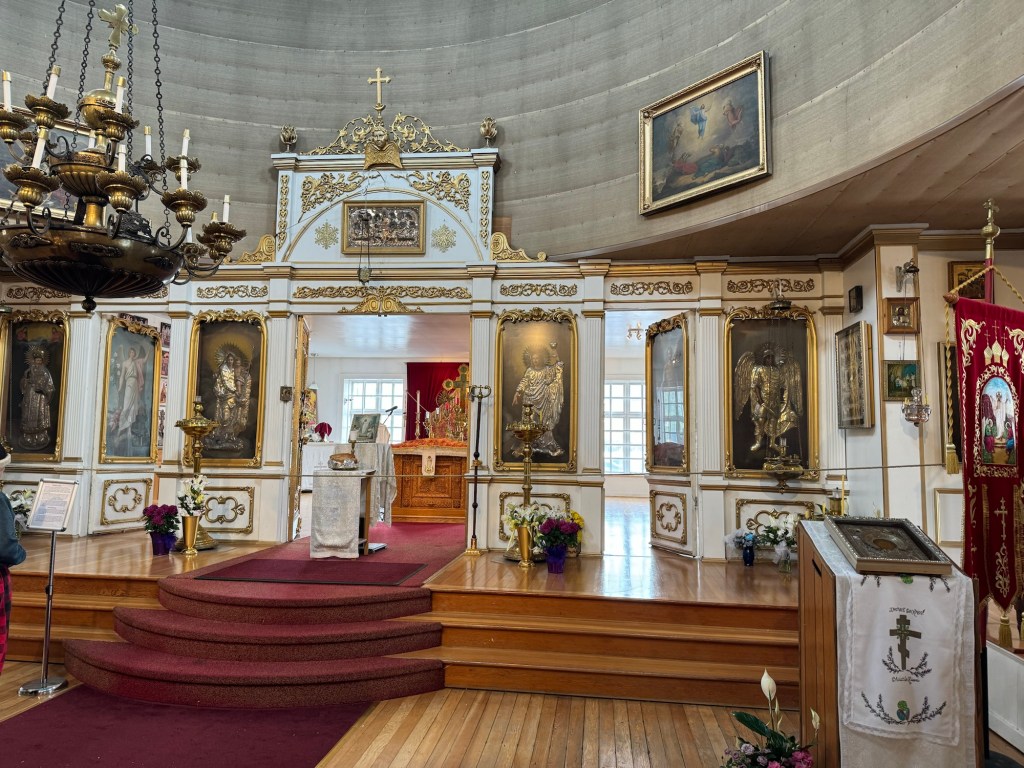
Once we had said goodbye to the couple, we headed across the road to St. Michael’s Cathedral. St. Michael’s Cathedral was the earliest Orthodox cathedral in the New World. It was built in the nineteenth century, when Alaska was under the control of Russia, though this structure also burned down in 1966. It was rebuilt based on historical drawings. Where the Lutheran church is very plain and functional, which is the case with many Lutheran churches, St. Michael’s Cathedral is the exact opposite. It is filled with religious art including some icons that date back to the 17th century. When the church burned down in 1966, it was the oldest church in Alaska. The royal doors in the centre of the Ikonostasis (a wall of icons and religious paintings, separating the nave from the sanctuary) and the chandelier were saved from the fire and were reinstalled in the new church. However, the handmade bells, the large icon of the Last Supper that decorated the top of the royal doors, and the clock in the bell tower were lost. When the church was rebuilt, they recreated the look and feel of the original church with fireproof materials. I have to say, considering the history of Sitka, I was more than a little surprised to find an active Russian Orthodox congregation there. While I admired the artwork, Graham had a chat with what turned out to be the parish priest. After the battle of Sitka, a lot of the Russian invaders married into the Tlingit community. When Alaska was sold to the United states, a lot of those families stayed in Sitka rather than returning to Russia. It is mainly subsequent generations of those families that make up the congregation.
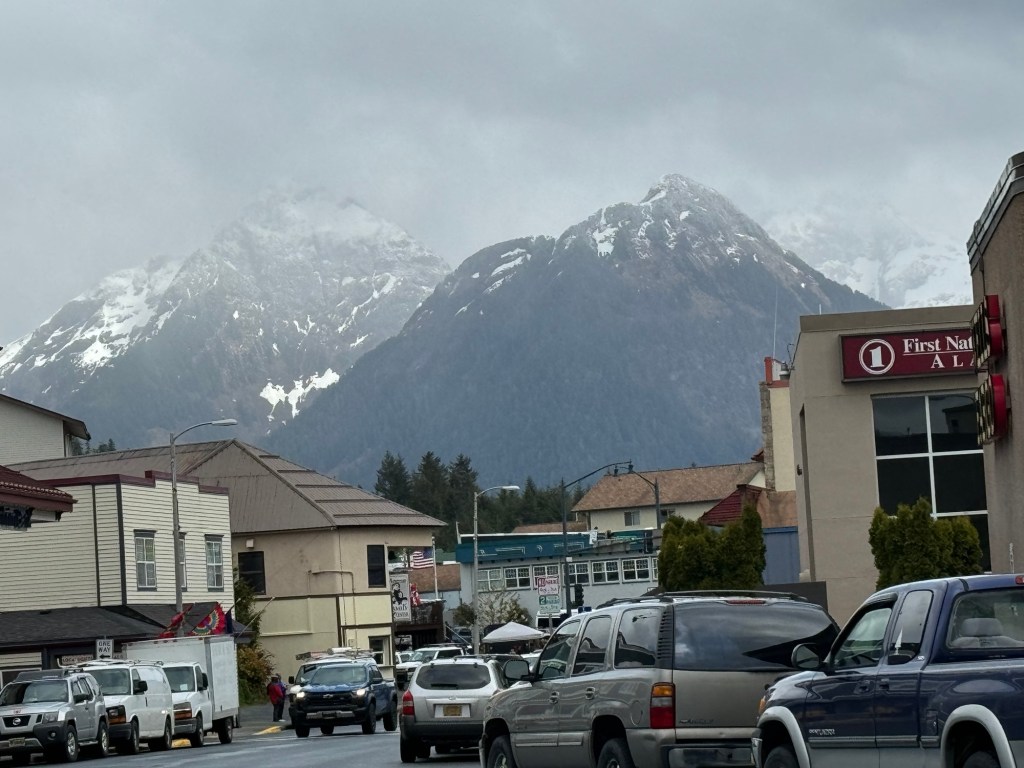
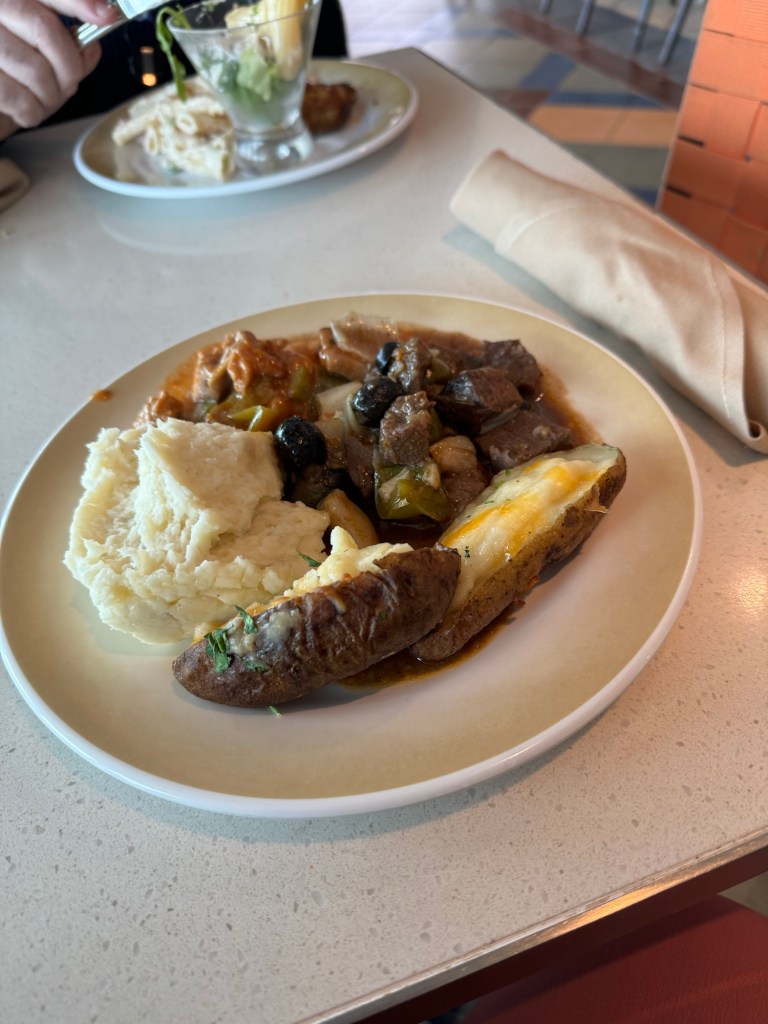
We headed back towards the Centennial Hall, and I took some photos on the way. When we got to the shuttle stop, there was a shuttle waiting and we were on the way shortly afterwards. When we got back to the port, the second ship started to pull in. I had planned to have a look at the shops at the port, but I figured I had done enough shopping for one day. Instead, we headed straight back to the ship. We went back to the cabin to drop off our stuff and then we headed up to the Windjammer for some lunch. Graham had some salads and a steak. I had loaded potato skins, mashed potato, beef stew with olives and chicken cacciatore. I also had a vanilla and chocolate swirl softserve ice cream.
After lunch we took a turn around the promenade deck. We checked out the helipad, but it was pretty blustery up there and we headed back inside. There were very slim pickings for trivia that day and nothing that appealed to us. They did not even offer afternoon that day for the second day running. We went to the Schooner Bar for a bit. Graham had a couple of Irish coffees. I tried a new drink. They had something called a Peanut Butter Tropic, which consisted of Screwball peanut butter whiskey, pineapple juice, bitters, and lemon juice. It was very delicious even though I would not normally go for whiskey. For my second drink I went back to my usual dessert pear margarita.
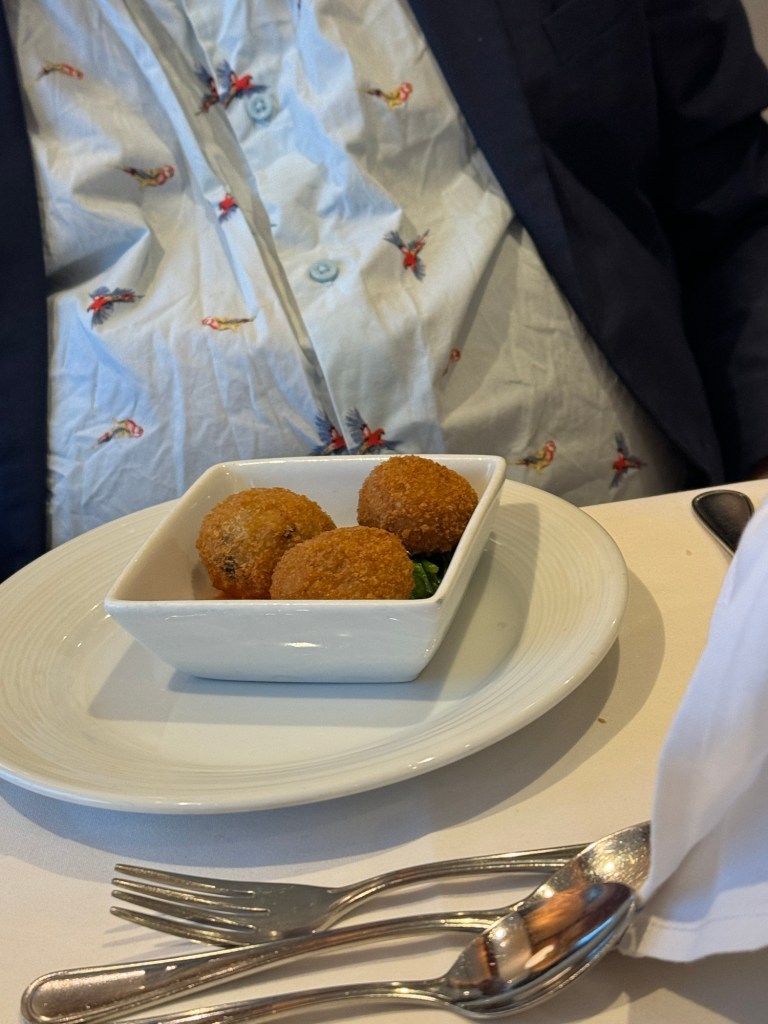
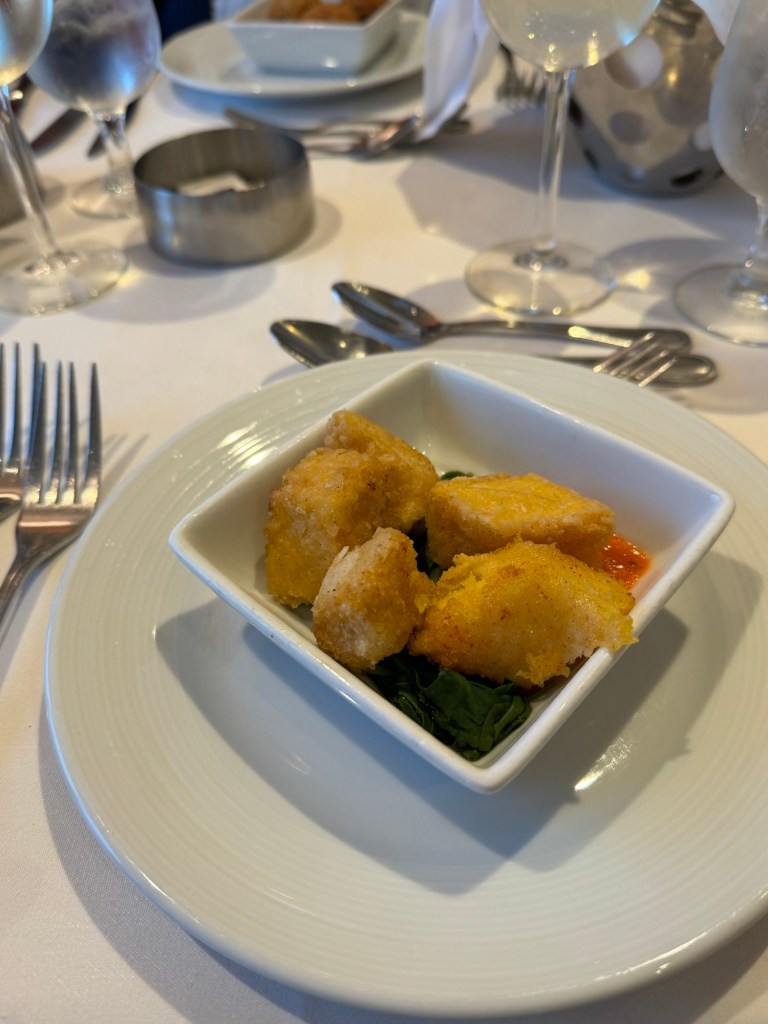
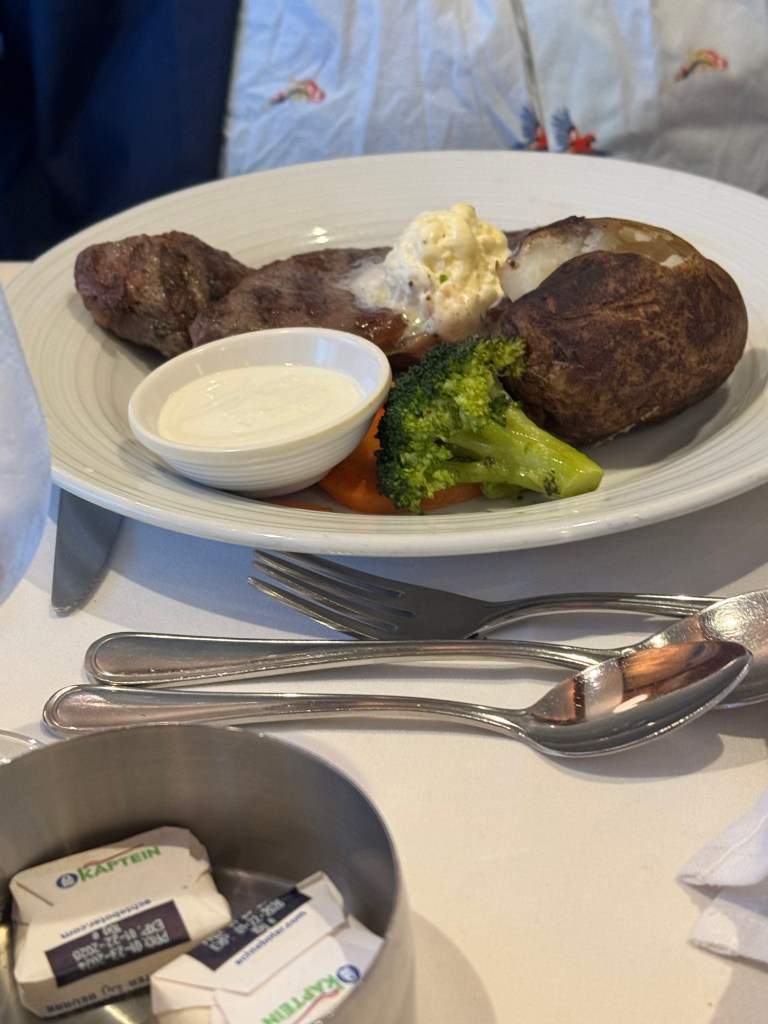
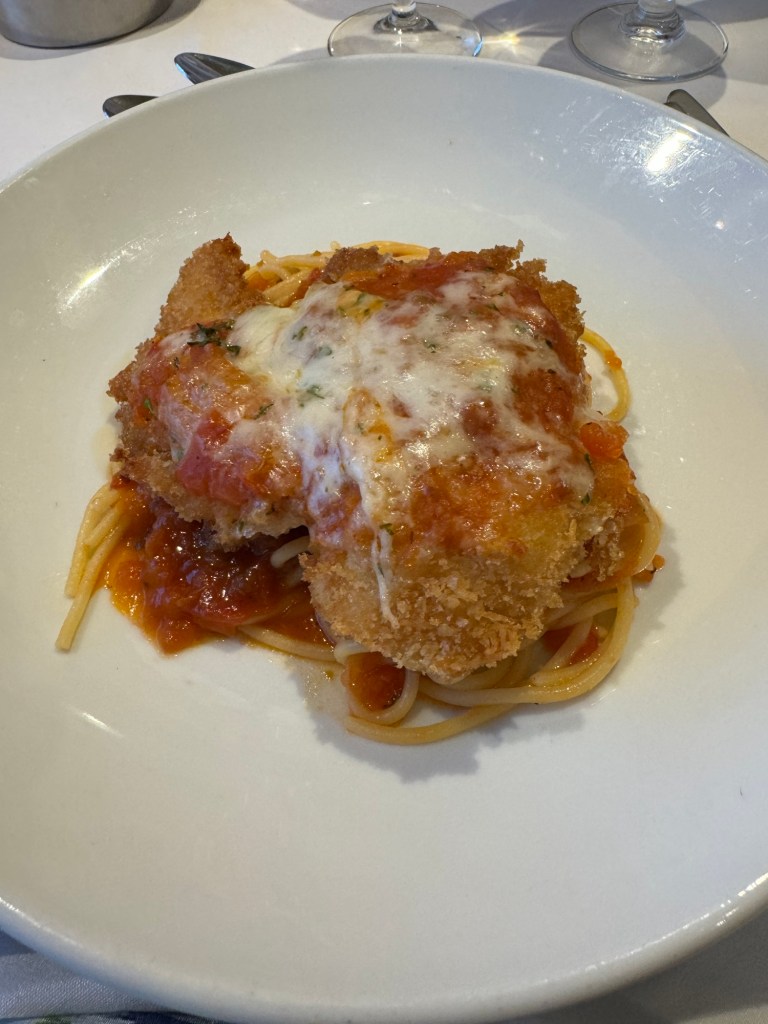
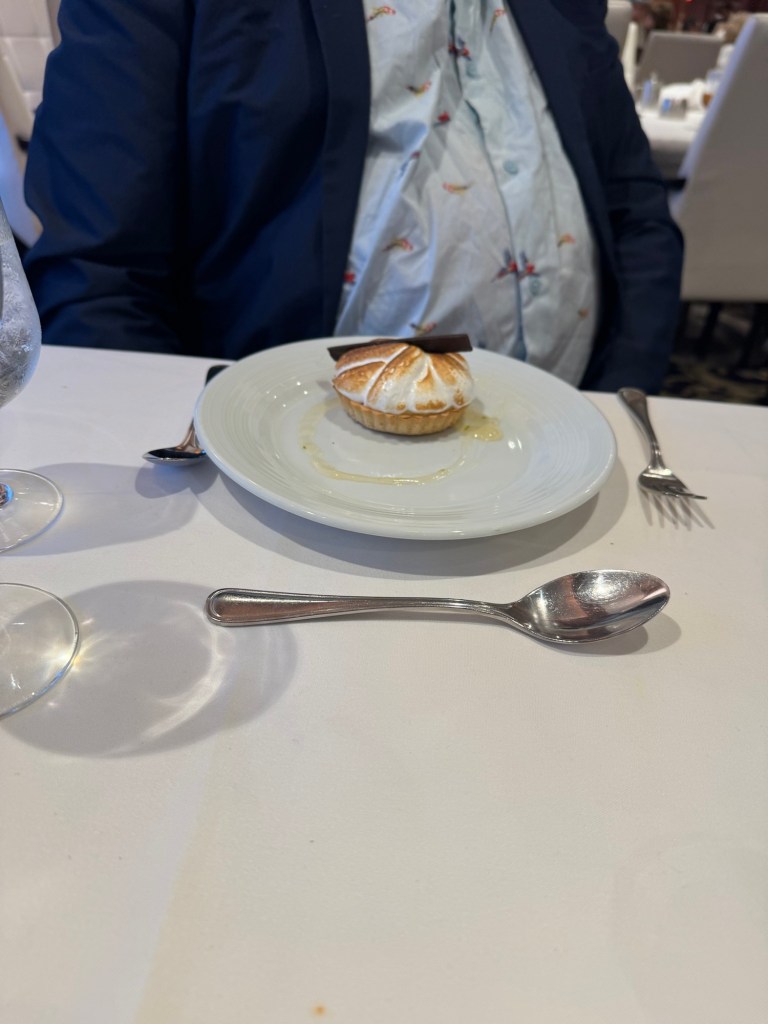
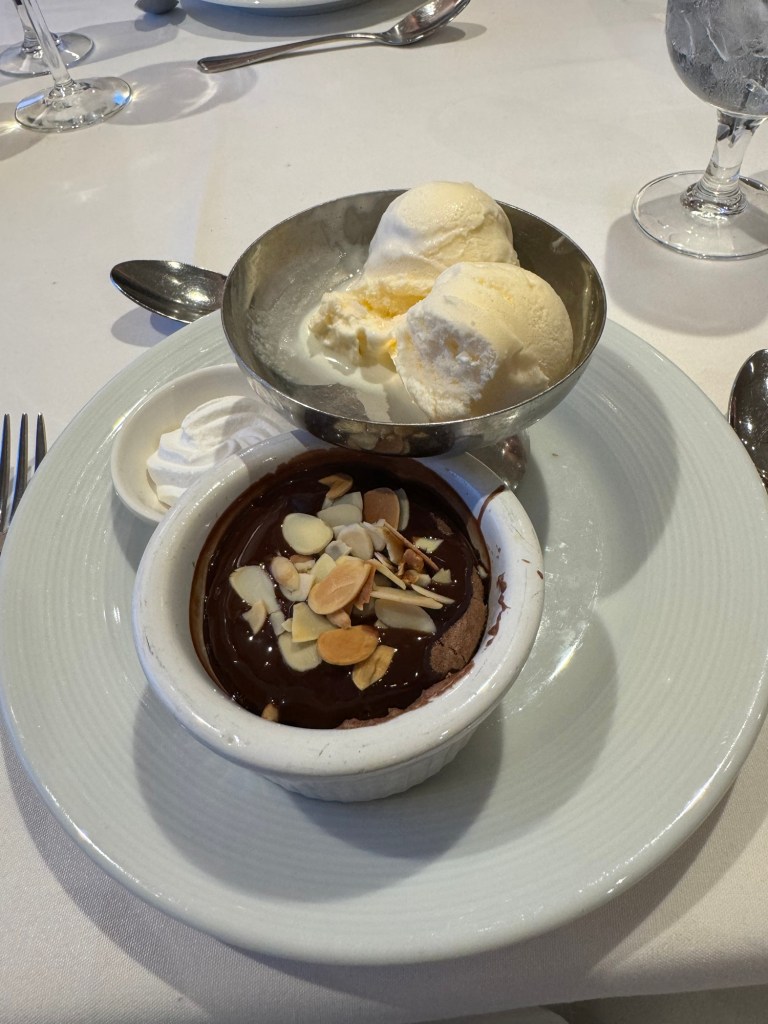
Once we had finished our drinks, we headed back to our cabin for a nap. I had set an alarm and when it went off, we took turns taking a shower. We got changed and headed for dinner. We stopped for some photos before we headed for dinner. The menu that evening was A Taste of Italy. This is probably my favourite of the current menus. Graham started with the parmesan arancini filled with portobello mushrooms and provolone and served with a Romanesco sauce. I had the crispy polenta fries with creamy hazelnut- red pepper spread. For his main course, Graham had the New York strip steak with baked potato and sautéed vegetables. I had the chicken Parmesan with marinara sauce and spaghetti. For dessert, Graham had the lemon curd tartlet, and I had the Italian chocolate-hazelnut cake with vanilla ice cream.

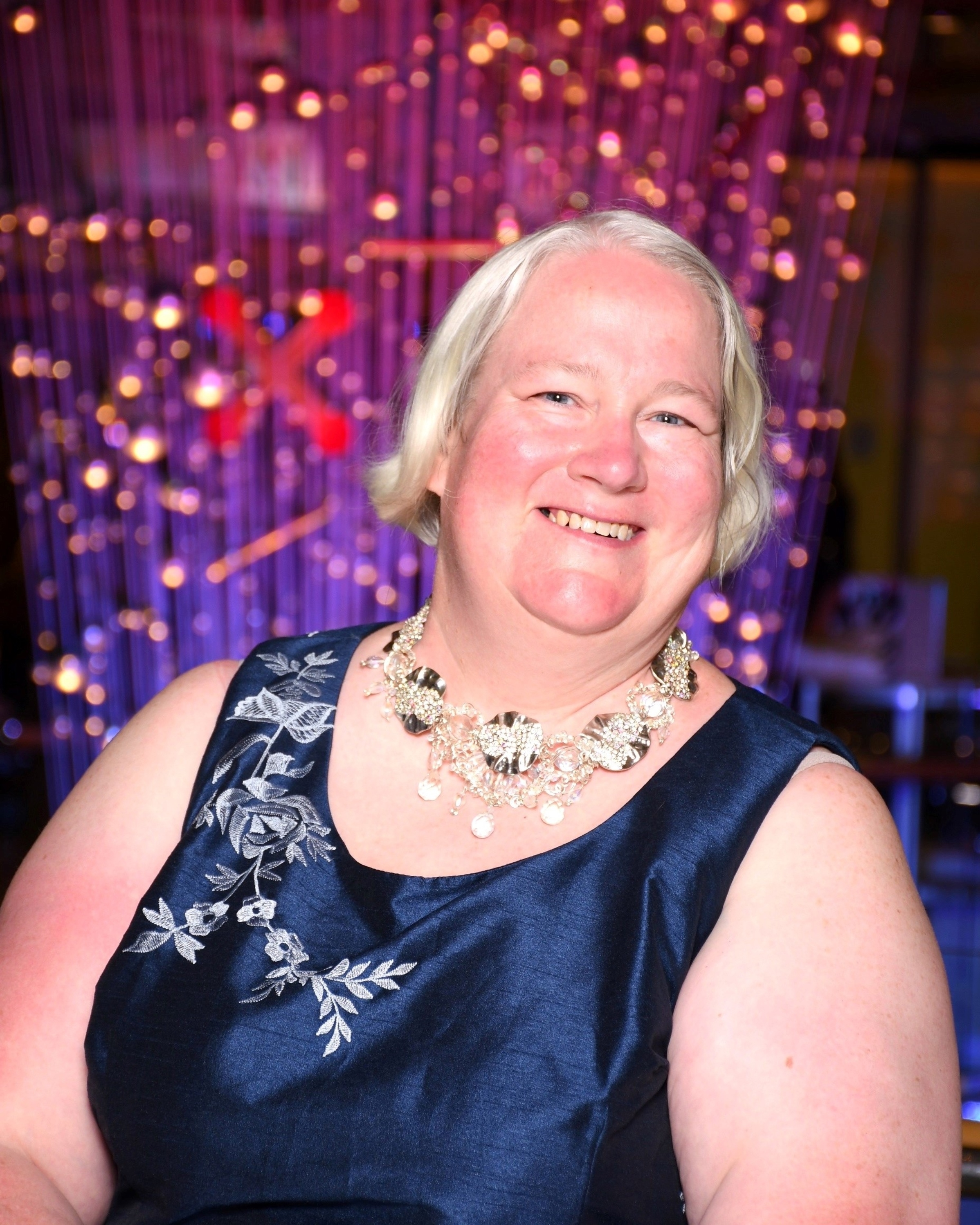
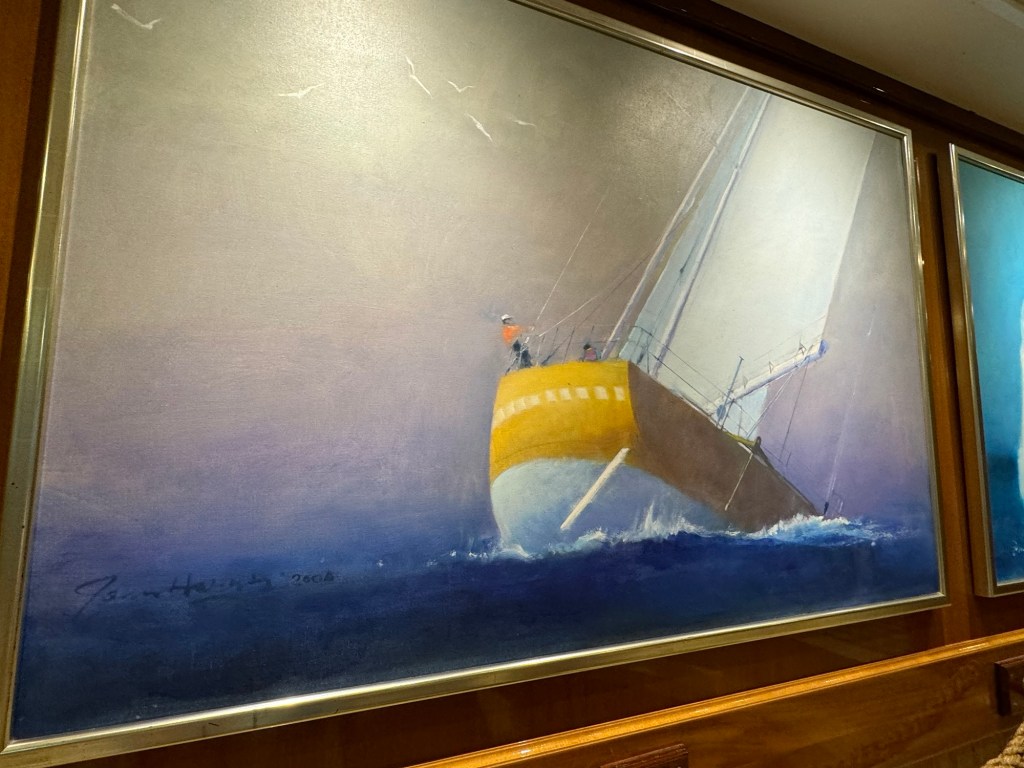
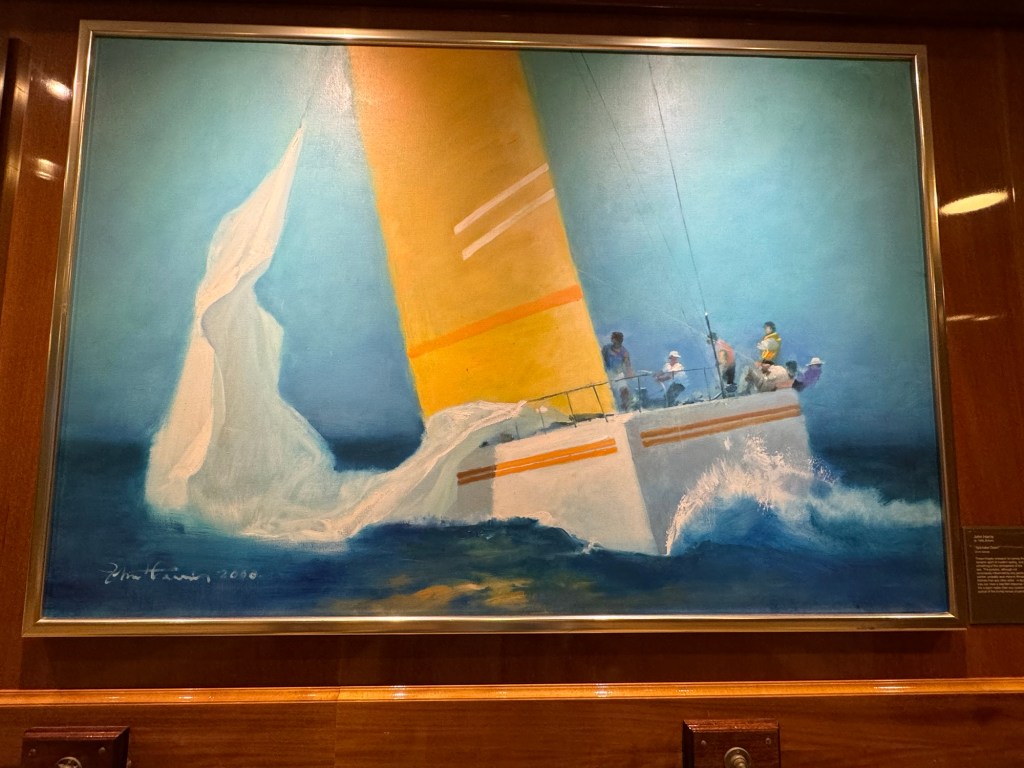
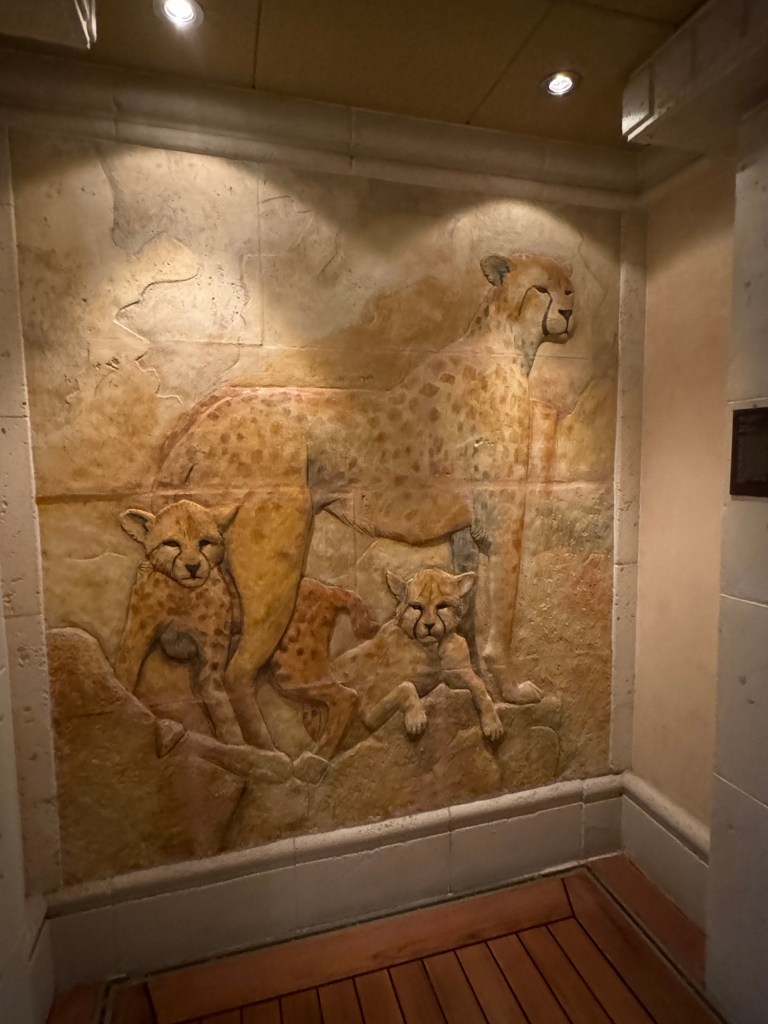
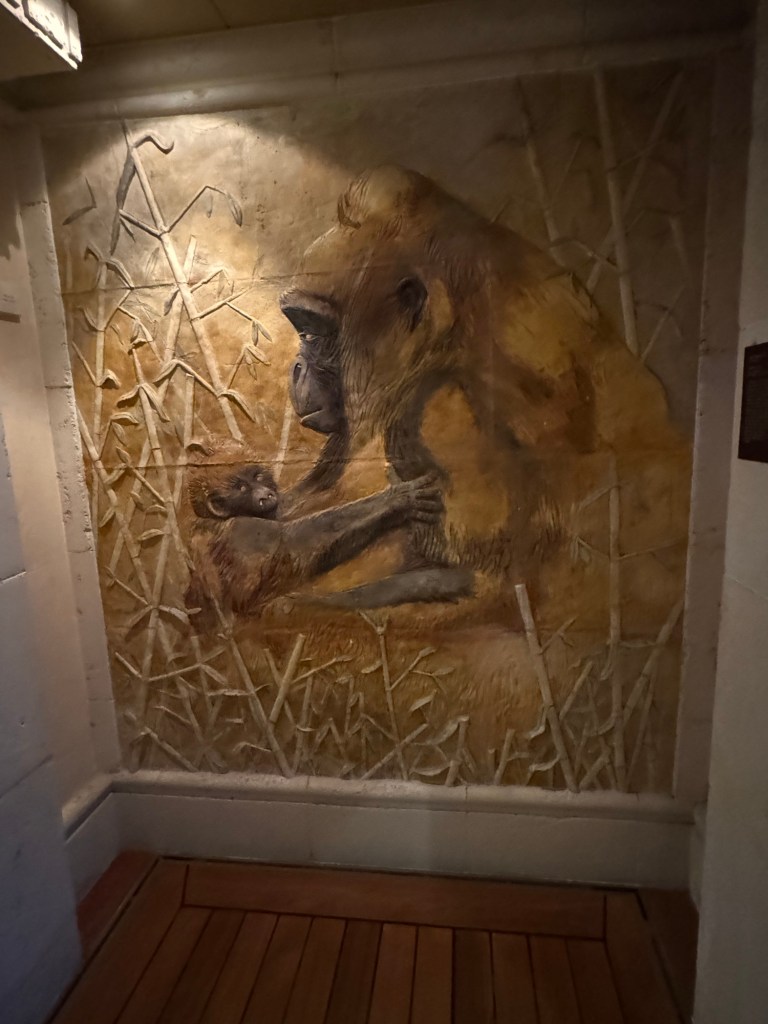
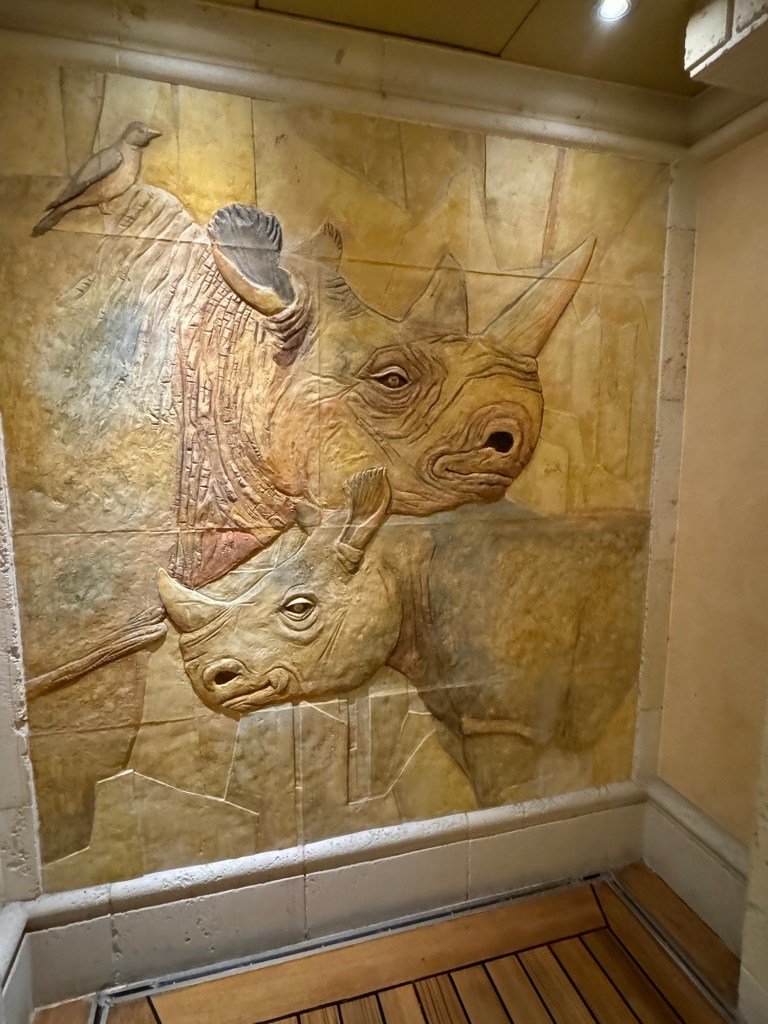
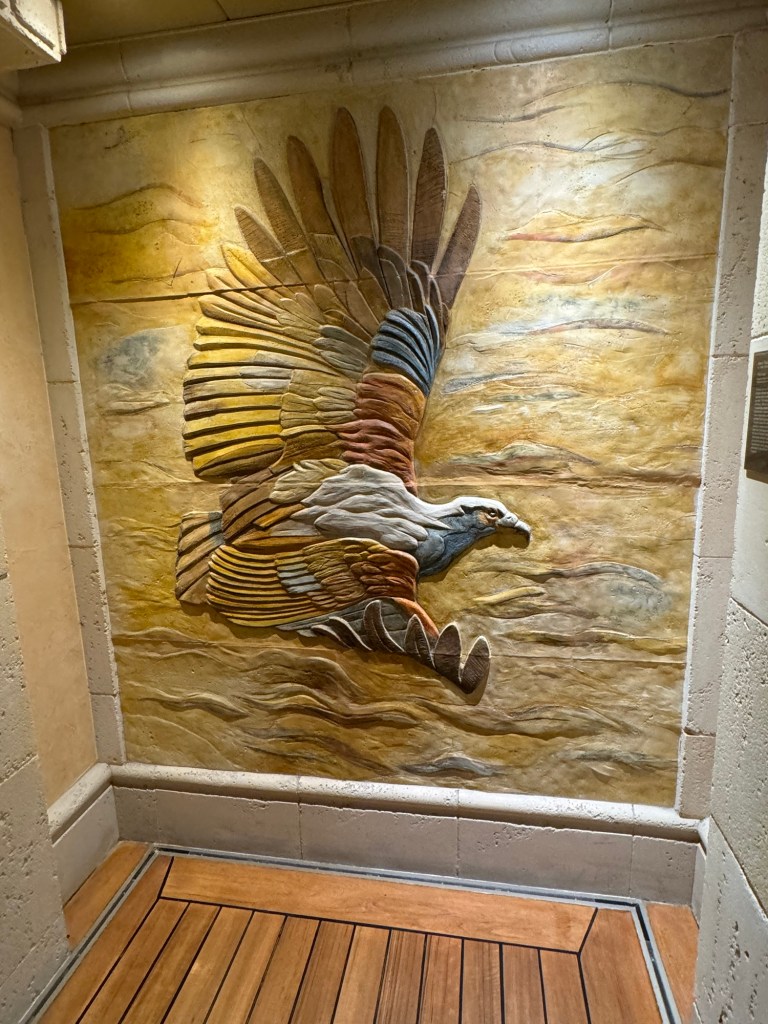
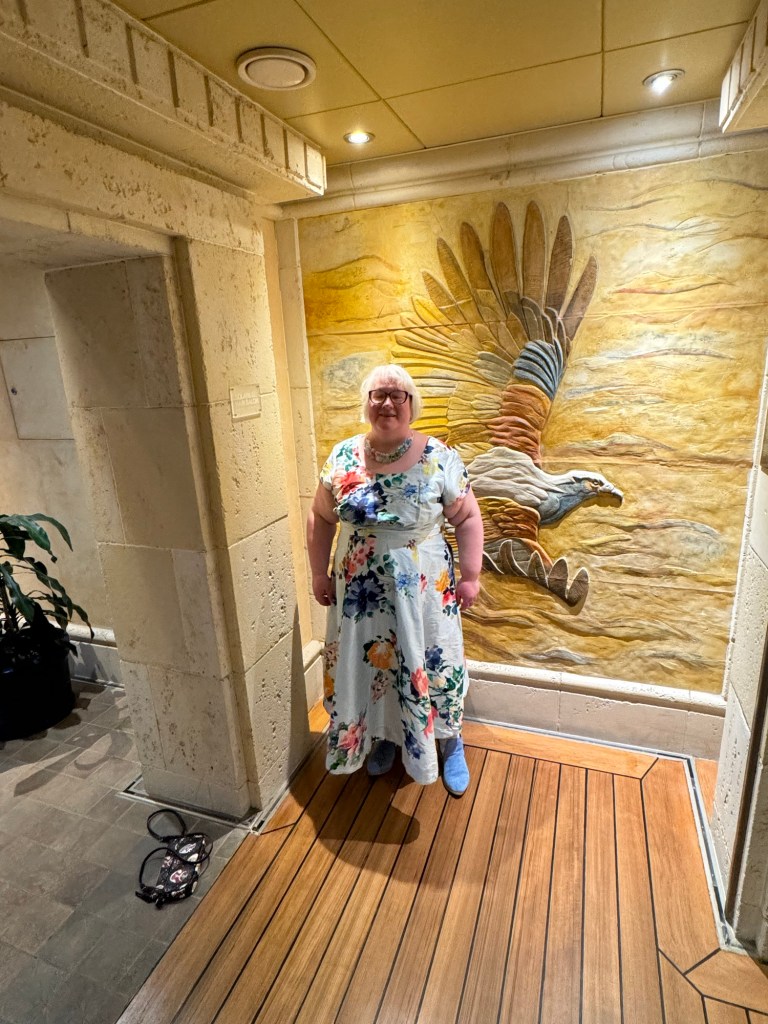
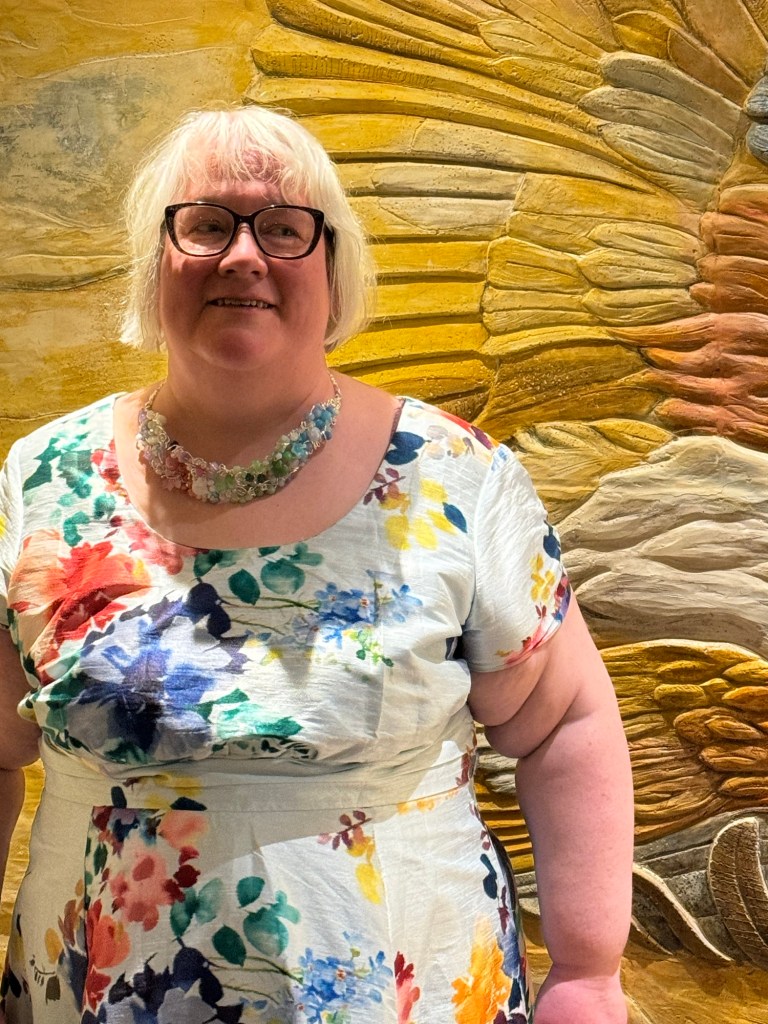
After dinner, we headed up to deck 11 to check out the artwork there. There were some beautiful watercolours of sailing boats. There were also more of the beautiful terracotta panels that I liked so much. Graham took the photo of my outfit in front of the eagle terracotta panel. Once we checked out all the artwork, we headed back to the cabin and got ready for bed.
 Dolphingirl’s Travels
Leave a comment