
We were awake just before 6:00 again. We got up and ready. Then we headed for breakfast. Graham had his usual coffee, orange juice, fruit, fried eggs on toast and oatmeal. I had coffee, fruit punch and some longans. I was delighted that they had a beef broth for the soup noodles that day and had a bowl of soup noodles with bean sprouts and fried shallots. I also had a couple of mini muffins. One was chocolate and the other was vanilla.
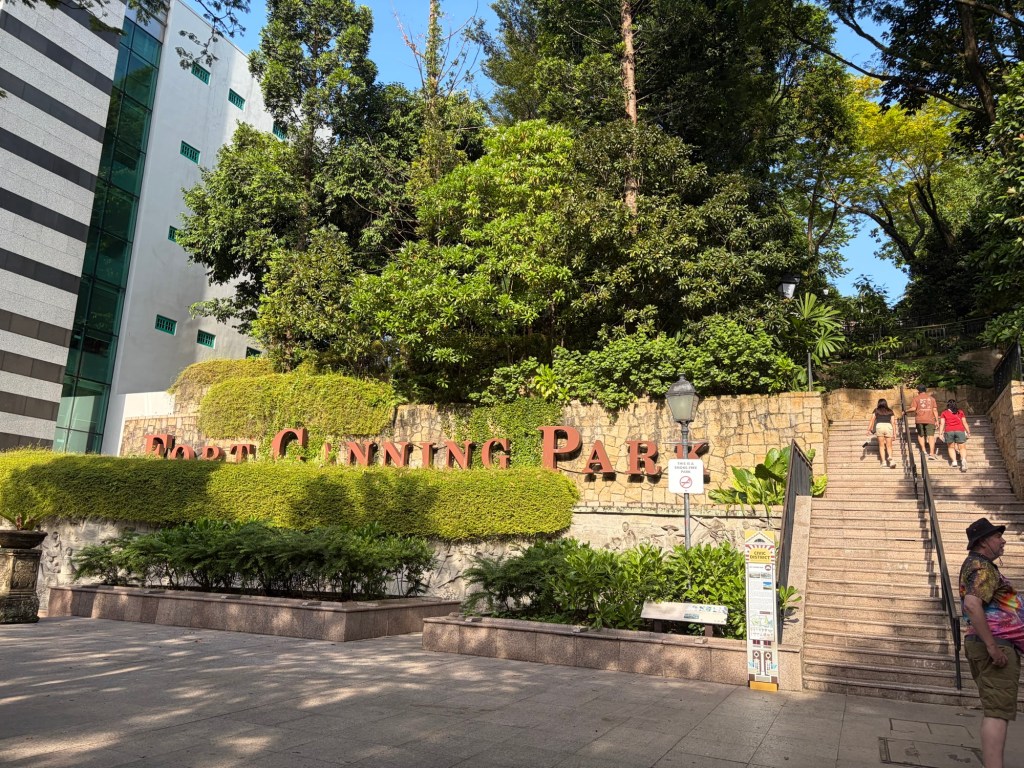
After breakfast, we headed back to the room to pick up what we needed for the day. Then we headed out. This was definitely a kind of “let’s see where we end up” kind of day. Our starting point was Fort Canning Park. The most direct way to get there was taking to the buses. The bus left from across the road from our hotel and the bust route was actually quite interesting. It did not take very long either.
The area around this side of Fort Canning Park is pretty interesting. Just next to the bus stop was the Armenian Apostolic Church of St. Gregory the Illuminator which is the oldest Christian church in Singapore. Apart from the church, there is a memorial garden and an Armenian Heritage Gallery in this complex. It was still closed when we passed, but I think this may be quite interesting.
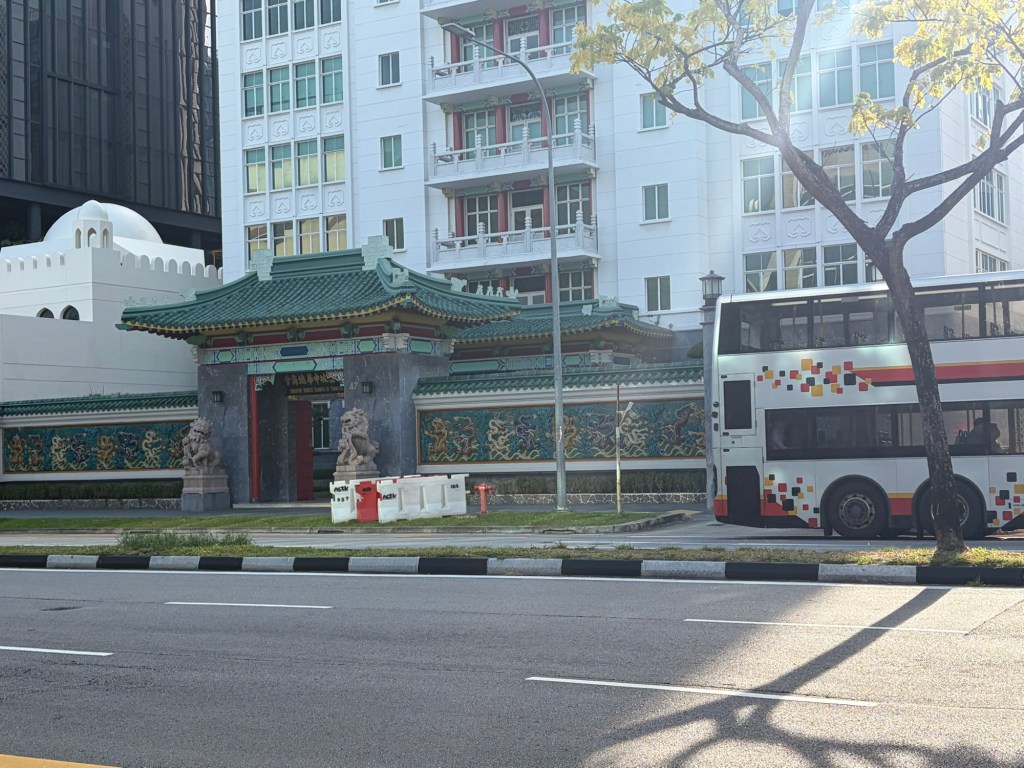
Roughly opposite was an interesting building. I was not sure if this was a Chinese temple or an apartment building. It turned out it was neither. It was the Singapore Chinese Chamber of Commerce and Industry Building. This was the only building in this area that I managed to take a photo of as it was on the opposite side of the road.
We walked past the Central Fire Station, which is in an absolutely beautiful building. We had seen a photo of this in one of the MRT stations the day before, but it is even more beautiful in real life. This is still an active fire station but is also the home to the Civil Defence Heritage Gallery. There were also a bunch of museums up a side road. I think this area has deserved a second look this year.
Fort Canning Park is another place that is absolutely packed with history. It is also a very peaceful place to visit. What is now Fort Canning Park was previously known as Forbidden Hill and then later as Government Hill. According to tradition, what is now Fort Canning Park was home to the five kings of Singapore in the 14th century starting with Sang Nila Utama. Sang Nila Utama gave Singapore its name when he thought he had seen a lion while sheltering from a storm on the land that is now Singapore. According to tradition, the Forbidden Hill was also the burial ground of the five kings. Although there is no prove as such that what is now Fort Canning Park really was the home of the five kings, there are accounts going back to 1821 about ruins of a palace being visible in the area. The early colonial settlers found these sandstone foundations. There were also archaeological findings of objects from the 14th century that are definitely in line with what one would expect to find in a palace.
We know more about the colonial history. In 1822, a residence for Sir Stamford Raffles and his sister’s family was built on what is now Fort Canning Park. His home was later named Government House and was home to a number of governors of Singapore until Government House was demolished in 1859 to make room for Fort Canning. Raffles created the first Botanic Garden of Singapore in the area, and a Christian cemetery was also created on the hill. This was in use until 1865, when it was declared full and closed. In the 1970s the cemetery was exhumed. All that is left of the cemetery today are some headstones along the brick walls (although most of the headstones came from another cemetery), the gothic gateways, and two classical monuments. Most of the headstones that were moved from the old Christian cemetery can be found at St Gregory’s Armenian Church, although the graves are not located there.
As there was no harbour defence, the construction of an artillery fort on the hill started in 1859. This not without controversy especially as hill is so far from the harbour. Nevertheless, an arms store, barracks and a hospital were built. Fort Canning was demolished in 1907 without ever having been used to defend the country. However, the hill was used for various military purposes by British, Japanese, and Singaporean forces until the early 1970s. There are still some signs of this era with two cannons still in place as well as underground bunker that is called the Battle Box and is now a tourist attraction. The hill has been used as a park since the early 1970s and became a historic park under the present name in 1981.
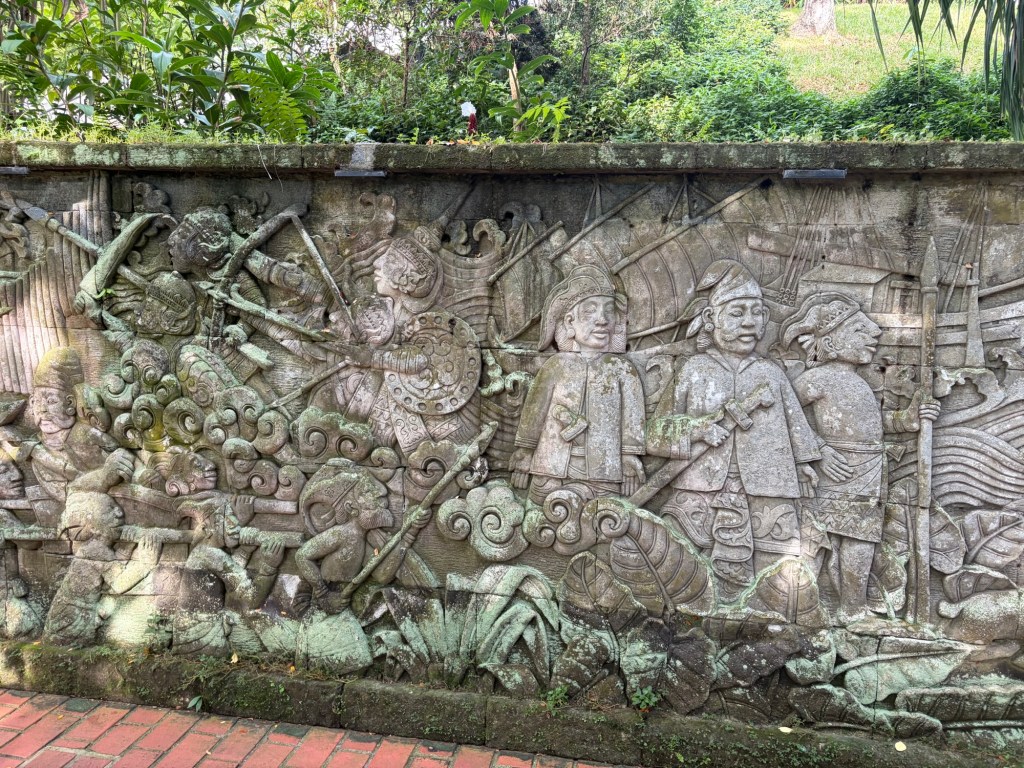
I should have been forewarned based on the name. I was however surprised that there were a lot of stairs leading up to Fort Canning Park. About halfway up the hill, we came across a beautiful mural wall, which was carved by Balinese artisans. It shows various events of the 14th century as well as the wider history of Singapore. It is very interesting. Once we got to the mural wall, we had the choice between more stairs or a winding path uphill. We took the path.
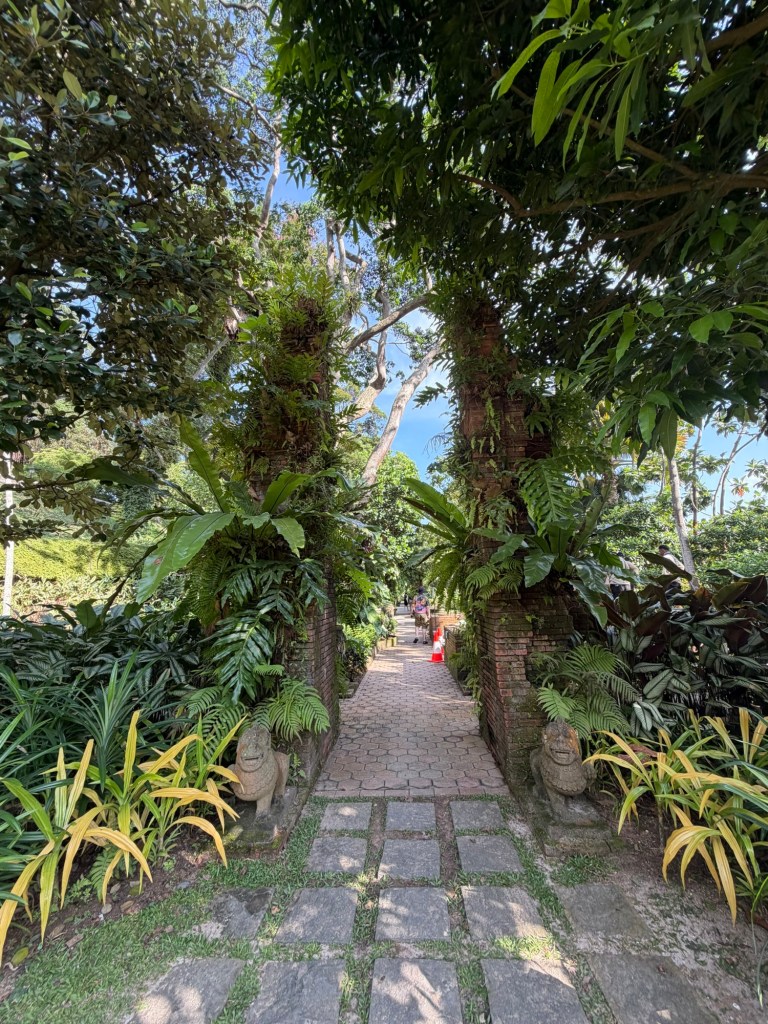
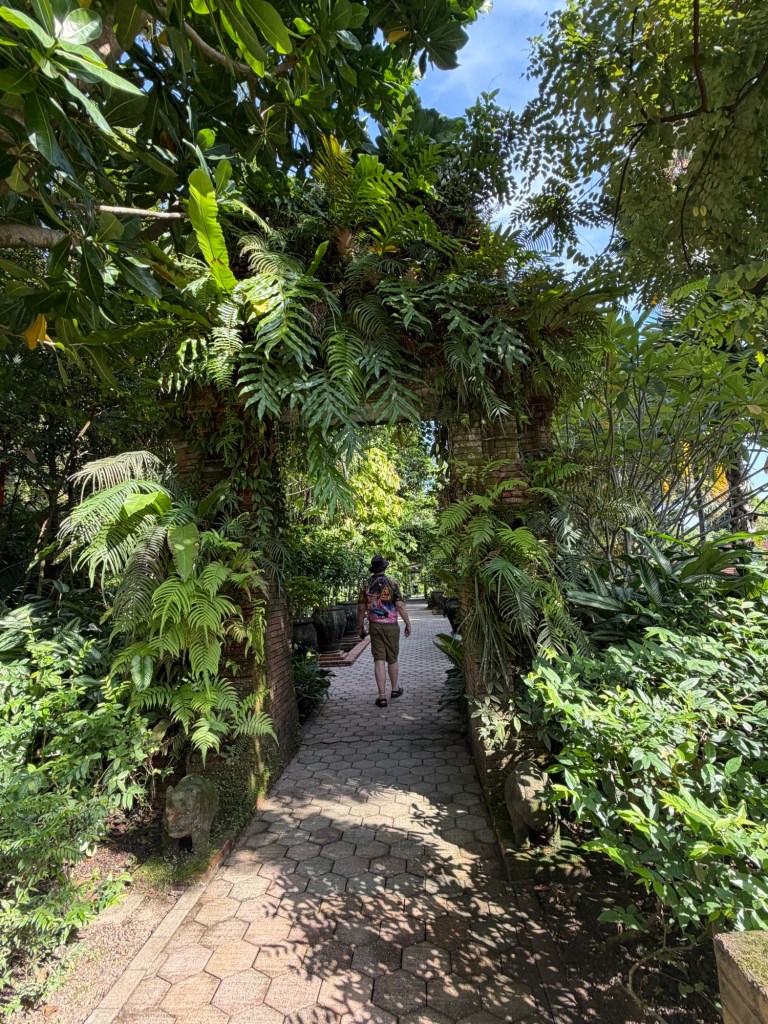
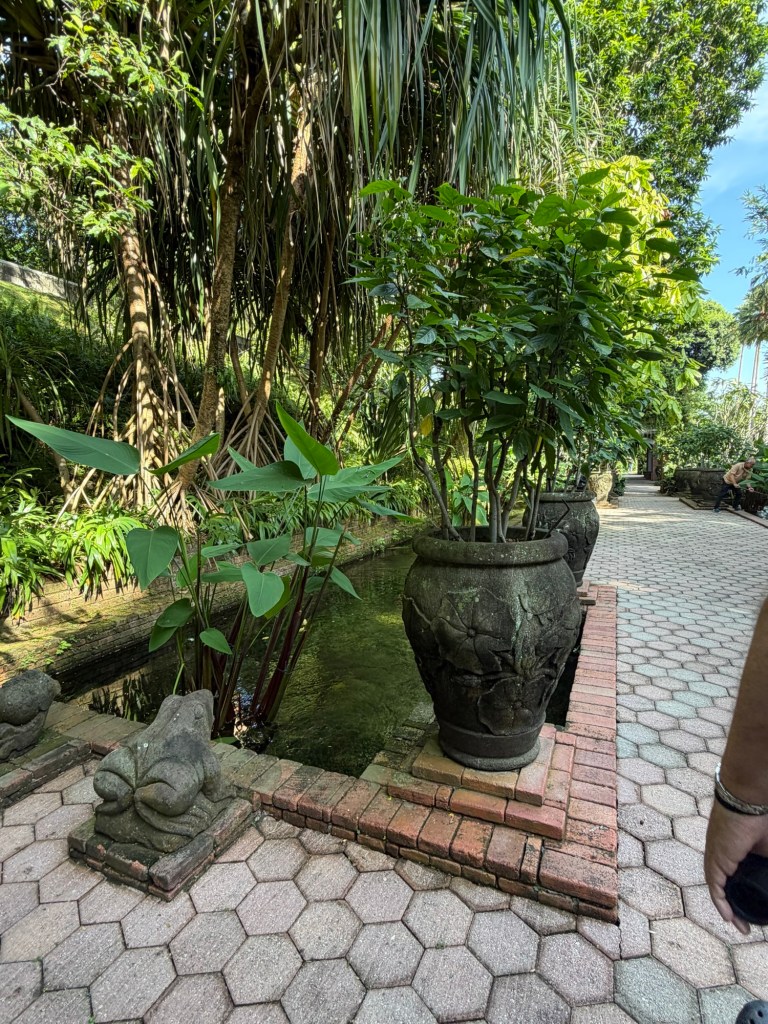
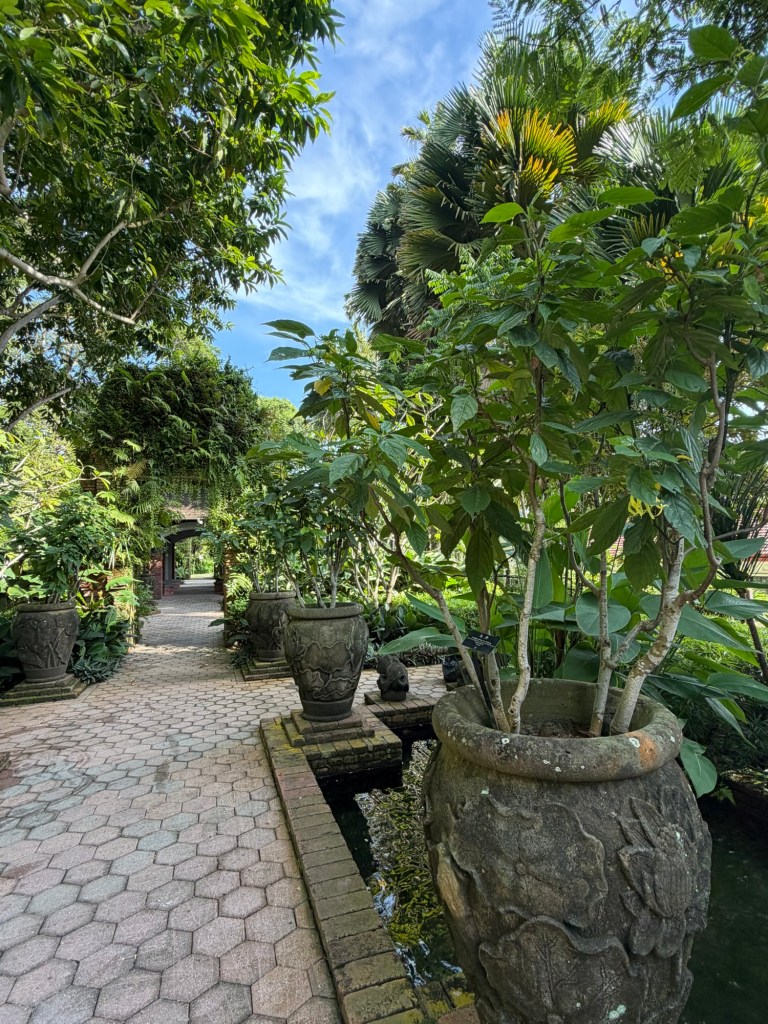
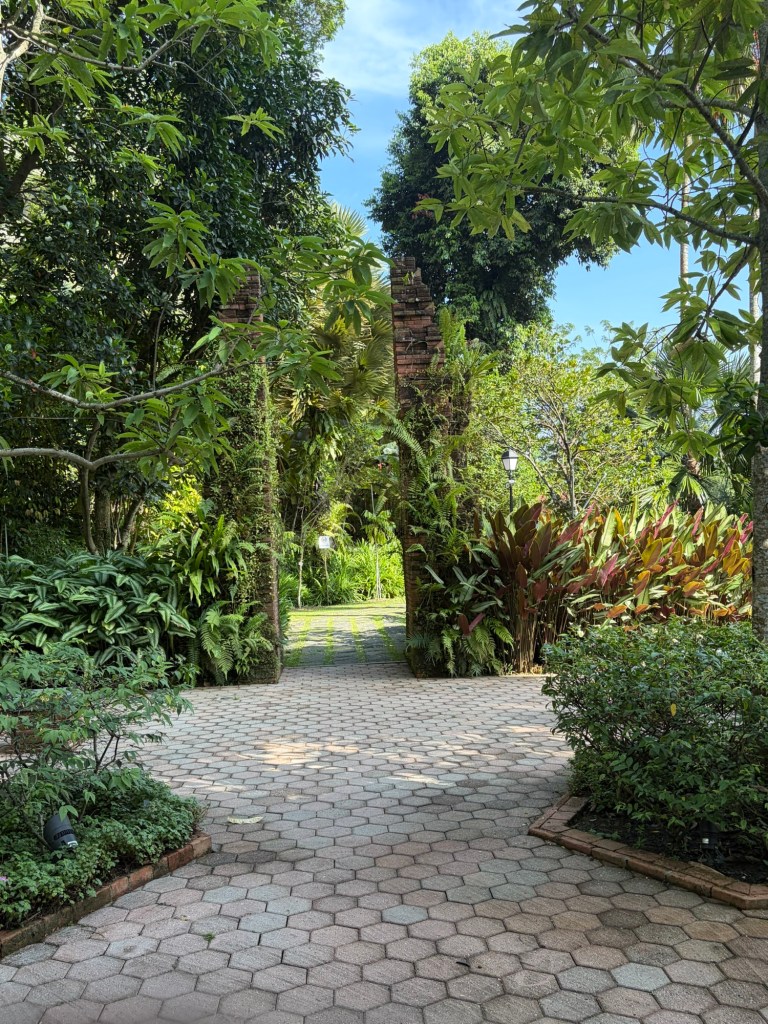
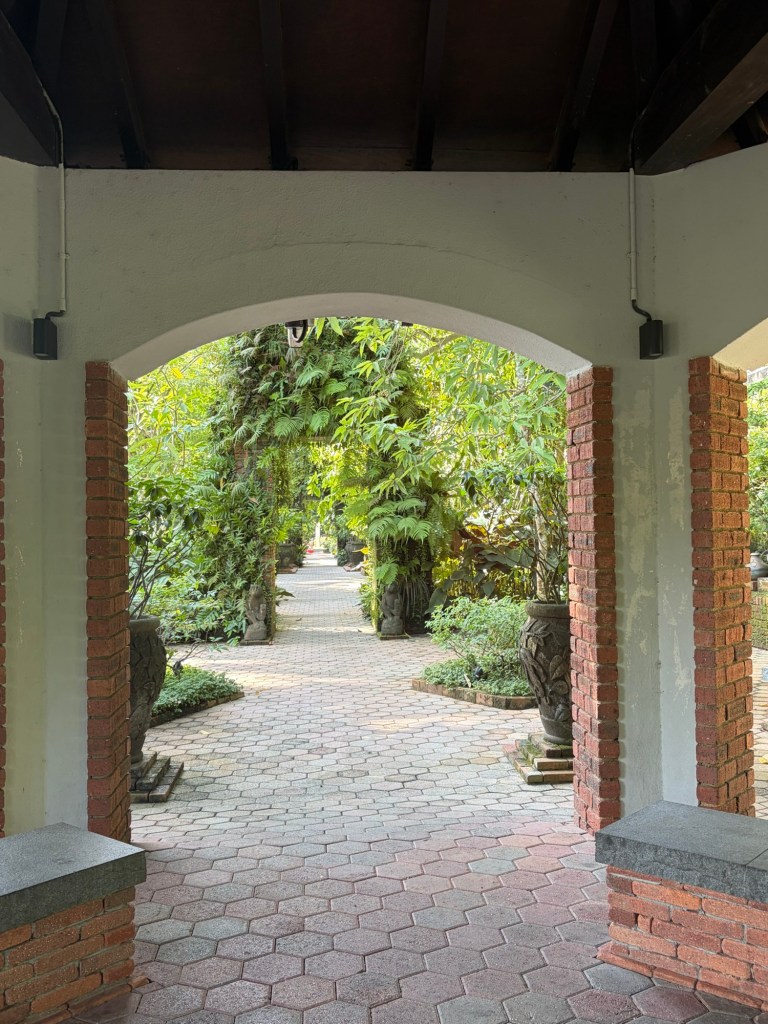
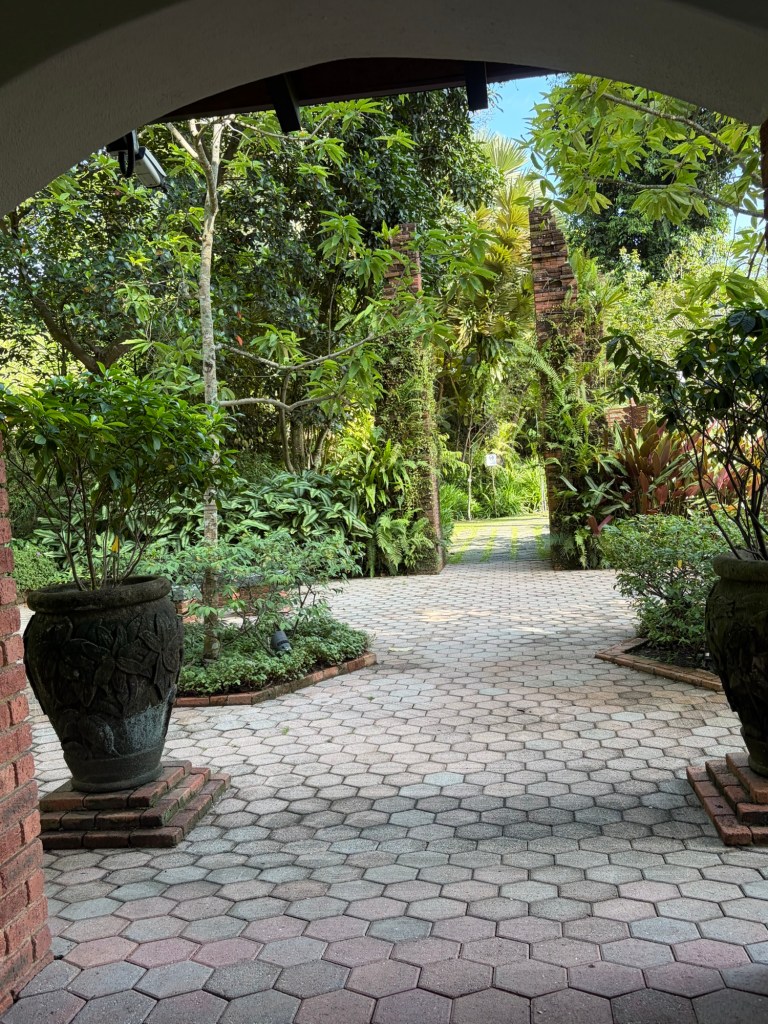
We headed up to a pavilion that contained the public restrooms. They were rather nice for public restrooms. There were also some benches outside the pavilion. As there were a lot of birds around, we sat down for a while and checked out what was around. Then we moved on. At this stage we could have turned left for Raffles Garden. Raffles Garden is home to plants that Raffles may have studied or encountered on his travels in Southeast Asia as well as the flagstaff and the historic Fort Canning lighthouse. We turned right towards Sang Nila Utama Garden. Sang Nila Utama Garden is one of nine historical gardens which opened in 2019. It is named after the Palembang prince that founded early Singapore. The garden features split gates, reflecting ponds, various sculptures as well as magnolias, gardenias, and fruit trees. The area is very pretty.
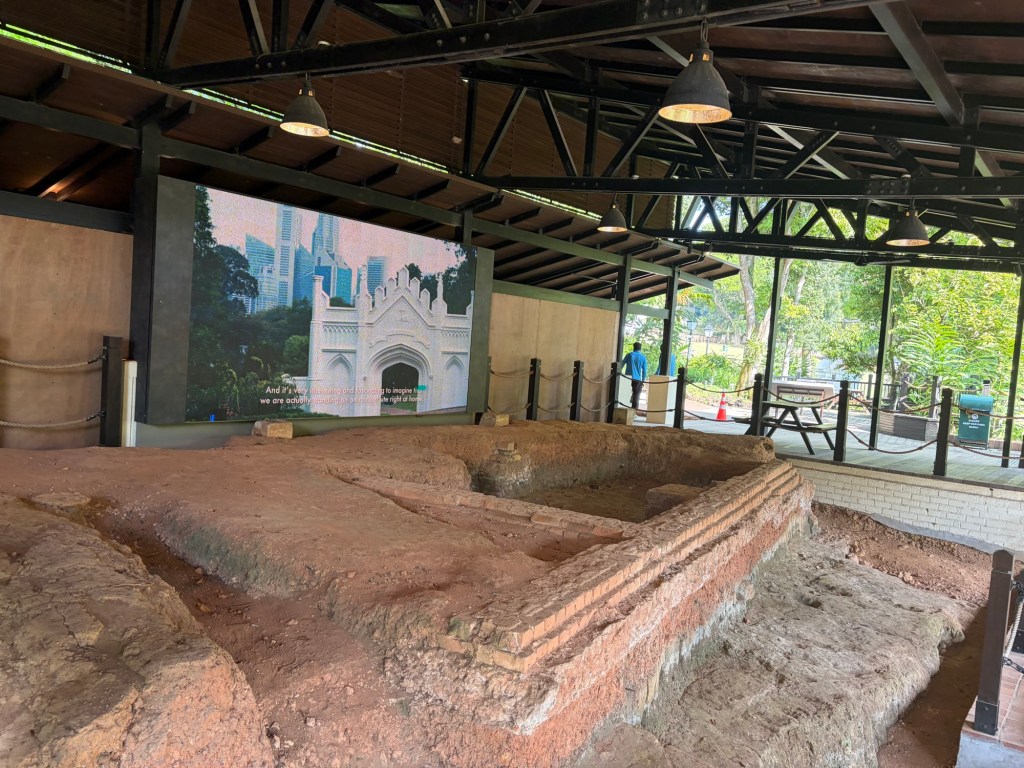
Next up was the Artisan’s Garden, which is an archaeological dig site where they found evidence for an ancient artisan’s workshop back in 1984. Some of the dig site has been preserved and can be seen in this area. There is also short video about the history of the site as well as some display cases with some of the finds like glass fragments and beads from the 14th century. This suggests the area was used by artisans who turned glass into jewellery, which seems to support the claim that the hill was once home to a royal palace. Elsewhere on the hill gold, coins, and pottery per discovered also supporting this theory.
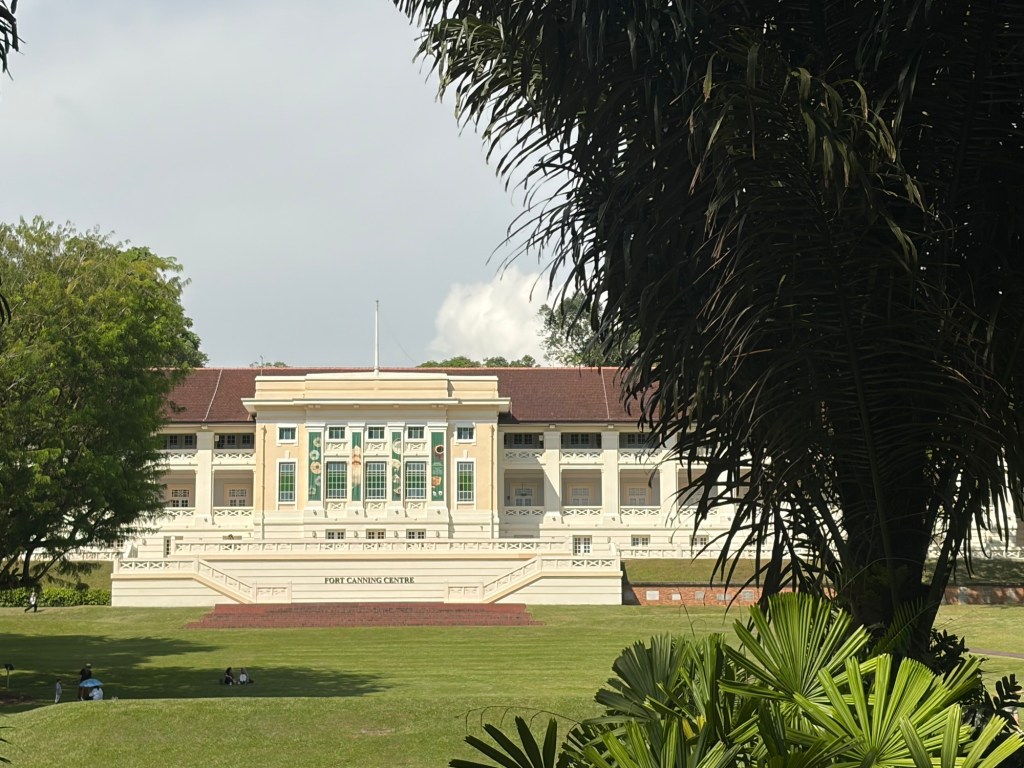
When we moved on, we came to Fort Canning Green, which was where the Christian cemetery was located. At the opposite end of Fort Canning Green is Fort Canning Centre. This is a very impressive building which was built by the British in 1926 and was used as army barracks. Over the years, it has served various purposes from squash courts and offices to an arts and culture centre. Over the years it also housed various exhibitions. In 2022, it was turned into the Fort Canning Heritage Gallery. We did not go inside but only admired the building from the outside.
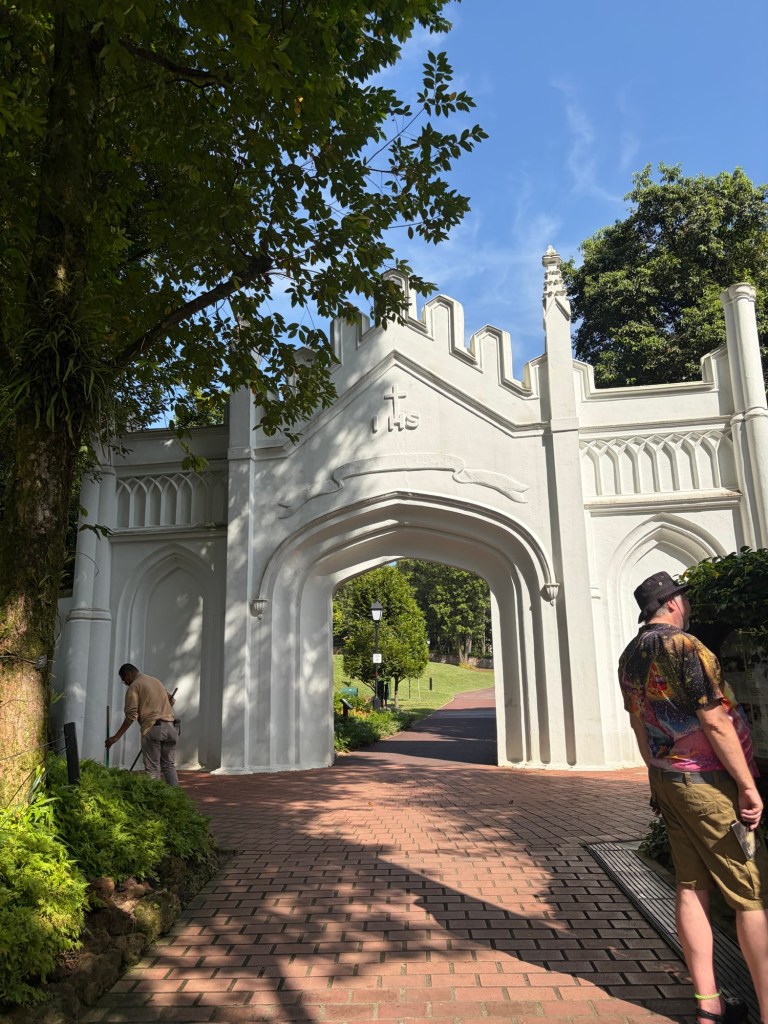
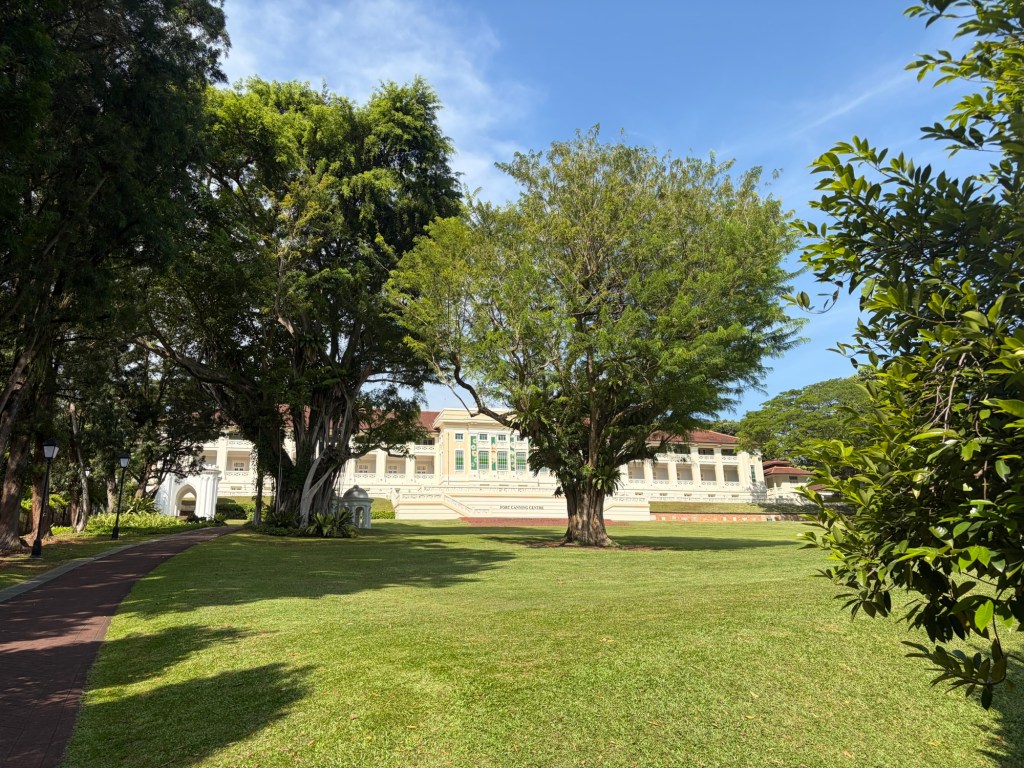
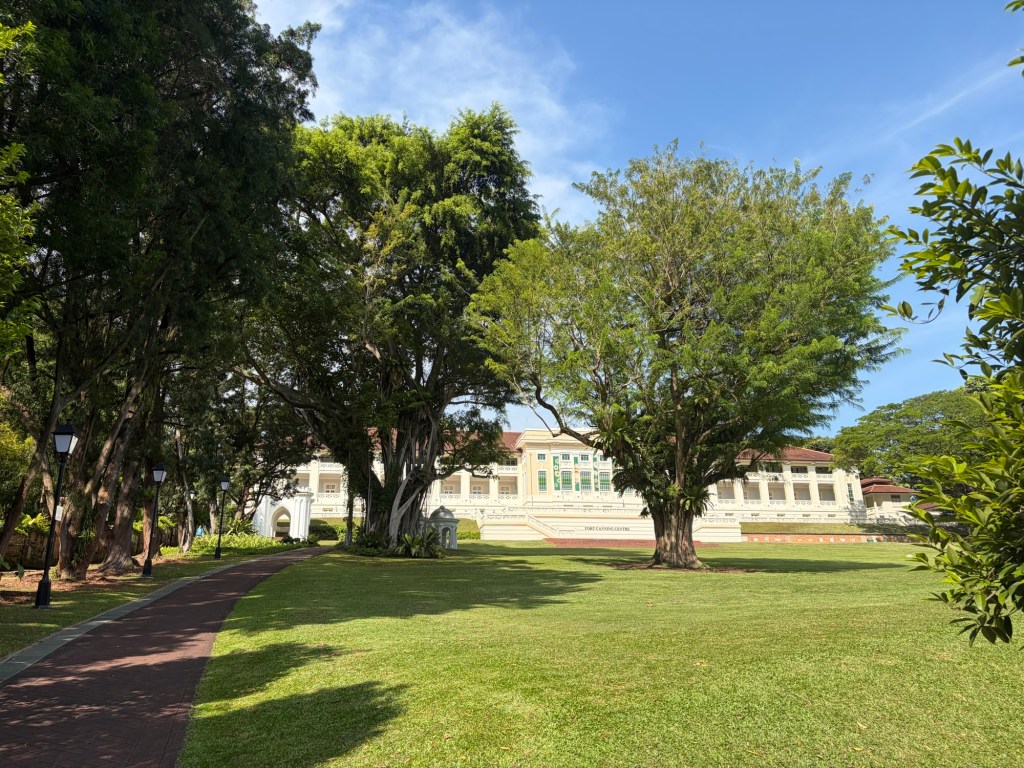
Next on our list was the Spice Garden and the spice gallery. We got slightly turned around and ended up at the Registry for Marriages building. However, there were some pretty gardens around this, and it was not a hardship. Eventually, we did find the Spice Garden, which Spice Garden is a replica of the first botanical garden in Singapore that Sir Stamford Raffles established in 1822. The Spice Gallery has displays about the spice plantations in Singapore and about how Singapore became a major hub for the spice trade. This was all very interesting.
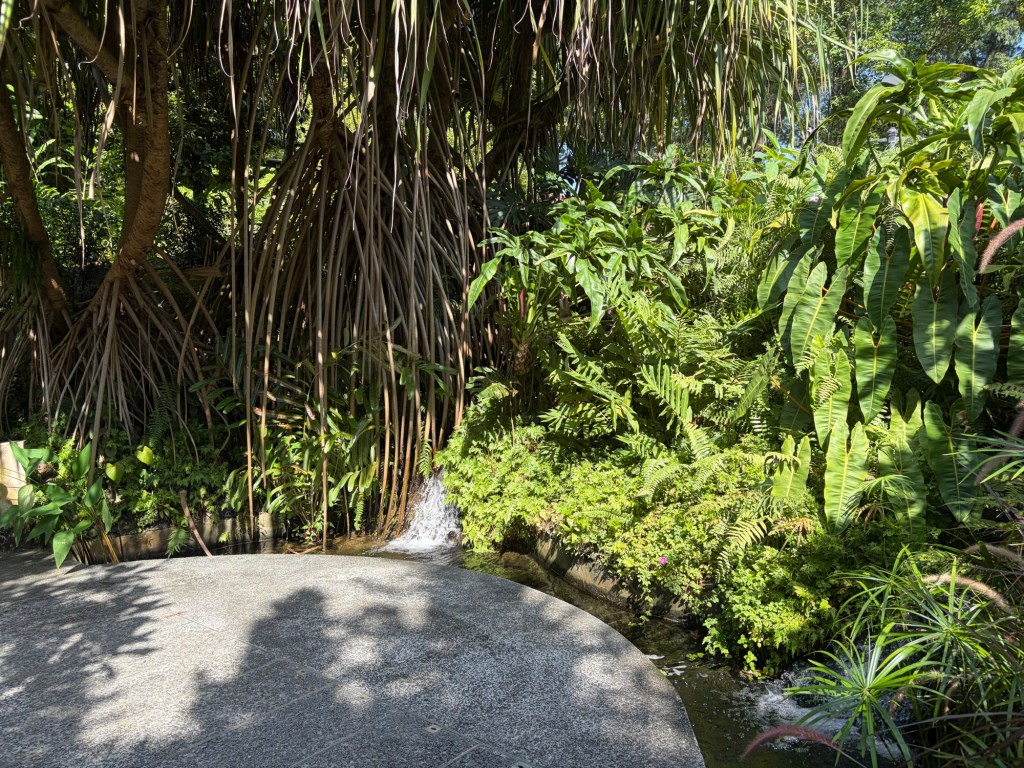
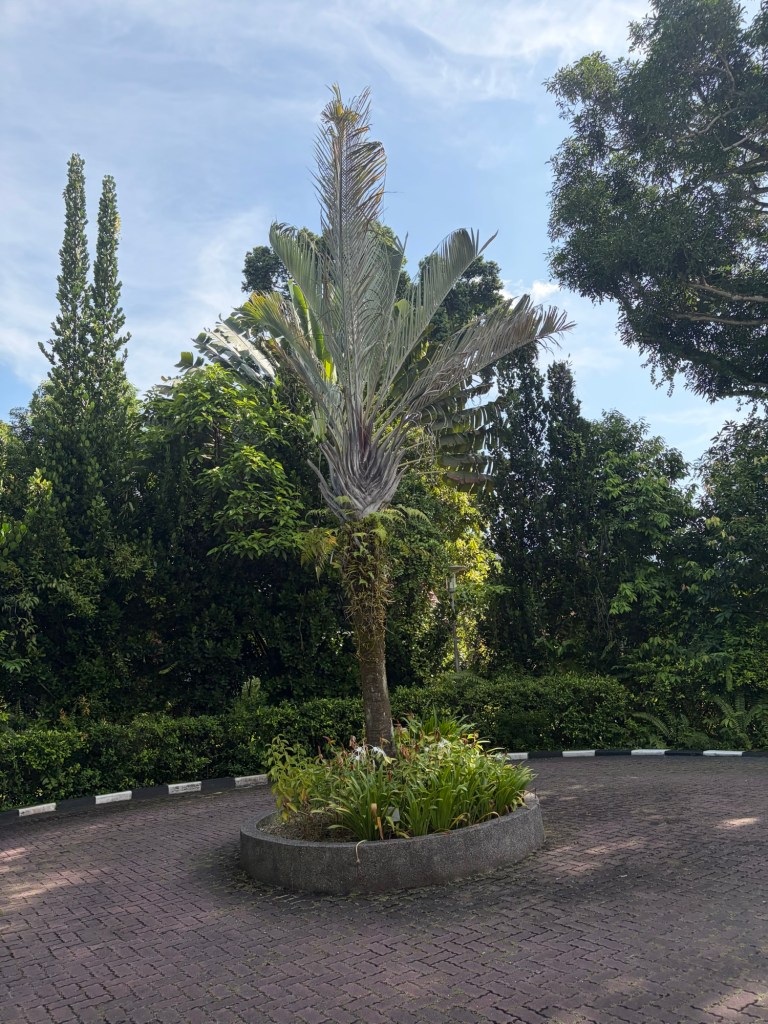
Near the Spice Gallery, there was an escalator, and we wandered where this was leading. It led to an area that looked like an amphitheatre. This is part of one of the universities in Singapore. We sat down in the change for a while and used this downtime to book tickets for our next destination. Once we had rested for a bit, we took another escalator back up to Fort Canning Park. We had a bit of a closer look at the area around Fort Canning Green. Then we walked through the ASEAN Sculpture Garden to our final destination at Fort Canning Park.
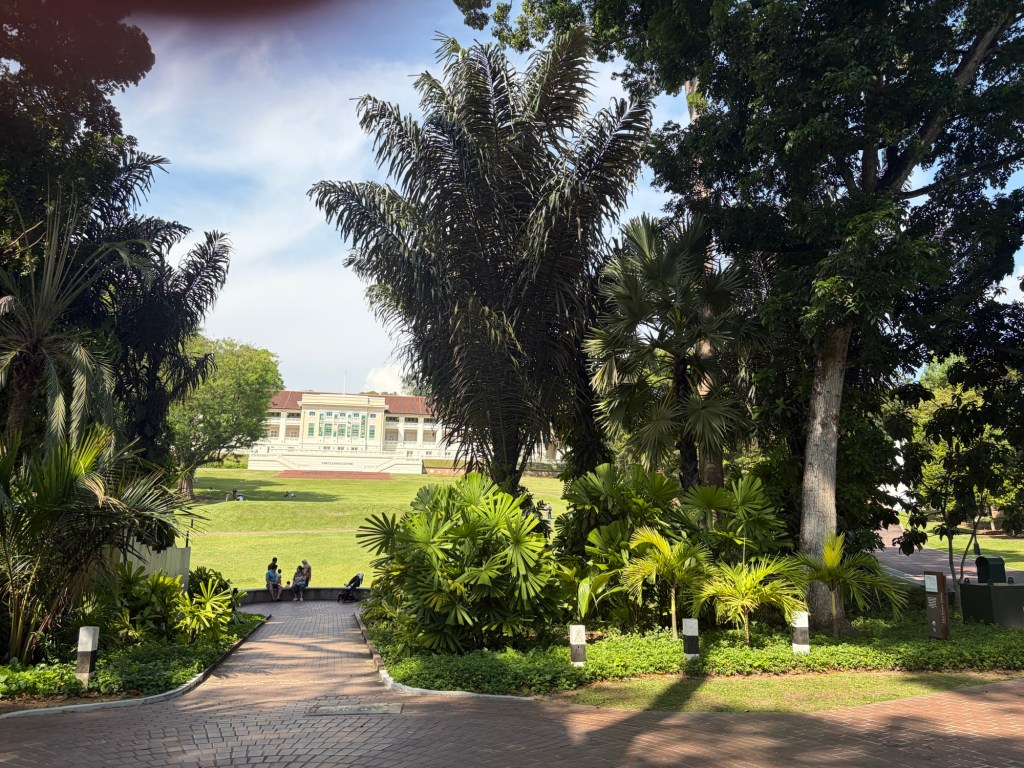
When I was looking into potentially visiting Fort Canning Park, a lot of the pages and blogs that I looked at mentioned that we should make time to check out the Fort Canning Tree Tunnel. It was usually described as an instagrammable location, which I have to admit always puts a slight smirk on my face. However, some of the photos that I had seen really looked beautiful. As this was kind of on the way to the MRT station anyway, we decided to give this a chance. What we found was a spiral staircase that led to a pretty standard pedestrian tunnel. This tunnel was filled with a long line of people waiting to take photos. Maybe you have to stand in just the right spot to get the pretty photos, but we were not willing to stand in line for goodness how long to find out for sure. We were decidedly underwhelmed with what we saw and moved swiftly along to the exit.
The MRT station at this end was well signposted and it did not take us long to get there. We took the MRT to Orchard Road. The Orchard Road corridor is a very popular area for tourists to stay. I don‘t get this. When we came to Singapore in 2019, it was love at first sight for me. However, there were three locations that just did not gel with me. Marina Bay Sands looks stunning from a distance but did not really do it for me close up. This time we just chose to admire it from a distance. The other two, which I found soul destroying, were Sentosa and Orchard Road. It turned out that Sentosa just needed to be given a second chance. If you stay clear from Resort World, this island actually has a lot going for it. There will be more about this later in the trip report.
Orchard Road however has no redeeming features. It is brash crowded chaos with loads of high-end designer stores. This is just not our scene. In one of the shopping centres along Orchard Road, there is a branch of Heytea. We went there in 2019. As we were both thirsty and we were in the vicinity anyway, we decided me may as well try to find this. As Orchard Road consists of a whole rabbit warren of interconnected shopping centres that are mainly underground, we got turned around. We did however find another place that sold iced tea. Graham had an iced ginger tea, and I had an iced jasmine tea. This hit the spot. I also found a Lush. I was surprised that my favourite perfume is actually cheaper in Singapore than in the UK. They also had some unique products. I figured I may go back on the way back to the hotel, but in the end, I never bothered.
The reason we were at Orchard Road was that there was an interactive Titanic exhibition nearby. This sounded interesting. This was at a venue that was in a road just off Orchard Road. We had got thoroughly disorientated in the rabbit warren of underground shopping centres. We headed up to the surface. Once we were back on the surface, I had a quick look around for some landmarks and then pulled up a map on my phone. It turned out that we had been heading in the wrong direction. However, out in the open with not too many people about, we were able to make quick progress. It felt a bit surreal to have Christmas music blaring from speakers in palm trees. I was quite relieved when I spotted the road that we had been looking for opposite form where we were. There was no way to cross the road. We had to head underground once more. Thankfully, there were no more shopping centres to navigate and where we were headed was well signposted. When we came back up to the surface, it was quite obvious where we needed to go. We could not see the venue from the junction, but we were able to see the hotel that was opposite. It did not take us long to get there and this time, there was a footbridge across the road.
Even with our slight detour, we still arrived ahead of our ticketed time. However, they let us go in straightaway. This was very much a two-part experience. The first part was showing the “before” from the design via construction to the completed article. This area was a nice combination of displays providing information, 3D sets and artefacts that were linked to the Titanic. There was an area that highlighted people on board that had a connection with Singapore and also showed newspaper headlines from the local press related to the Titanic, which was a nice touch. Once we reached the fateful day on the timeline, we entered to a different room. This was a cinema showing a film, the seats were steamer trunks and beanbags made to look like sacks. The film recreated the last hours of the Titanic in a surround fil through the eyes of a fictional crew member. This was quite powerful, but also quite surreal. The premise was that a vision of a woman guided him to safety. There were also some very strange dance segments in this film. For the most part, this was really powerful, but the vision and the dance segments seemed very farfetched. Another drawback was that the film was on an endless loop and there was no indication how long the film had been running or when the next film would start. When we entered the cinema, the film was about one third in. We stayed behind and watched it from the beginning again. There was also a virtual reality experience at an extra cost, but we did not pay for this. Once we left the cinema, there was a memorial wall where we could check the fate of the people of the boarding passes that we were given at the entrance. Neither of us survived.
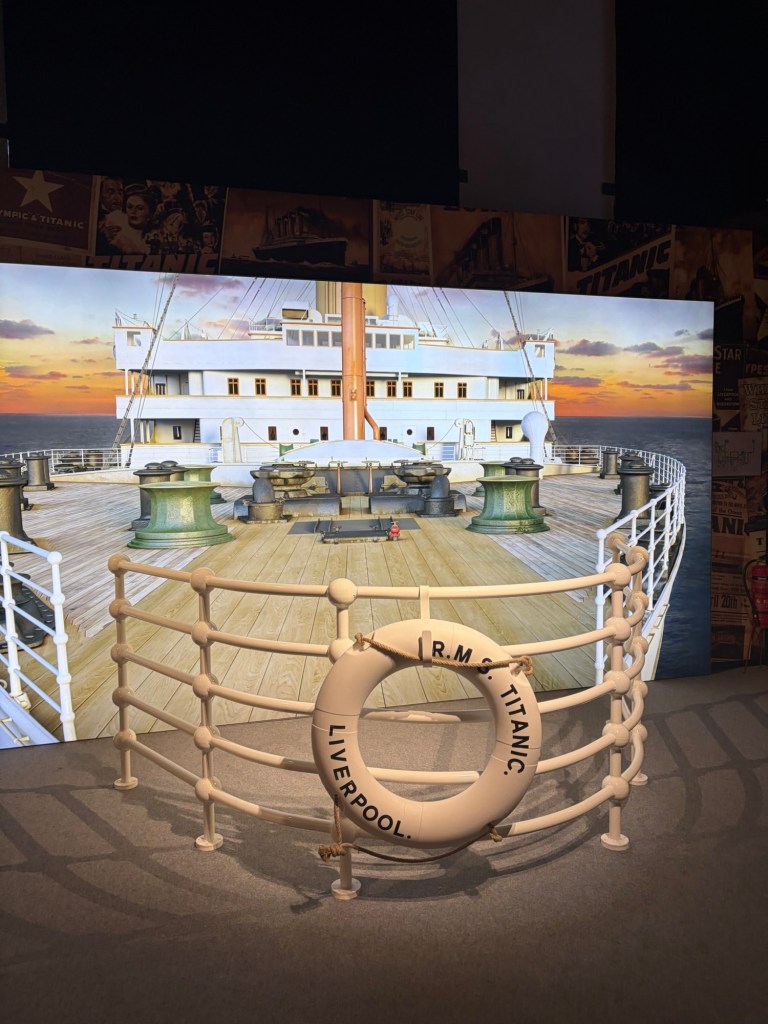
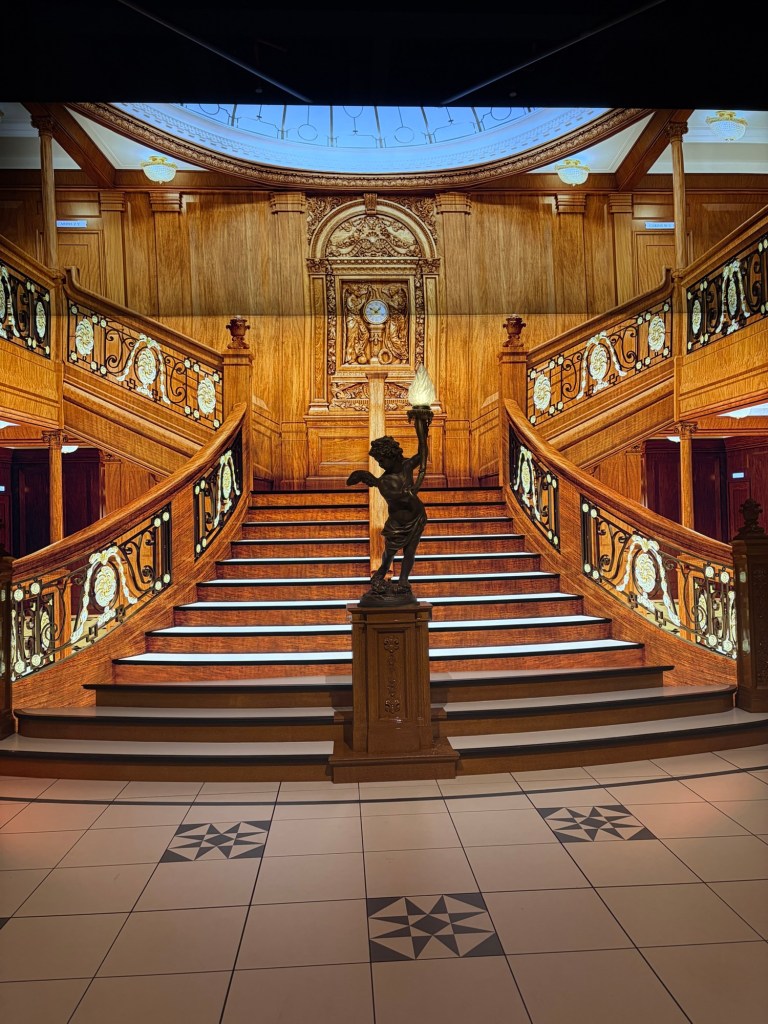
This was the second Titanic exhibition that I went to last year. There were definitely positives to both of them, but I preferred the local one I visited in Manchester. This was just a more rounded experience and took into account the aftermath as well as more modern aspects including the fairly recent expedition to Titanic on board of a submersible that went horribly wrong. I also liked the Manchester expedition had more artifacts including some that were from the sister ship, but that would have been identical on the Titanic. One good thing came out of this though. The spelling of our family name changed at some point before I met Graham, and the original spelling is pretty uncommon. Graham found somebody on the passenger list with the same family name as his original family name. He has always been interested in genealogy, and this was just a gift. There is still one missing link that would proof that this passenger is indeed a relative. This is fascinating stuff.
Opposite the exposition centre was a more down-to-earth shopping centre. I checked if there was something suitable in there for a snack. I found out that there was an outlet of the second chain specializing in kaya toast and kopi. They are called Ya Kun Kaya Toast. We figured that this would hit the spot. Ya Kun Kaya Toast started all the way in 1944 as a single stall operated by the founder and his wife. Compared to this, Toast Box is a complete newcomer as the chain only started in 2005. We both preferred the kaya toast at Ya Kun Kaya Toast, which is made from very thin bread. However, the kopi is much nicer at Toast Box. I am glad that we have tried this, and I definitely would not rule out going to Ya Kun Kaya Toast again. Nevertheless, if both Ya Kun Kaya Toast and Toast Box are near to each other, I am pretty sure the business would go to Toast Box just on the strength of their kopi.
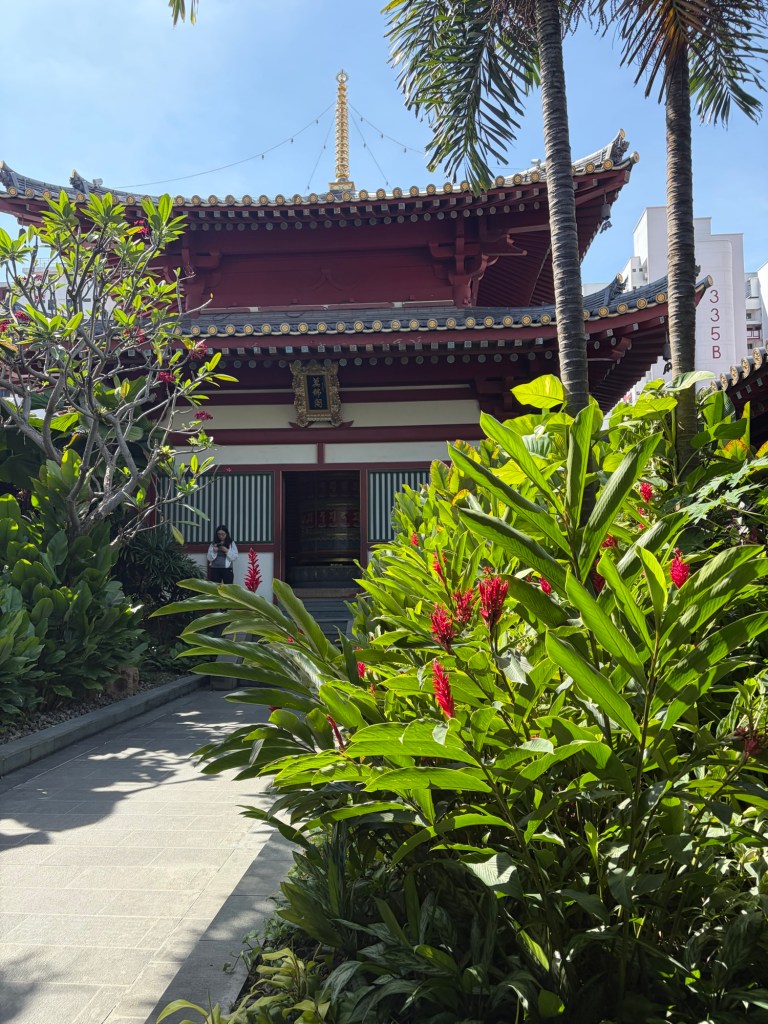
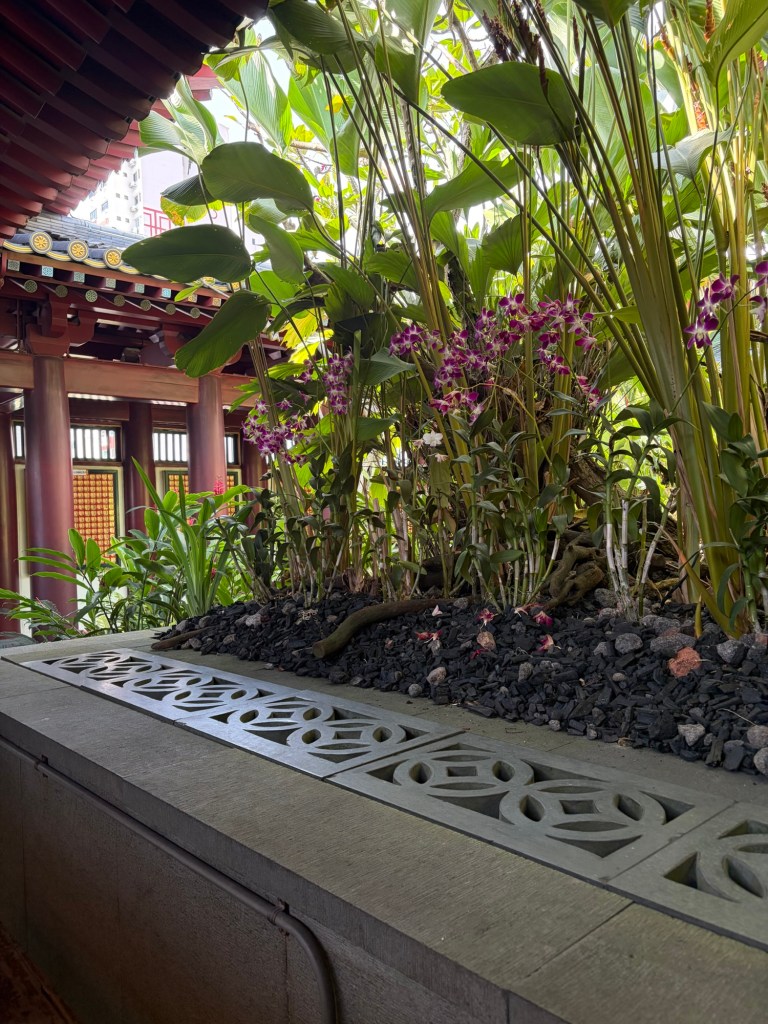
Once we had finished our snack, we headed back to Orchard Road station. This time we got on the Thomson East Coast Line to Maxwell station. I still had some unfinished business there. One of the things that were still on my to do list was a visit to the Buddha Tooth Relic Temple. We had visited this in 2019, and I had enjoyed this. As temples in Singapore go, this is relatively recent. It was only built in 2007 in the style of the Tang dynasty. This is quite a big complex. There is a theatre and a vegetarian restaurant in the basement, but we did not make it down there on either visit. The ground floor is home to the temple entrance and two large halls. The mezzanine is home to one smaller hall, an ancestral hall that contains ancestral tablets and a museum featuring the biography of various important Buddhist monks. The second floor contains another hall, a reference library, a history gallery, and a shop. Most of the third floor is home to a Buddhist cultural museum, but there is also a small hall there. The jewel of the crown is the fourth floor, which is home to the Sacred Light Chamber. This where the sacred Buddha tooth relic is located. There are different accounts on where the Buddha tooth relic came from. However, the version that is told by the Buddha Tooth Relic Temple is that the Buddha tooth relic was found in 1980 in a collapsed stupa in Myanmar. The Buddha Tooth Relic is housed in a giant stupa made from 320 kilograms of gold, which was all donated by devotees from around the world as well as local people. The chamber is absolutely stunning. This is the only part of the temple where photography is not allowed. Probably my favourite part of the temple is the rooftop garden which has the Ten Thousand Buddha Pagoda in the middle and various rare orchids all the way around it.
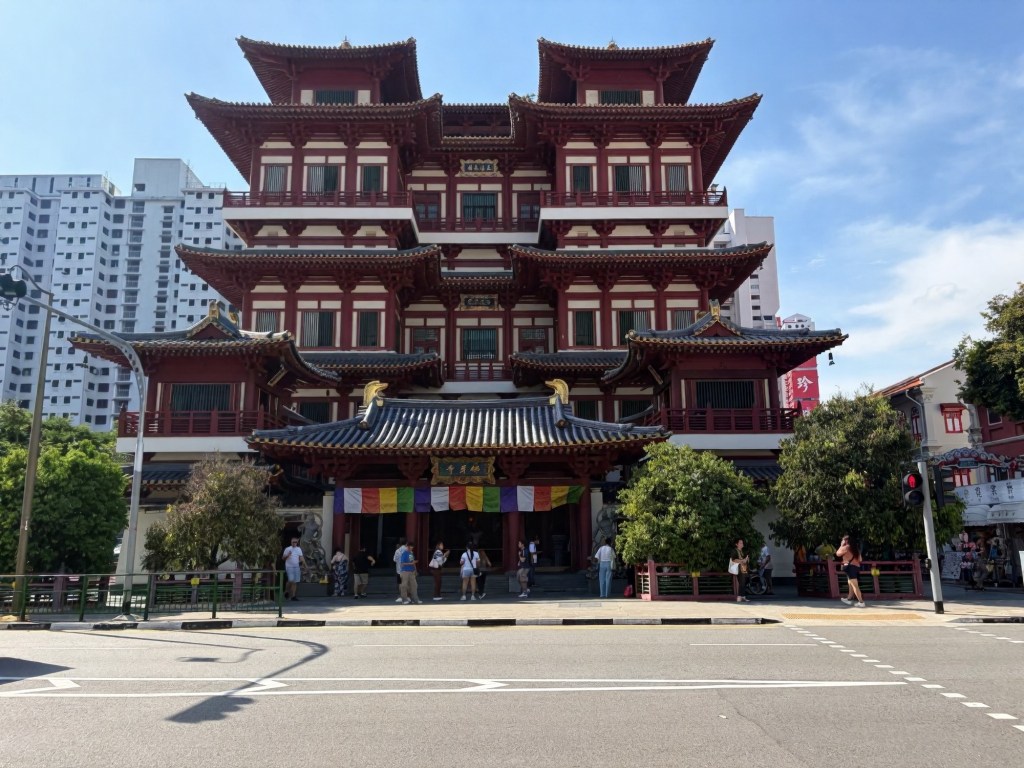
In 2019, we had explored the Buddha Tooth Relic Temple from top to bottom. This time round, I was just planning to visit the two halls on the ground floor and the roof garden. I could not remember where the lift was. I thought it was attached to one of the main halls. I could however not find it. There was some kind of ceremony going one at the second of the halls and this was quite fascinating even though I had no idea what this was all about. After a while, I managed to find a passing security guard and asked him where the lift was. He pointed me in the right direction. The lift was actually just off the courtyard. I went to find Graham and we headed in this direction. I was convinced that the lift went all the way up to the roof garden, but this was not the case. It only went as far as the fourth floor. I took to the stairs, but Graham decided to sit this out and headed back downstairs. I did not spend long up there, but I took a lap around the rooftop garden and took some photos. Then I retraced my steps.
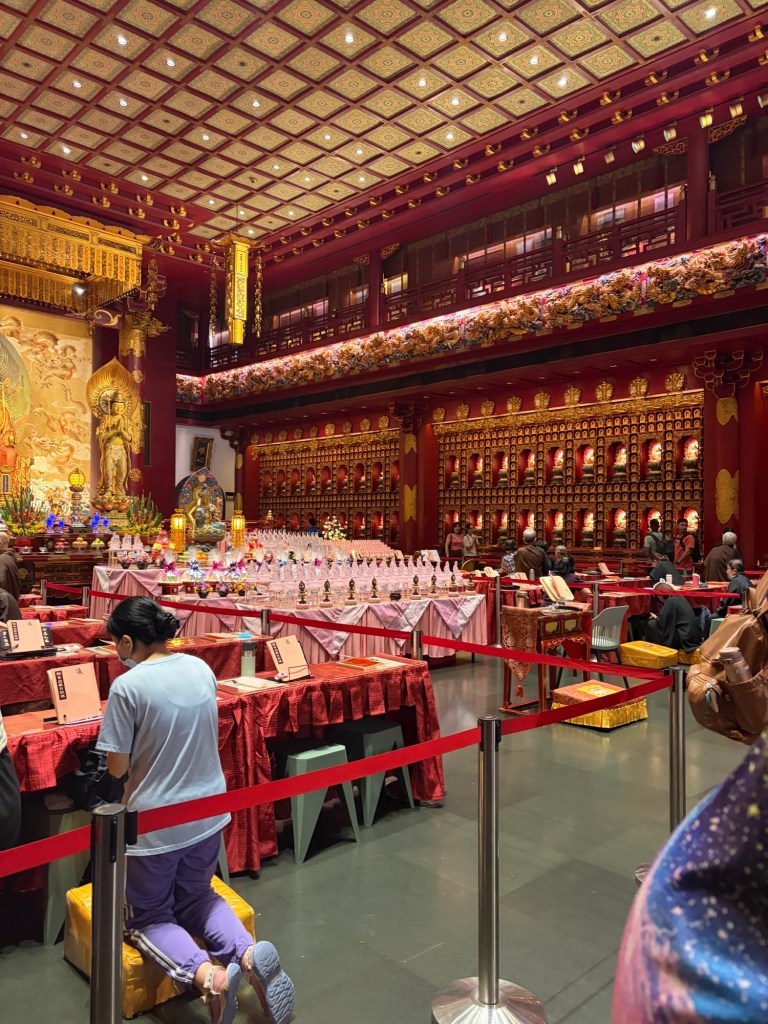
I found Graham sitting on a ledge in the courtyard. He had made sure that there was no opening behind him. However, as this was a Buddhist temple he was unlikely to prevent the gods passing through. I joined him. We had some amusement. It is clearly stated that modest clothing is required to visit the temple. This was nothing out of the ordinary. They just wanted knees and shoulders covering. Graham was wearing longer shorts that covered his knees and nobody batted an eyelid. However, there were plenty of people around with strappy tops, crop tops and very short skirts or shorts. They were all intercepted by a security guard near the entrance to the first hall and were sent to borrow a sarong to cover themselves up. Initially we only saw women that were sent to get a sarong. Graham wondered what would happen if a man was not adhering to the dress code. I told him that I thought that it would not actually make any difference. Shortly afterwards we saw a man in shorts above the knees being sent to get a sarong.
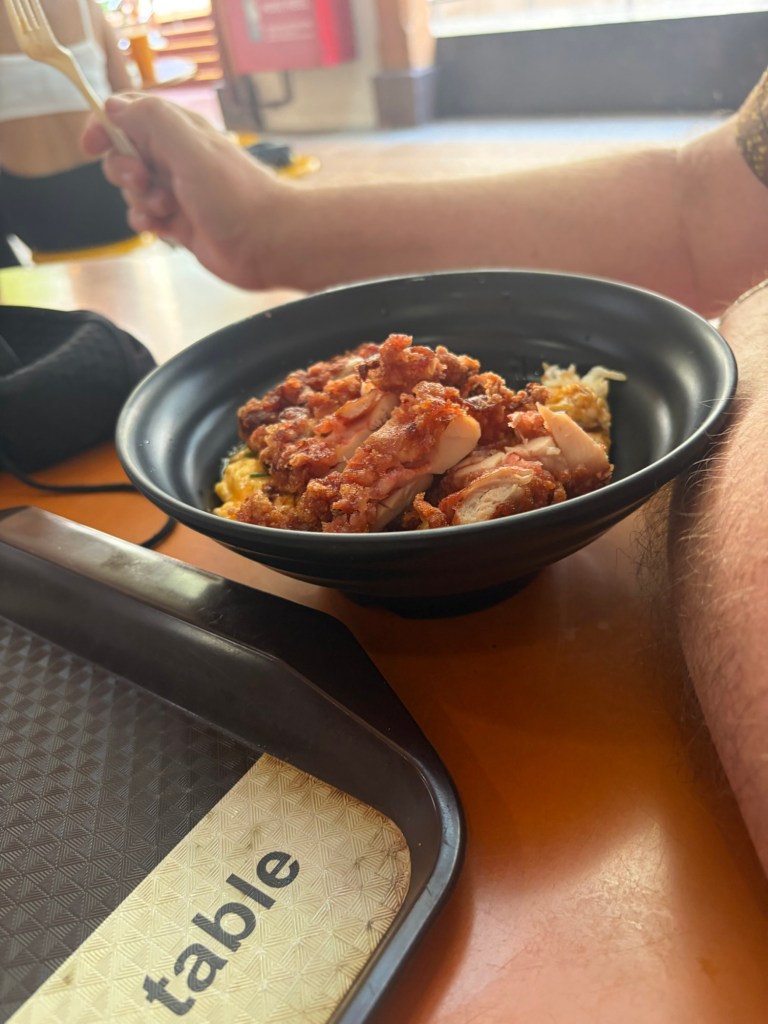
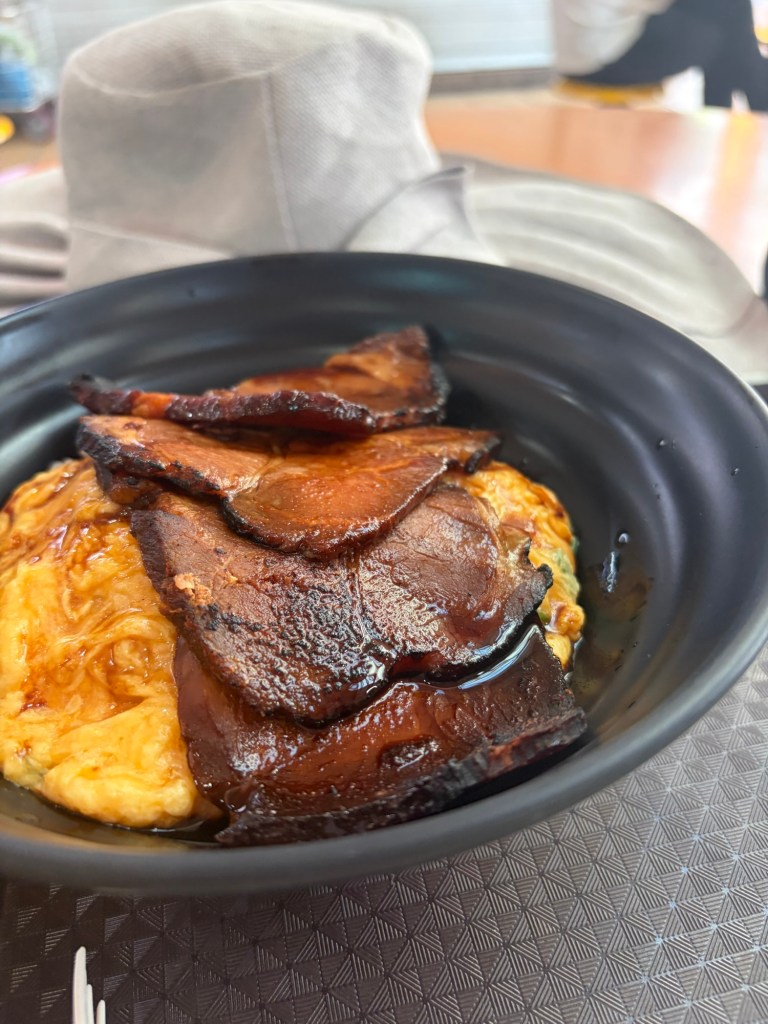
When we were ready for some food, we left and headed across the street to the Maxwell hawker centre. I had spotted some scrambled egg fried rice at one of the stalls the previous day and this intrigued me. I mentioned this to Graham, and he was up for this. The dish consisted of fried rice topped with softly scrambled eggs and your choice of a different protein as a topping. Graham had it with fried chicken steak and I had mine with char siu pork. We both enjoyed this. This was one of the cheaper meals we had, but it was so filling that neither of us finished it. We had some watermelon juice ease, which was nice and refreshing. We also shared the coconut water from a fresh coconut.
After dinner, we went back to the MRT station and took the two stops back to the hotel. Even though it was not particularly late and we did not have a very active day, we both felt tired. We got ready for bed. I read a chapter in my book and then I fell asleep.
 Dolphingirl’s Travels
Leave a comment