
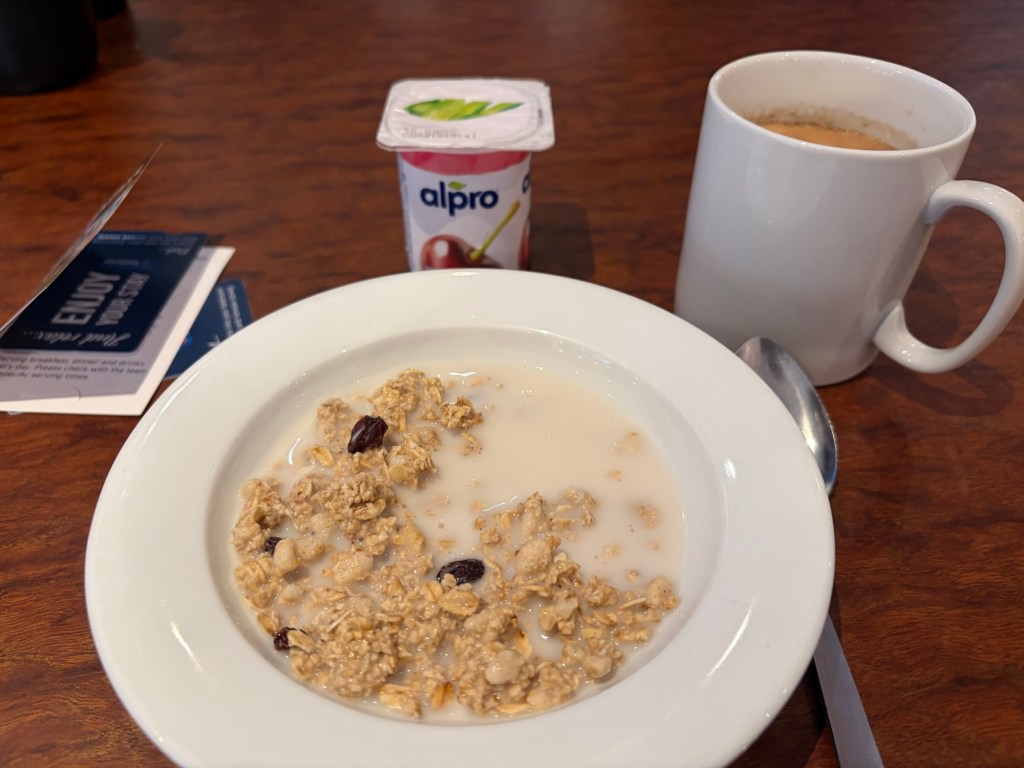
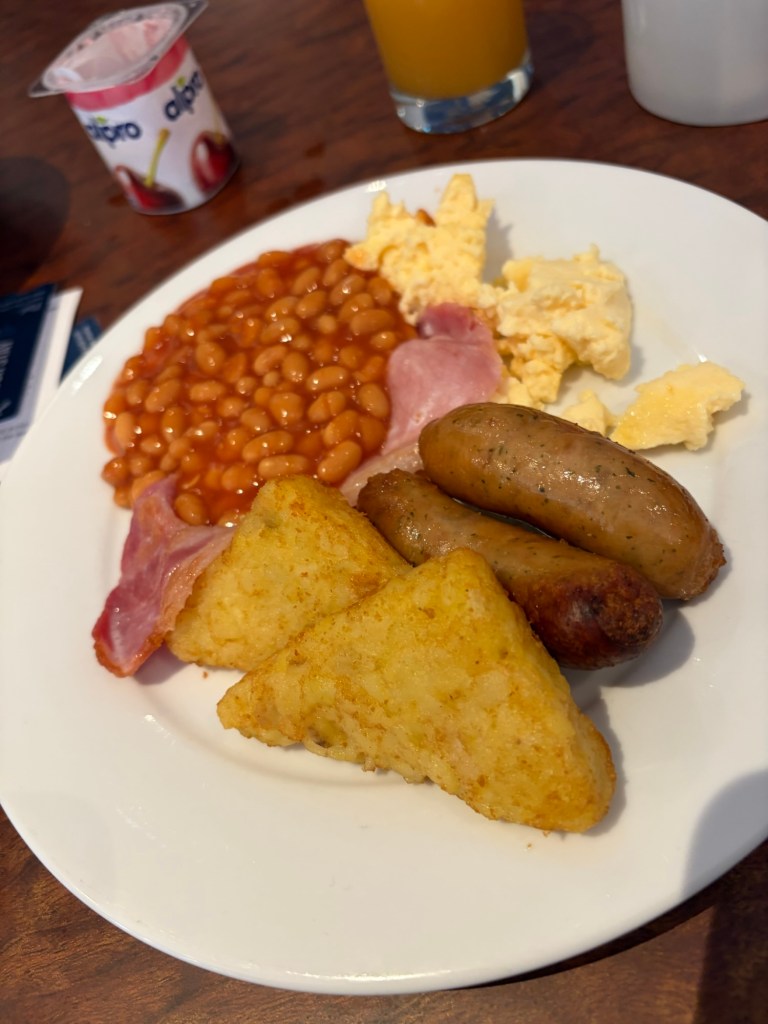
We woke up at 08:30 and things looked decidedly dreary. I was not too alarmed as the weather forecast had said that it would rain overnight and things would start to improve after 09:00. We got ready and headed downstairs for breakfast. Breakfast was not a huge affair, but we most certainly did not go hungry. Graham had fruit, soya yoghurt and a cooked breakfast washed down with coffee and apple juice. I had granola with almond milk, soya yoghurt, and a cooked breakfast. I also had coffee and a mix of apple and orange juice. After breakfast, we went back upstairs to get what we needed for the day. Then we headed out.
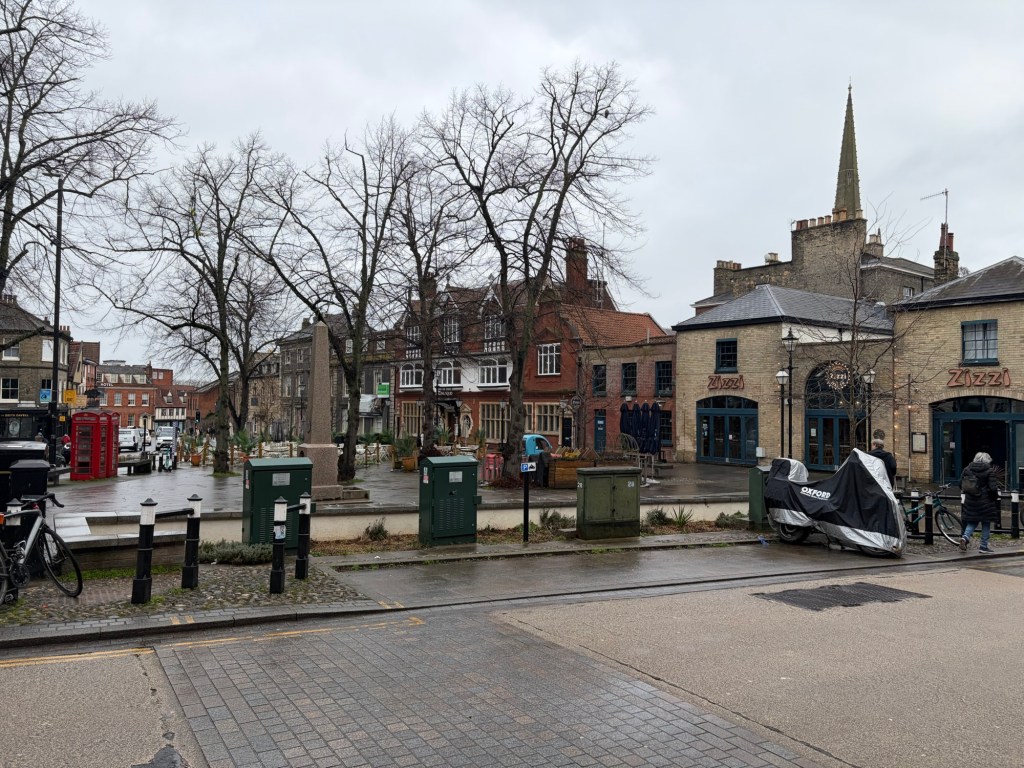
Thankfully, even so it looked decidedly dreary, it was dry. The first order of the day was to find the cathedral. When we lived in the south of the country, we would go to Norwich quite regularly. We have always enjoyed this city. However, we had not been back since me moved north. We were somewhat hazy on the lay of the land. As I needed to be at the cathedral that evening, it made sense to head straight there from the hotel. We did not find the most direct route but ended up near the castle initially. Still, from there it was not too far to the cathedral.
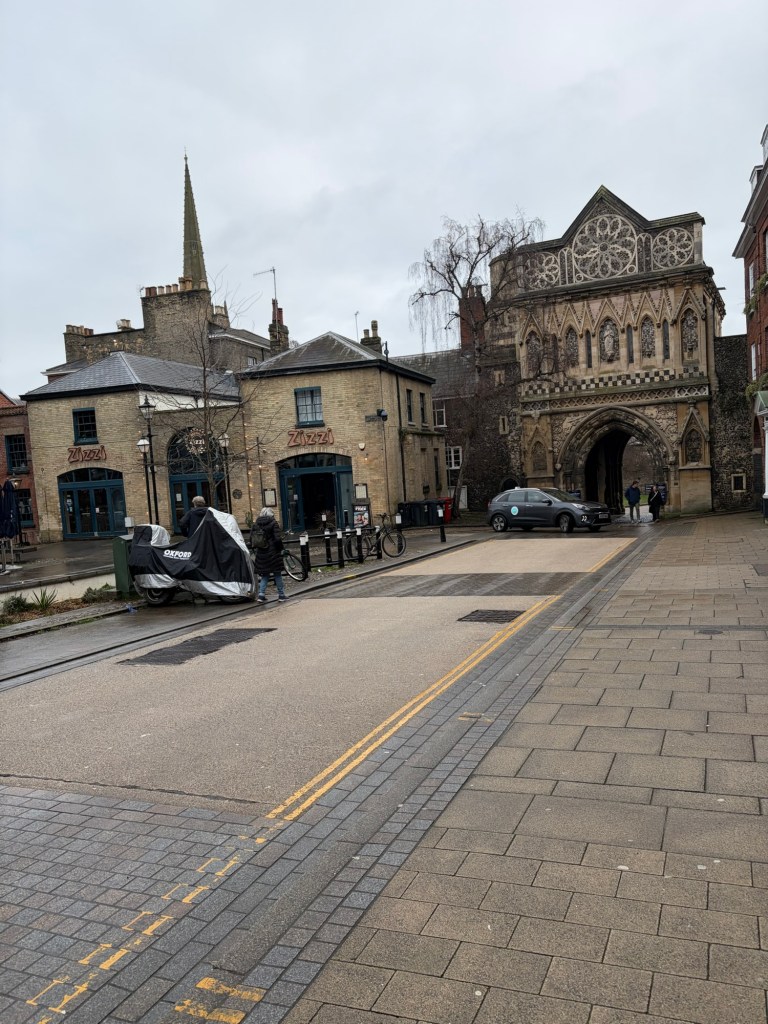
As soon as we reached the historical quarter, I was reminded just how much I love Norwich. There are so many beautiful buildings. We headed through a very ornate gate into the cathedral close. This was where our scavenger hunt started. Three years ago, I discovered something called Mystery Guide. They are little books for various cities that combine a story line, puzzles, and historical facts. I had bought a Mystery Guide for Manchester at the time, but we never got around to doing this. At some stage, we put it somewhere save and of course, this means that it probably will never see the light of day again. I did however remember this when we were planning this trip and checked if there was a Mystery Guide for Norwich. I ordered this and also one for Hull and Chester as they had a special offer. As I write this, we have done the Mystery Guides for Norwich and Hull. I also ordered a new copy for Manchester, which we have also done. We are hoping to take a weekend trip to Chester in July. They are great fun. They also give the sightseeing a bit of structure. Without fail, we also discover some stuff that we otherwise would never have seen.
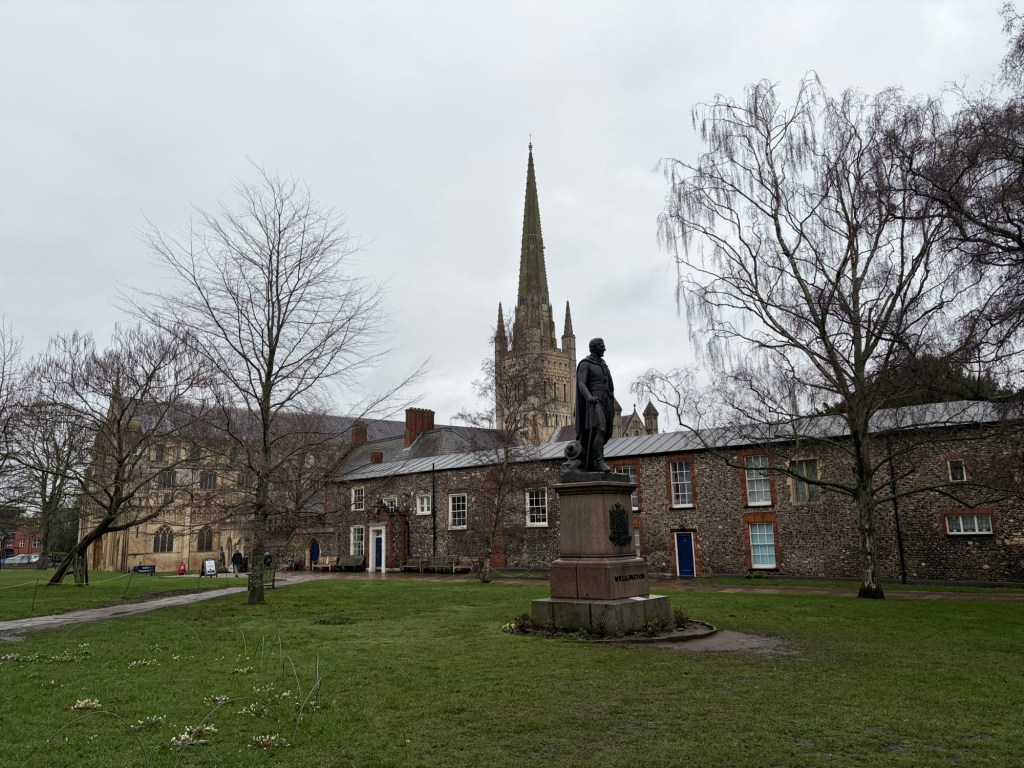
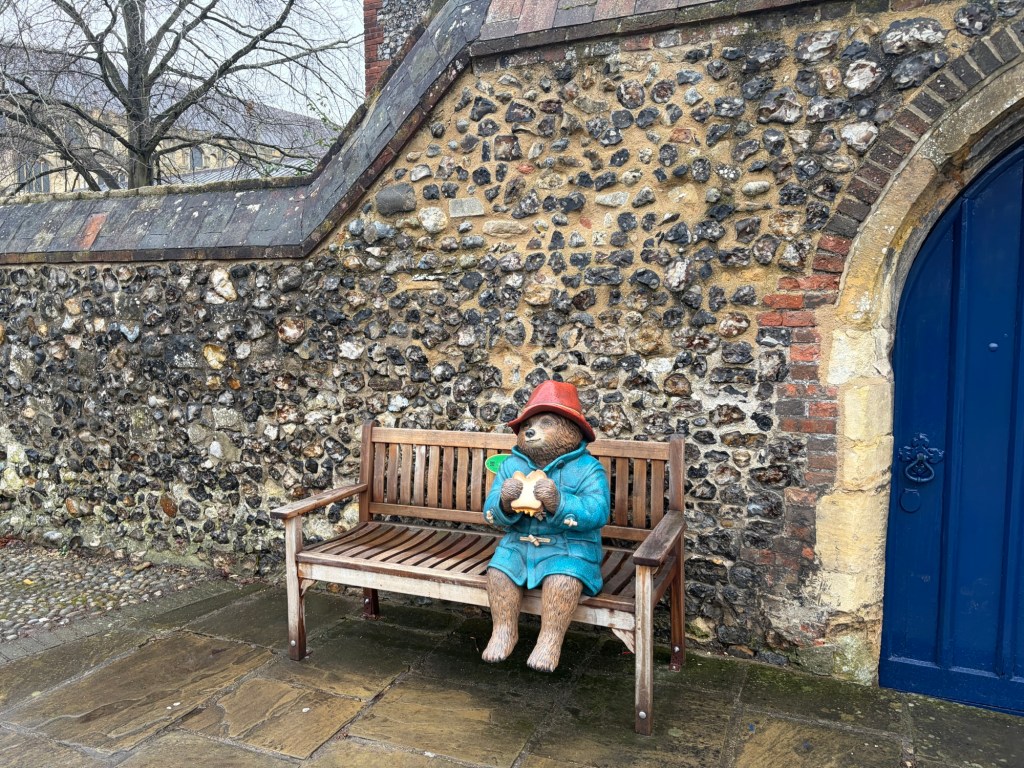
The starting point of this Mystery Guide was the Wellington monument in the cathedral close. We had a go at solving the first clue, which was fiendishly difficult. The monument is in the middle of a lawn, which on that particular day was a mud bath. We had to match symbols on a coat of arms on the plinth to letters in a booklet. However, the symbols were quite small and difficult to see from a distance. I marked the rough location and then we headed onwards to the cathedral. On the way, we came across a bench with Paddington Bear. Twenty-four of those benches were installed around the country to celebrate the release of the movie Paddington in Peru. I know there is one in Manchester, but I have yet to see this.
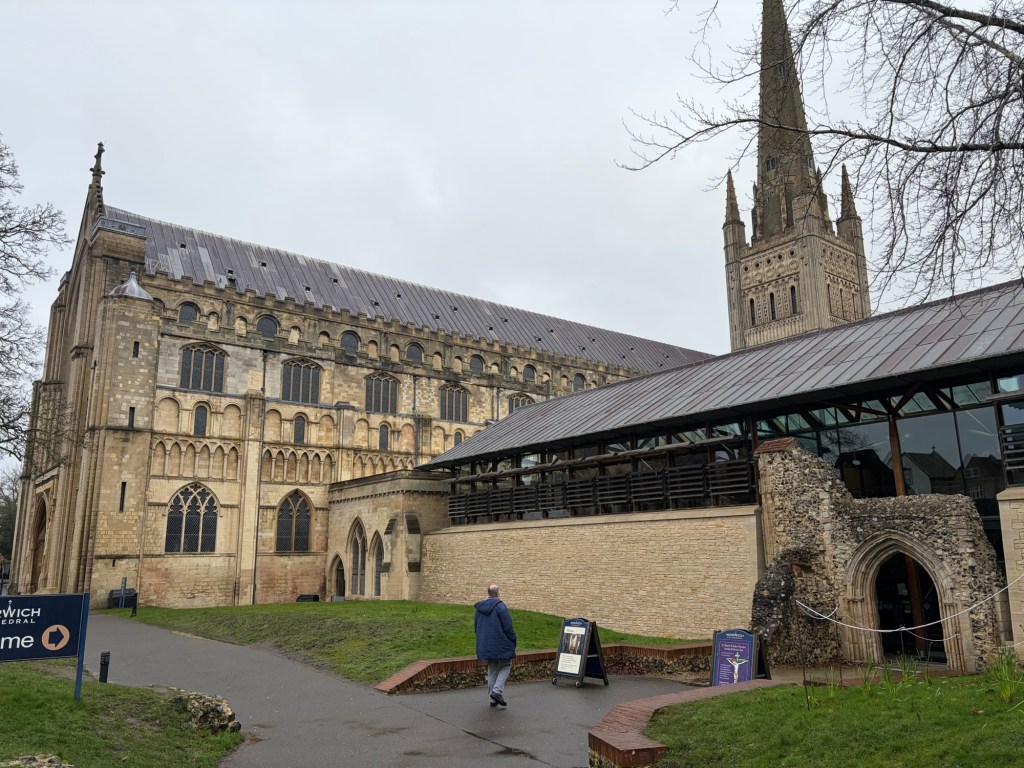
As we entered the cathedral, there was an information desk. I expected that there was an admission charge, but there was not. They do however encourage donations. Graham was happy to oblige. The person who processed the donation mentioned that there was a free guided tour starting near the shop in about half an hour. This sounded good to us. We went to the area where the tour would start from and sat down. One of the cathedral greeters came up to us and asked if we were interested in finding out a bit about the cathedral. We took her up on this offer. Just across from where we were sitting was the baptismal font which was made from two large copper bowls which were originally used to manufacture chocolate (specifically toffee) at the local Rowntree Mackintosh factory. They were given to the cathedral when the factory closed in 1994. Graham found this very interesting as his mum used to work in this factory. The other feature that the greeter pointed out were the medieval roof bosses. Roof bosses are often found in churches where roof beams intersect. I had come across them many years ago at St. Mary’s Church in Beverley where the roof bosses were carved from wood, are quite primitive and often tongue in cheek. Norwich cathedral has the largest collection of medieval roof bosses of any cathedral in the world. They are more sophisticated than their counterparts in Beverley. There are a wide range of different subject matters ranging from designs inspired by nature, historical figures, saints to mythical creatures. The most fascinating bosses are located in the nave of the cathedral. They represent biblical stories from the old testament at one end of the nave and from the new testament at the opposite end. Even though they are very high up, some of them are very clear from the ground level. When we mentioned that we were going to do the tour, she said that she did not want to give anything away that would be covered on the tour and moved on. I had a go at working out the first clue. It did not make any sense. I tried to find a clear photo of the coat of arms on my phone, but it was just too small. In the end, I resorted to the extra clues on the back page of the booklet for this clue.
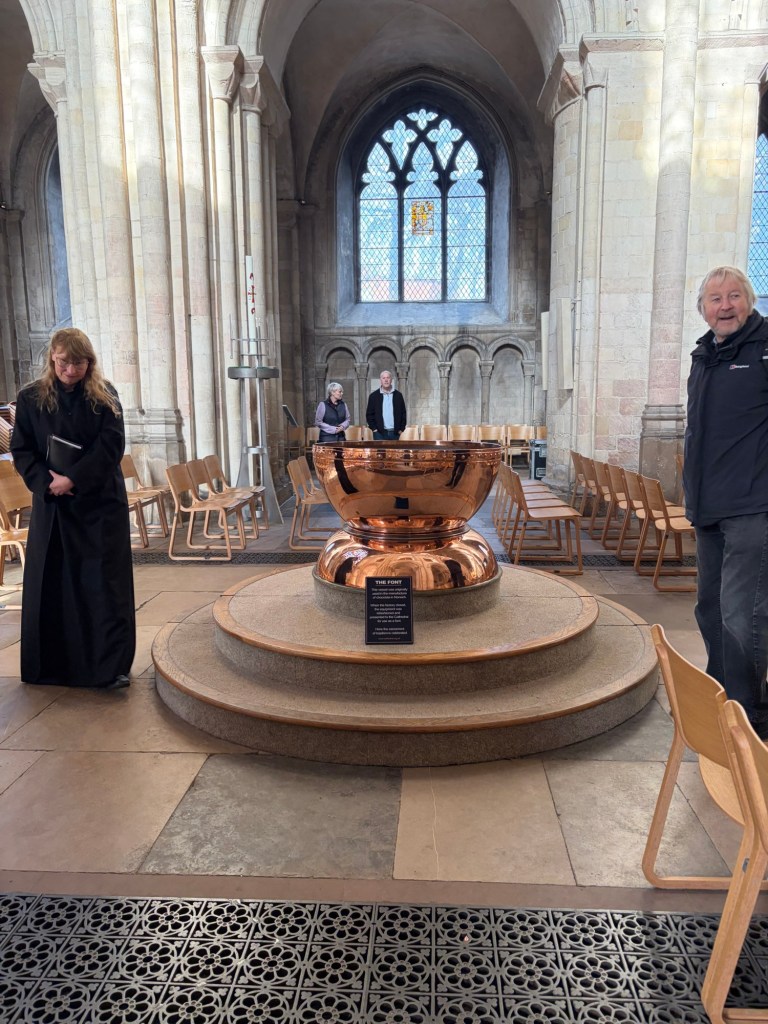
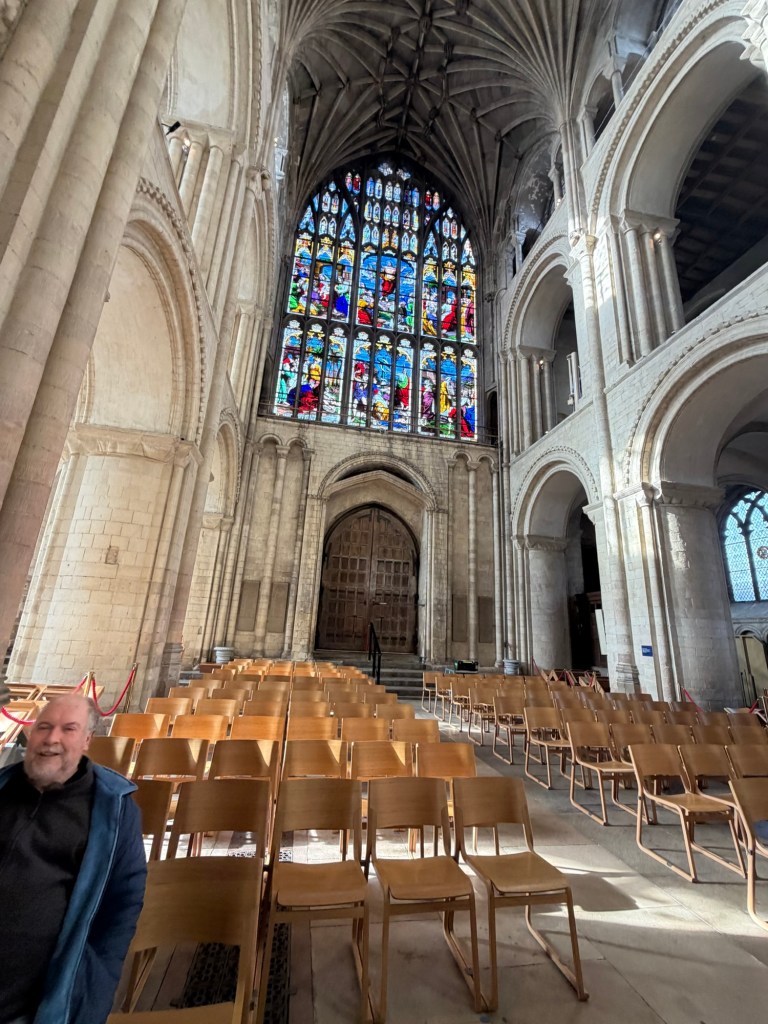
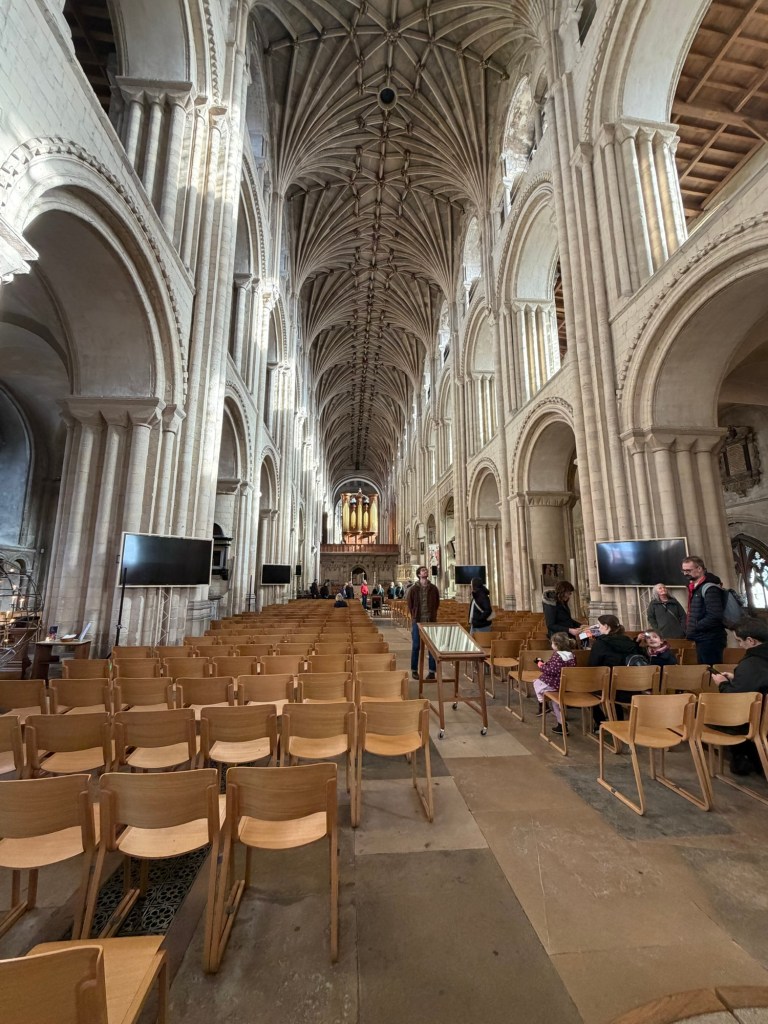
The tour was quite popular. They split everybody into two groups. The tour was very interesting. I learned a lot about the cathedral and also the wider history of Norwich. Our guide showed us some of the original wall paintings. Once upon the time, all the walls in the cathedral had paintings on them. Most of them have been covered up over the years, but there are a couple that have been restored. She also pointed out what she referred to as medieval graffiti. People had scratched names and designs into the walls. Most of them were names or very simple symbols, but some of them were very elaborate. Some of them were clearly visible, but there were plenty that you can only see by shining a torch on them. Other interesting pieces of art that our guide pointed out were stained glass windows from various eras. Most of the stained glass is Victorian, but there is some medieval glass and also some very modern glass. She did not take us to see the modern glass. The most fascinating piece of art was a pelican lectern. Traditionally, a lot of lecterns are eagles, but Norwich cathedral has a 14th century Flemish bronze pelican lectern. This seems a strange choice as there is really no link between Norwich and pelicans. There is however an explanation. According to legend, the pelican feeds her young with blood from her own breast, and so is considered a symbol of the sacrifice of Christ. Who would have thought! The lectern survived the reformation because somebody had the foresight to bury it in the bishop’s garden. It was only rediscovered many years later.
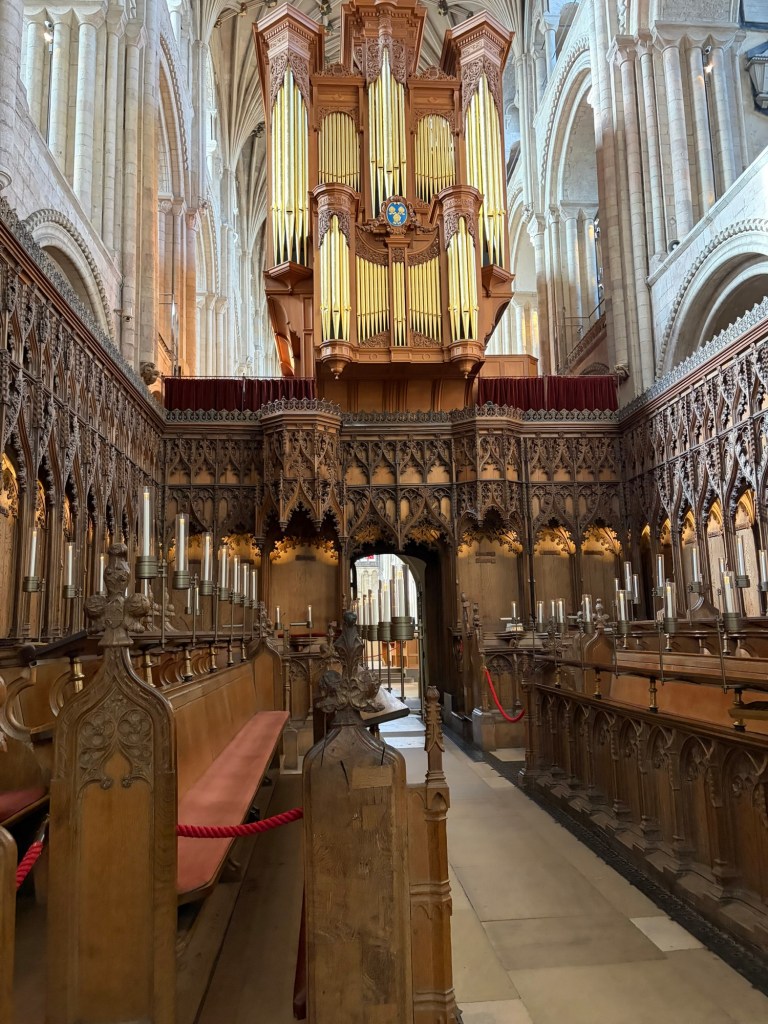
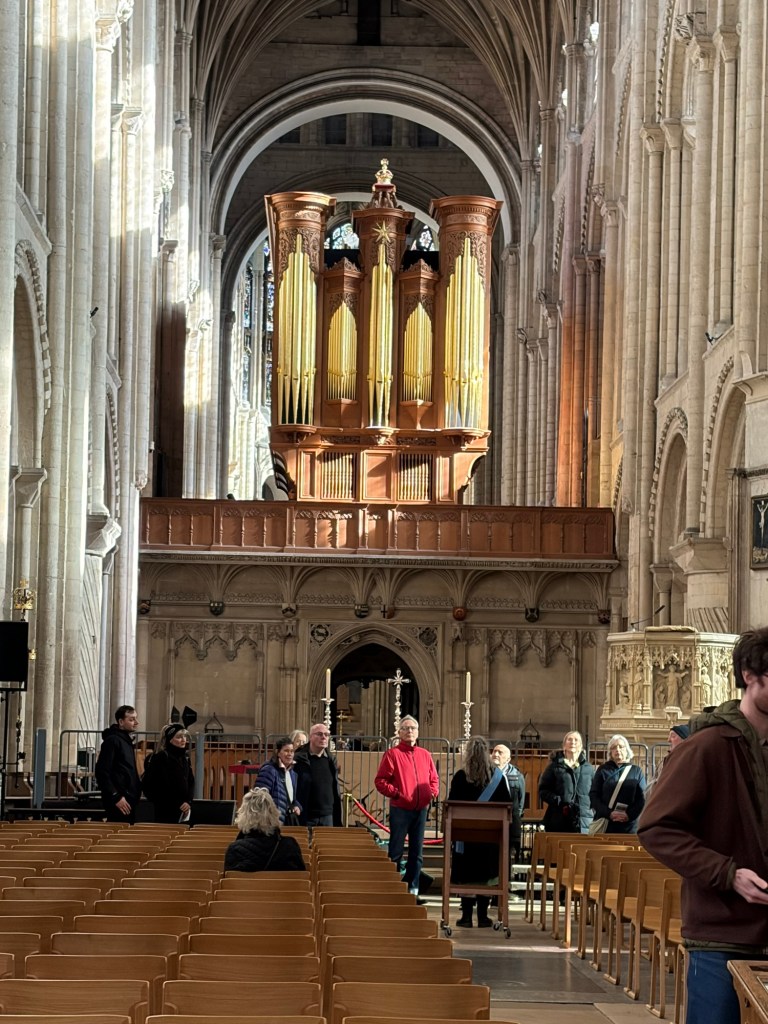
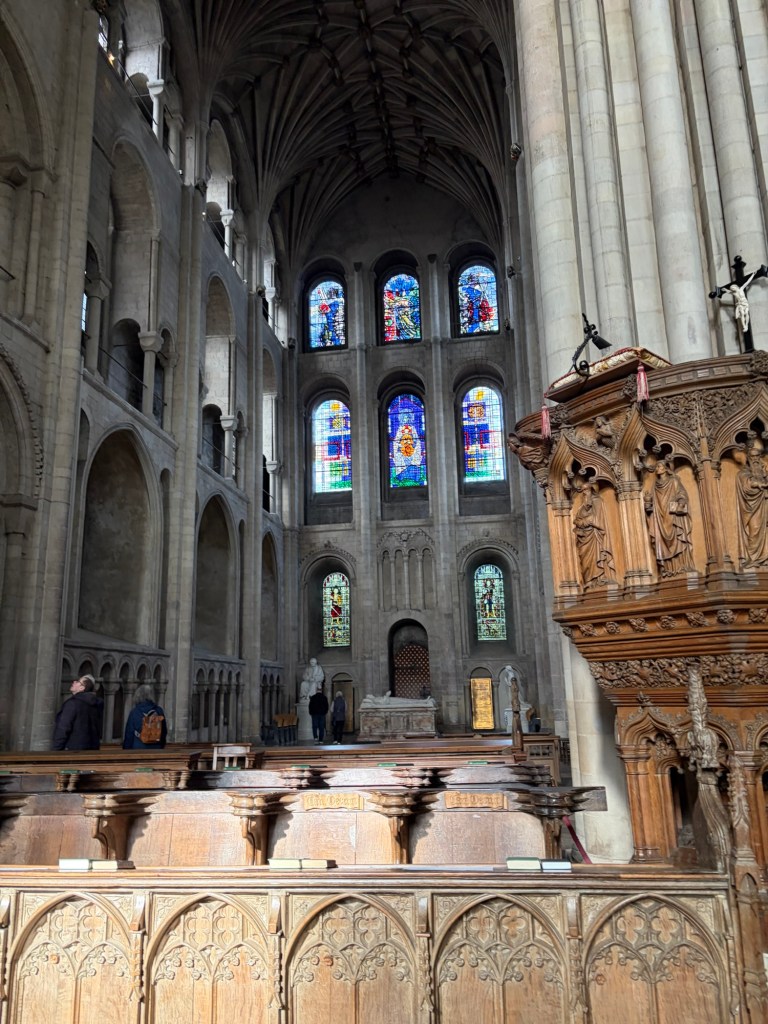
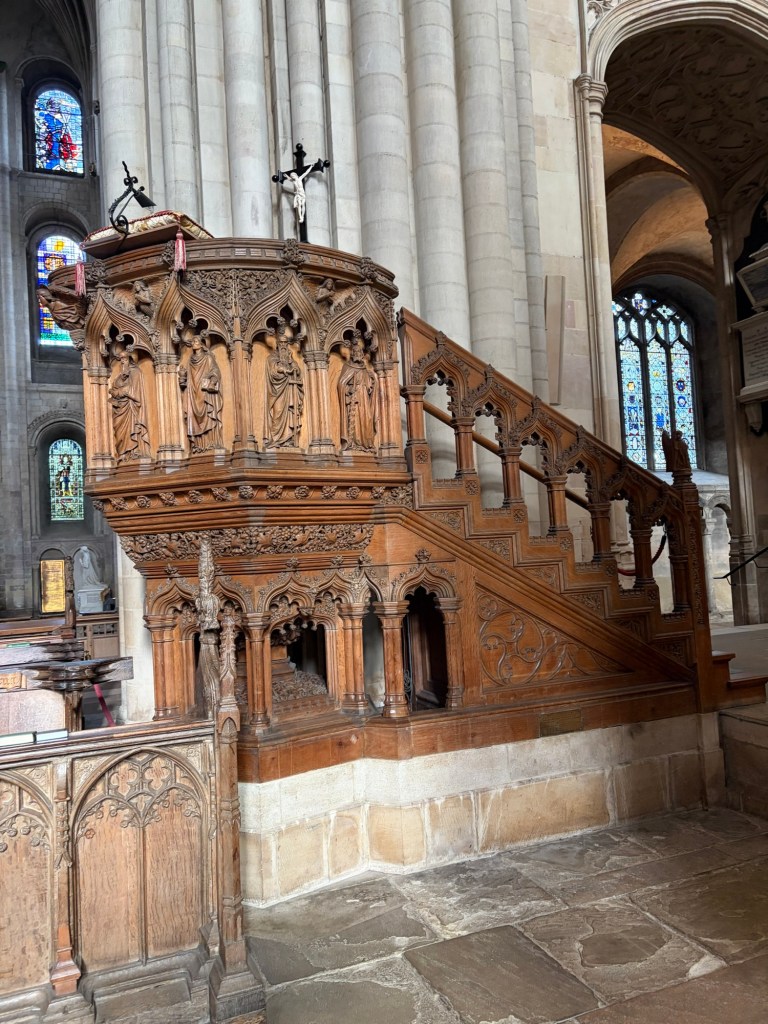
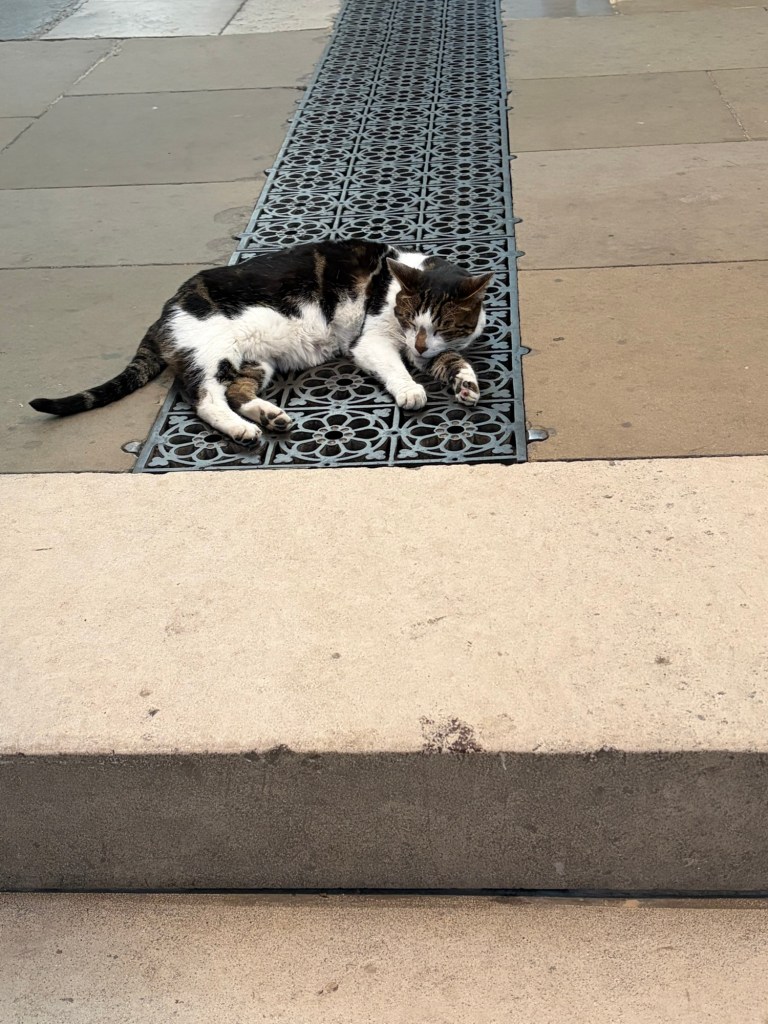
Near the pelican lectern, we met the “head of the pest control department”. Norwich cathedral has a cathedral cat. Our guide explained to us that he always tries to find the warmest spots but was currently not very happy as the cathedral was not particularly warm. He was very cute. I did wonder what he would make of the concert that evening. He technically lives in the cathedral close but suddenly wandered into the cathedral in the middle of a Good Friday service in 2018. He has made the cathedral his second home ever since. I cannot say I blame him especially on a cold and slightly damp day like we had that day.
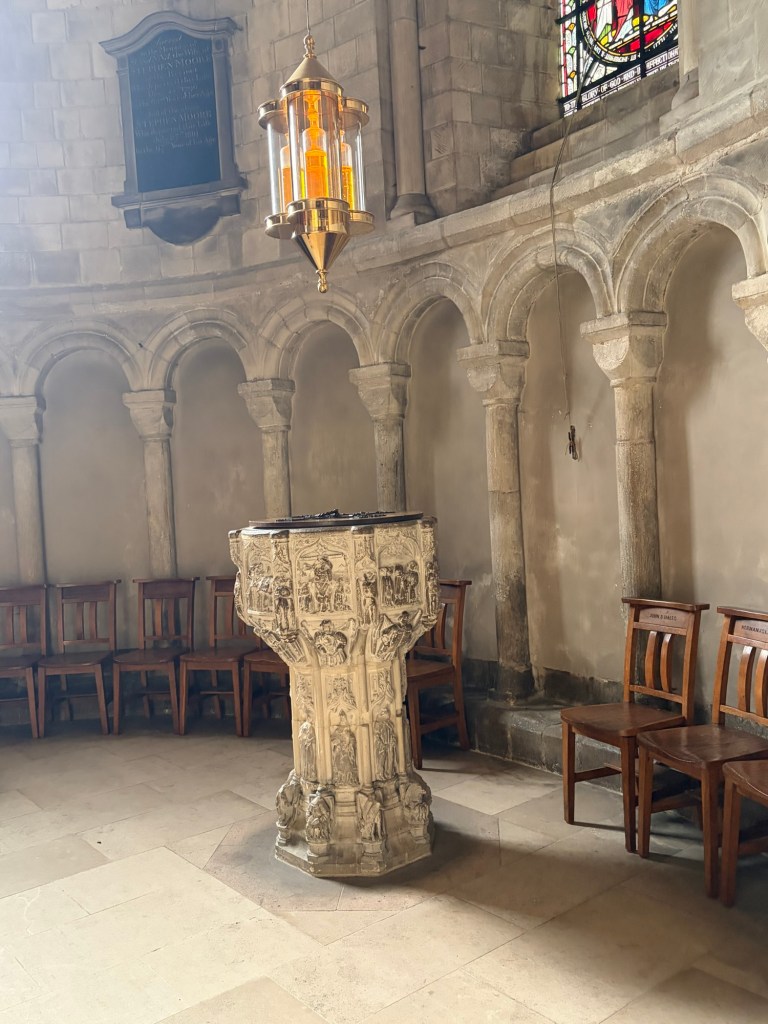
We then headed to see the chapels at the far end of the cathedral. They were all interesting and all have their own unique history. The chapel that I found the most interesting was St. Luke’s Chapel. For many years this operated as a separate parish from the cathedral parish. St Mary in the Marsh was originally a completely separate church that was located within the Cathedral Close. The church actually predated the cathedral and managed to survive for many years after the cathedral was built. However, in 1564, it was decided that the church was surplus to requirements. The church was pulled down, and the building materials were sold off. However, there was still an active parish although quite small at the time. The bishop at the time came up with a creative solution. The parish of St Mary in the Marsh could use St. Luke’s Chapel in the cathedral as its parish church. When they moved in, they brought a Seven Sacrament Font from their old church. It is called a Seven Sacraments Font as it displays the seven sacraments of the Roman Catholic church on seven of the eight sides of the bowl that holds the holy water. There are only about 30 of those in total surviving today. There is also a second treasure in this chapel. The Despenser Reredos is one of the Cathedral’s greatest treasures and the only surviving medieval English altarpiece with scenes from Christ’s Passion. It is dating back to approximately 1380. Like the pelican lectern, some unique steps were taken to protect it during the reformation. It was hidden as the underside of a table until 1847. I can just imagine the reaction of the person that discovered this.
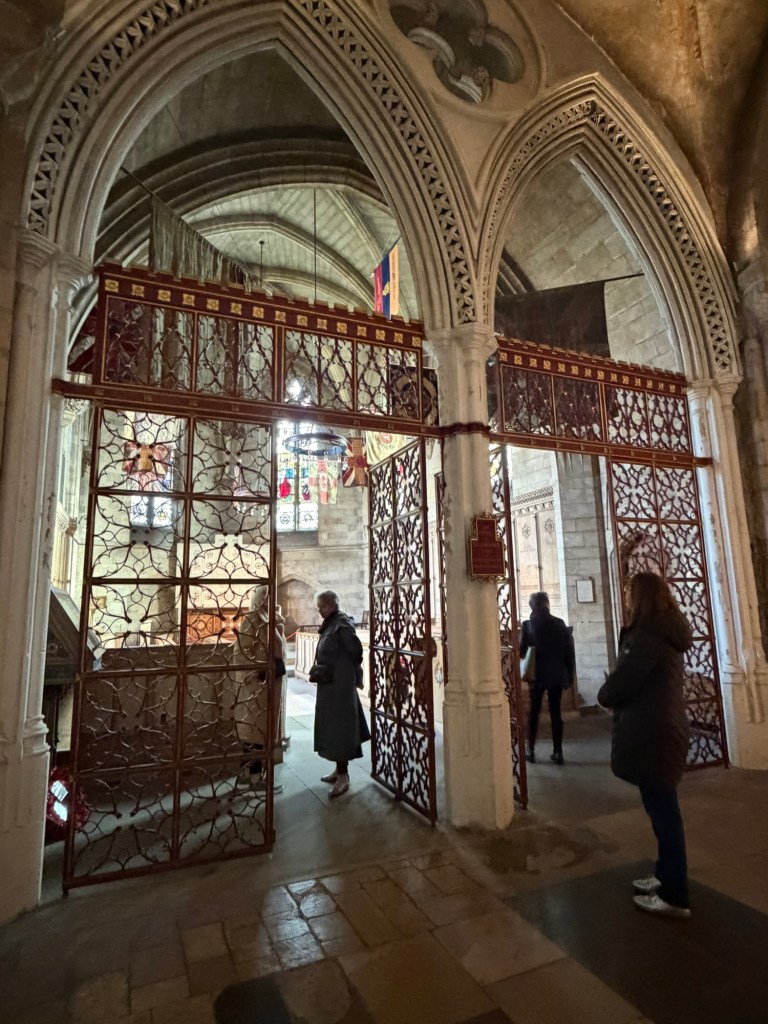
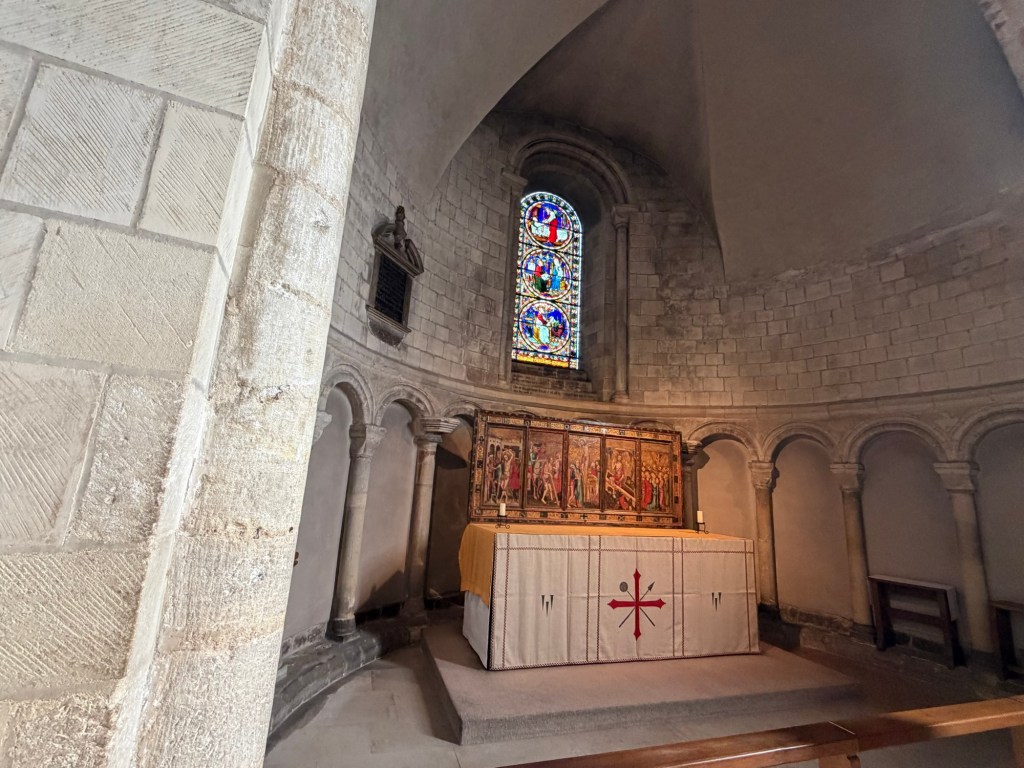
Another interesting chapel was the Bauchon chapel. This is quite a small chapel but was once upon the time used as court. Graham is quite interested in genealogy, and he knew that one of his ancestors appeared in front of this court. The chapel also features an impressive painting behind the altar as well as stained glass window dedicated to Julian of Norwich. Julian of Norwich was a woman who chose to become an anchoress, being permanently walled up in a cell attached to St Julian’s Church in the city. She lived from the mid-14th century to early 15th century. The book that she wrote there, Revelations of Divine Love, is the earliest surviving English-language book attributed to a woman. It is also the only surviving English-language book by an anchoress.
After we had a look at the different chapels, we headed outside. Our guide pointed out the location of one of the original chapels. Then she took us to the grave of Edith Cavell. I have to admit that I had never heard of Edith Cavell prior to this day, but the rest of the group seemed to be at least familiar with the name. Edith Cavell was born in a village very close to Norwich in 1865 and was a nurse. During the First World War, she was a pioneer of professional nursing training in Brussels, and she nursed soldiers from both sides during the war in occupied Belgium. For nine months she worked with the Belgian underground resistance to shelter over 200 Allied soldiers, helping them escape to neutral Holland. She was shot by German soldiers on 12 October 1915. Her body was returned to England in May 1919. Her funeral took place at Westminster Abbey, and her body was then returned to Norfolk. Her grave is outside St Saviour’s Chapel which was built as a memorial to Norfolk’s fallen in the First World War.
Once we went back inside, our tour guide made some suggestions what else might want to see while we were in the cathedral and then we were left to our own devices. Graham wanted to check out the cloisters, which was one of the things our guide had suggested. I wanted to take some photos first. We agreed that I would catch up with Graham. While I went around to take some photos, I discovered the modern windows that our guide had mentioned earlier. They are called Trinity Windows and were designed by British abstract expressionist artist John McLean. They were installed in 2014. Apparently, they create stunning light effects on the surrounding walls when the sun shines on them, but as it was grey and dreary that morning, I was not lucky enough to witness this.
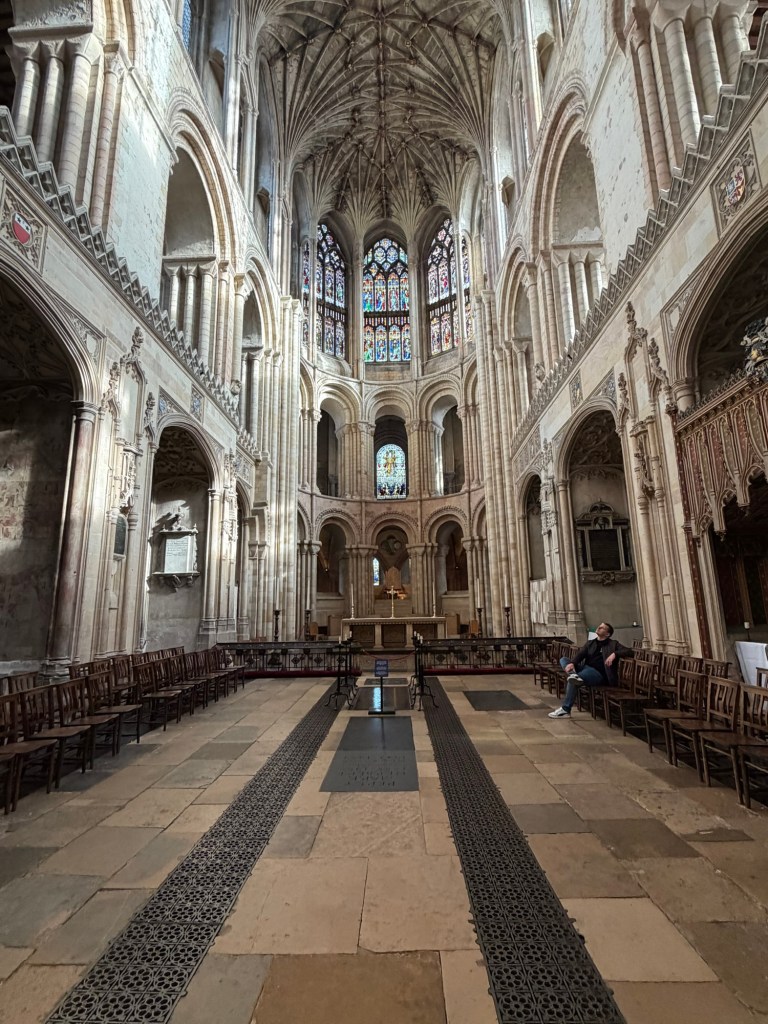
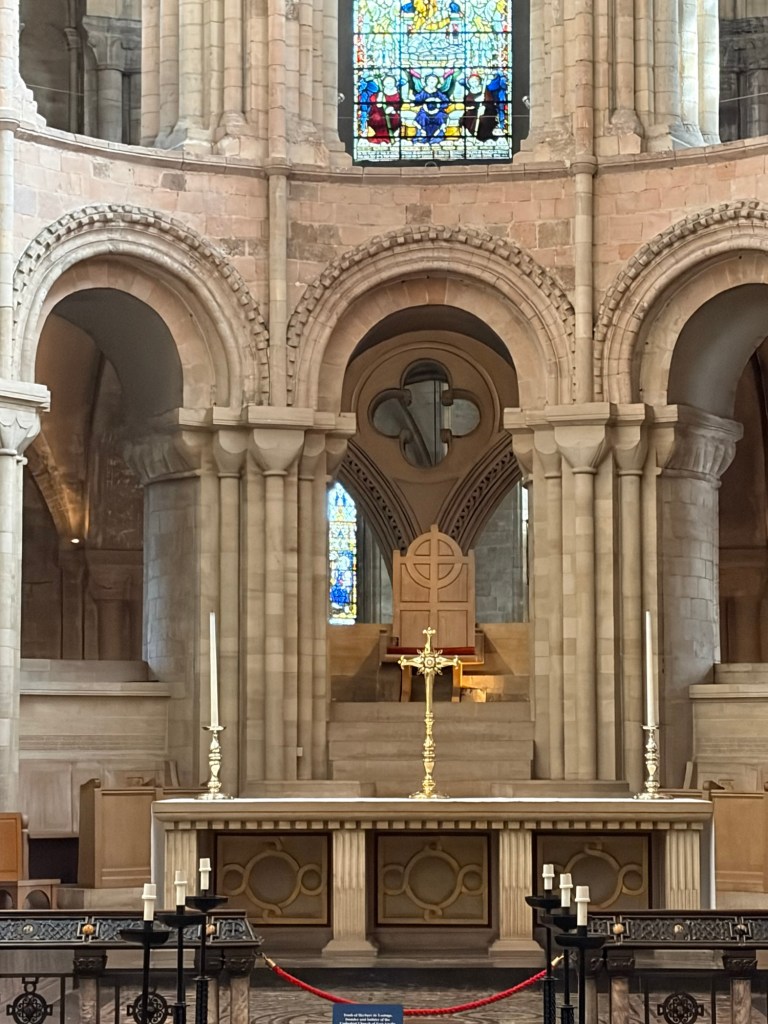
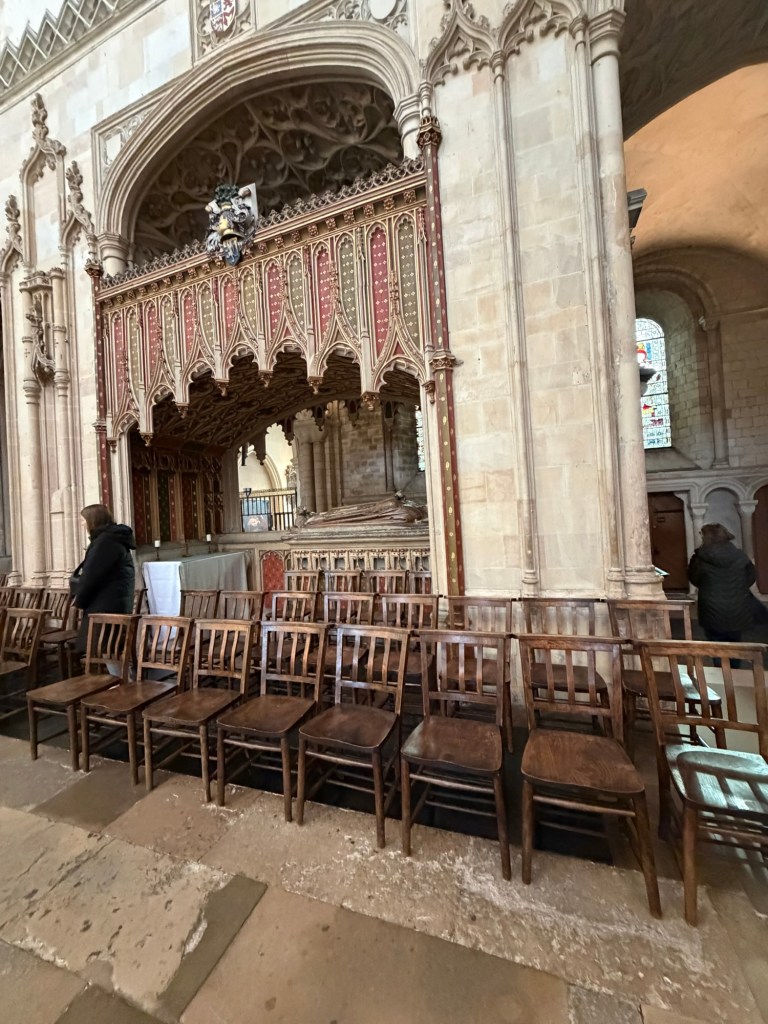
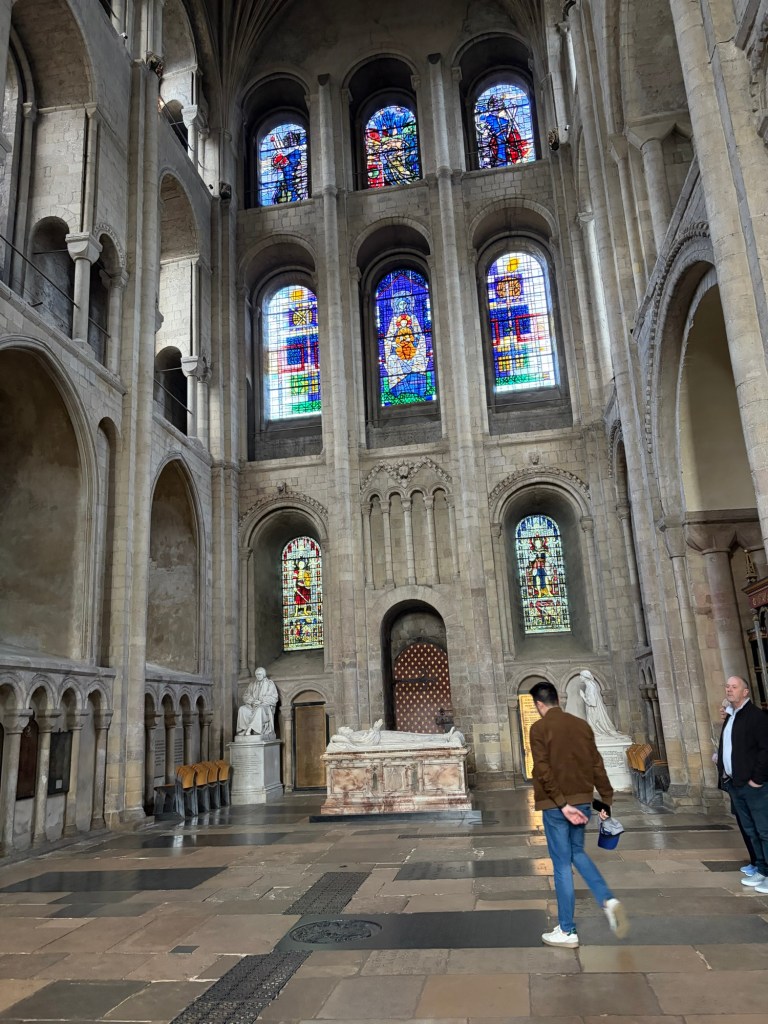
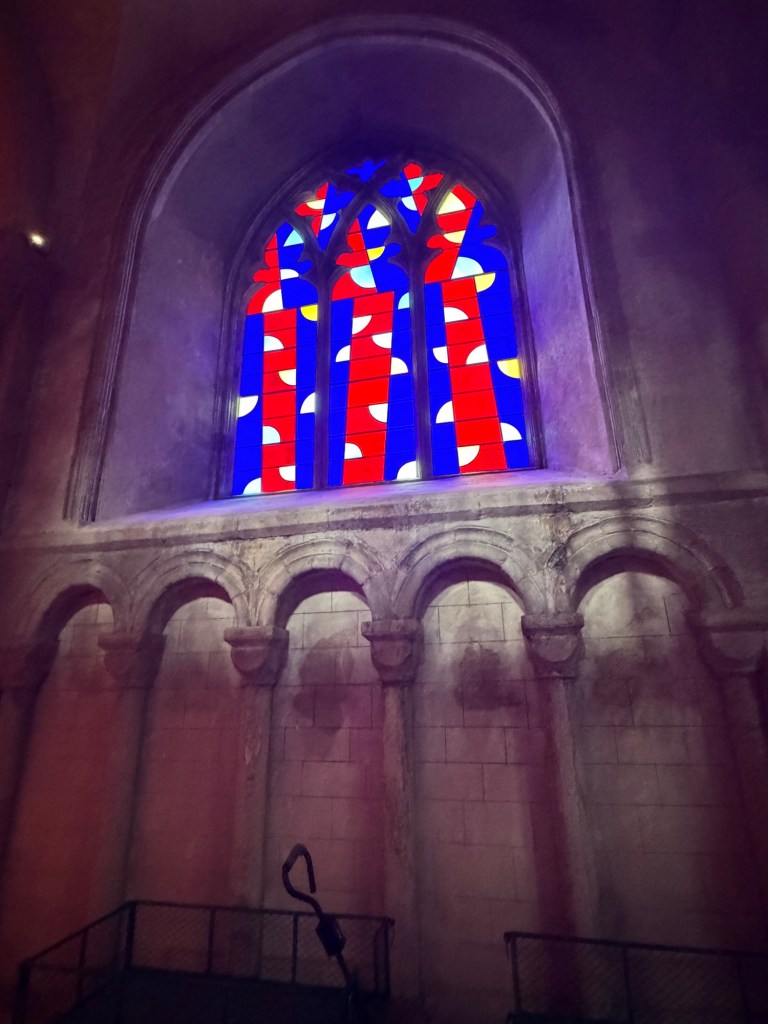
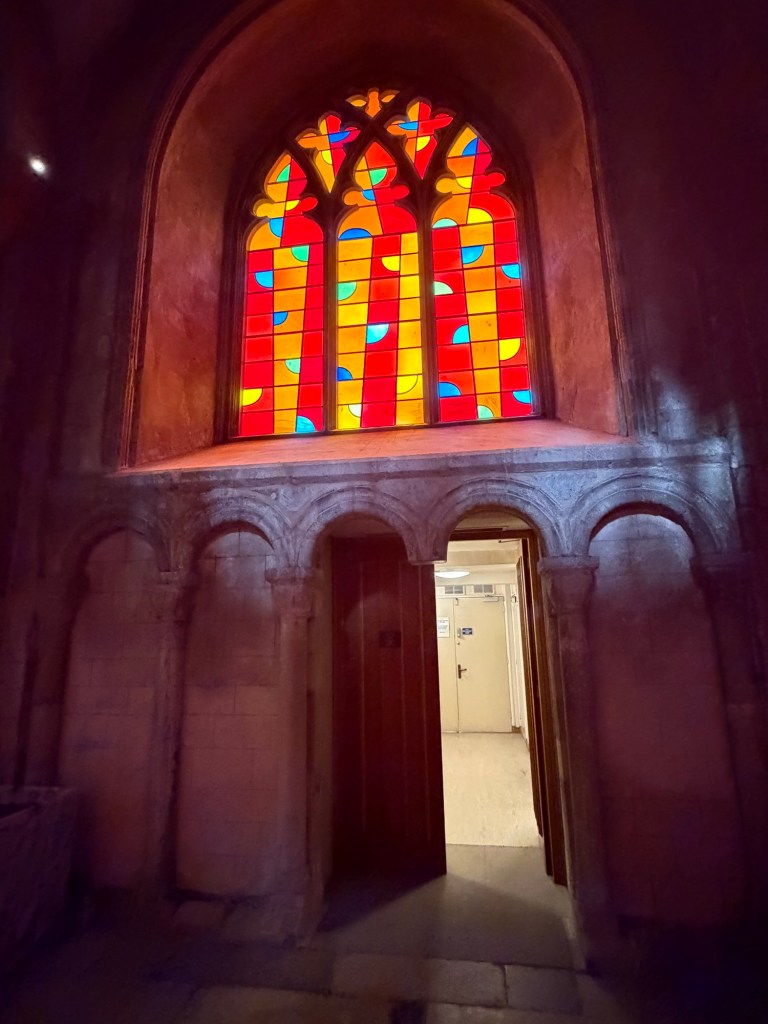
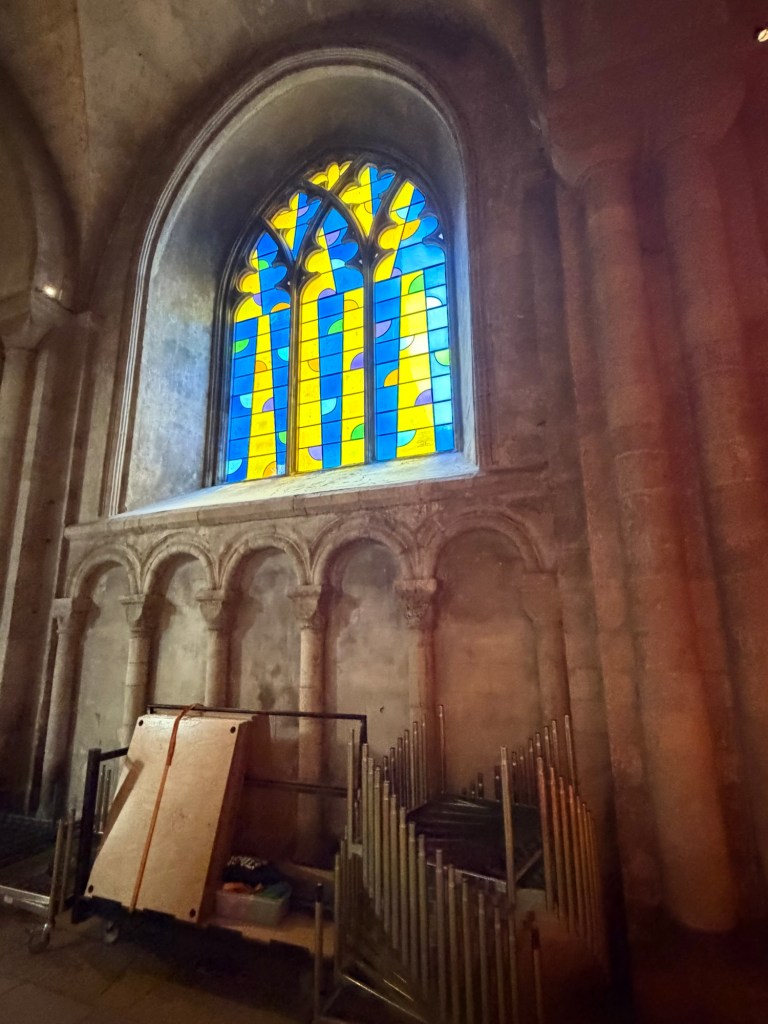
When I had taken the photos I wanted, I went join Graham in the cloisters. The cloisters are the largest monastic cloisters in the country. They are also incredibly beautiful with an intricately vaulted ceiling. In the green in the middle of the cloisters is a labyrinth that was created to celebrate the Queen’s Golden Jubilee. Sadly, this was closed that day. We did however take our time to just have a wander around the cloisters. I tried to get some artsy photos of the cathedral framed by the arches of the cloisters. Even though I ended up getting some nice photos, I did not quite get what I had hoped for.
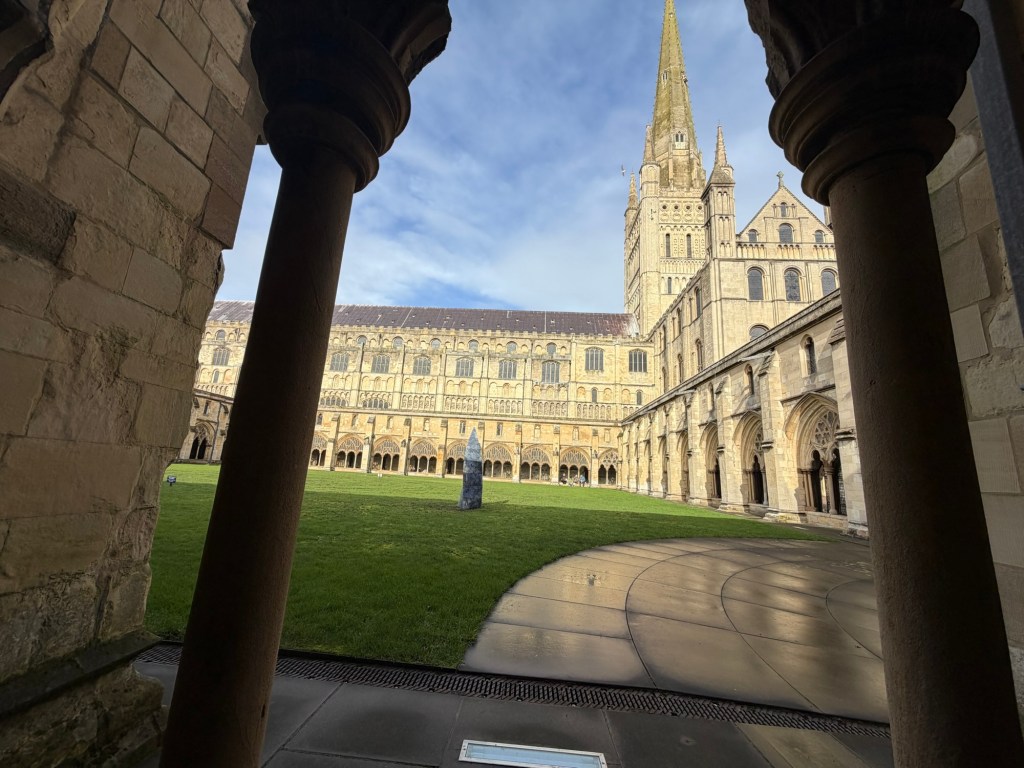
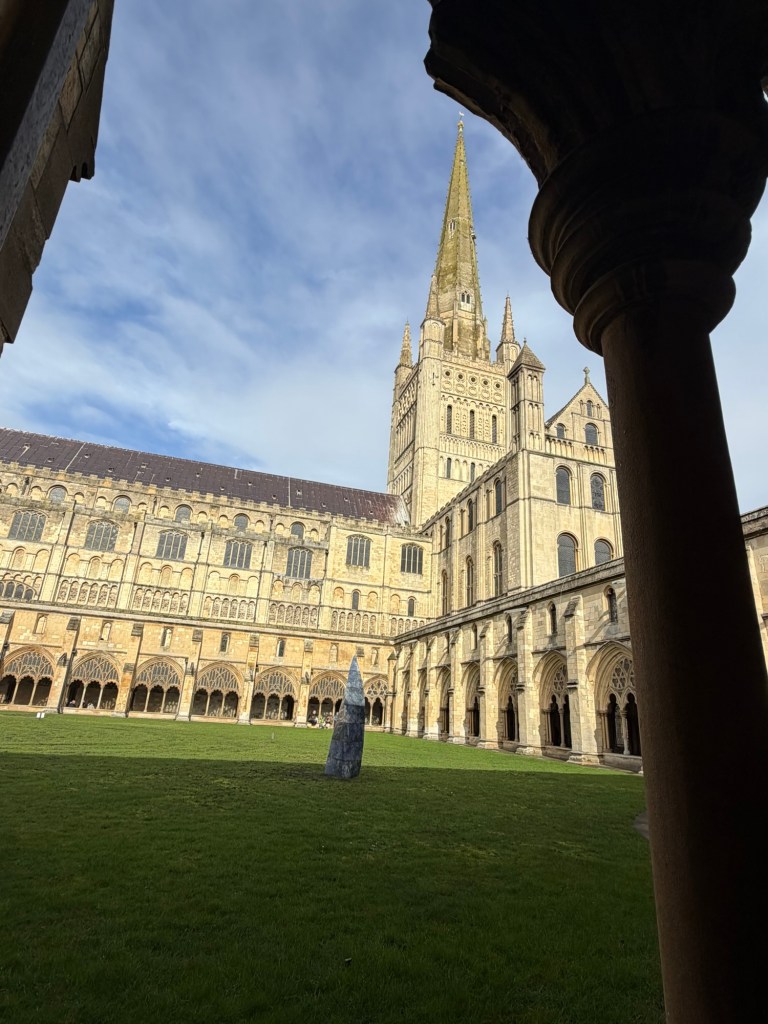
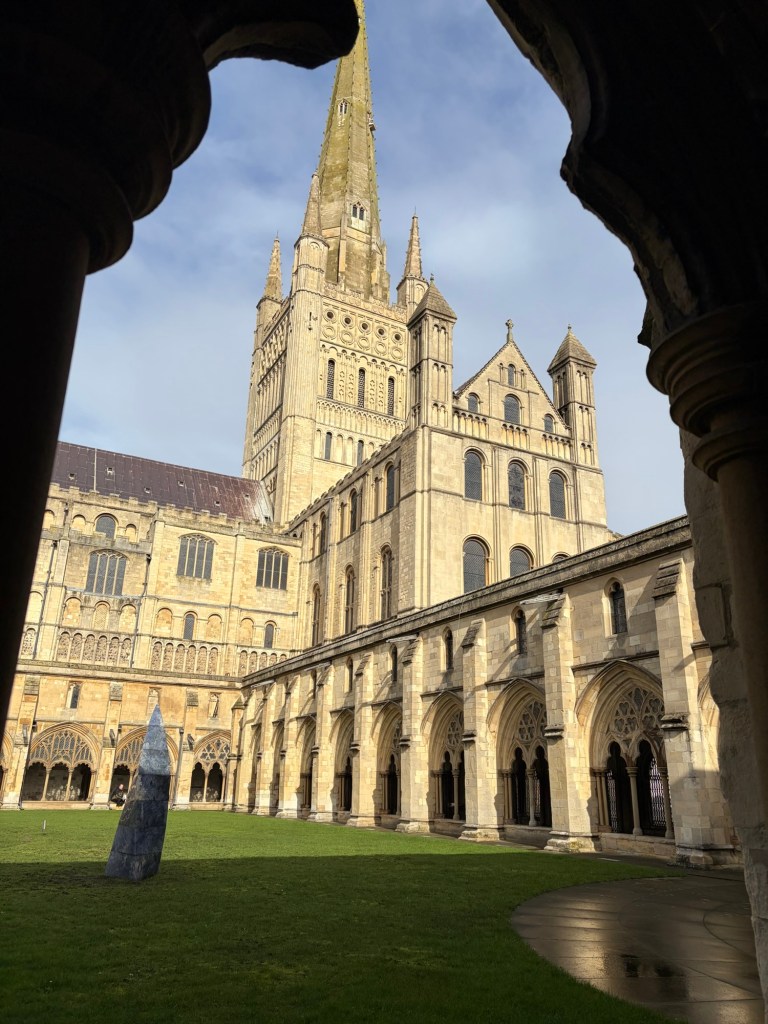
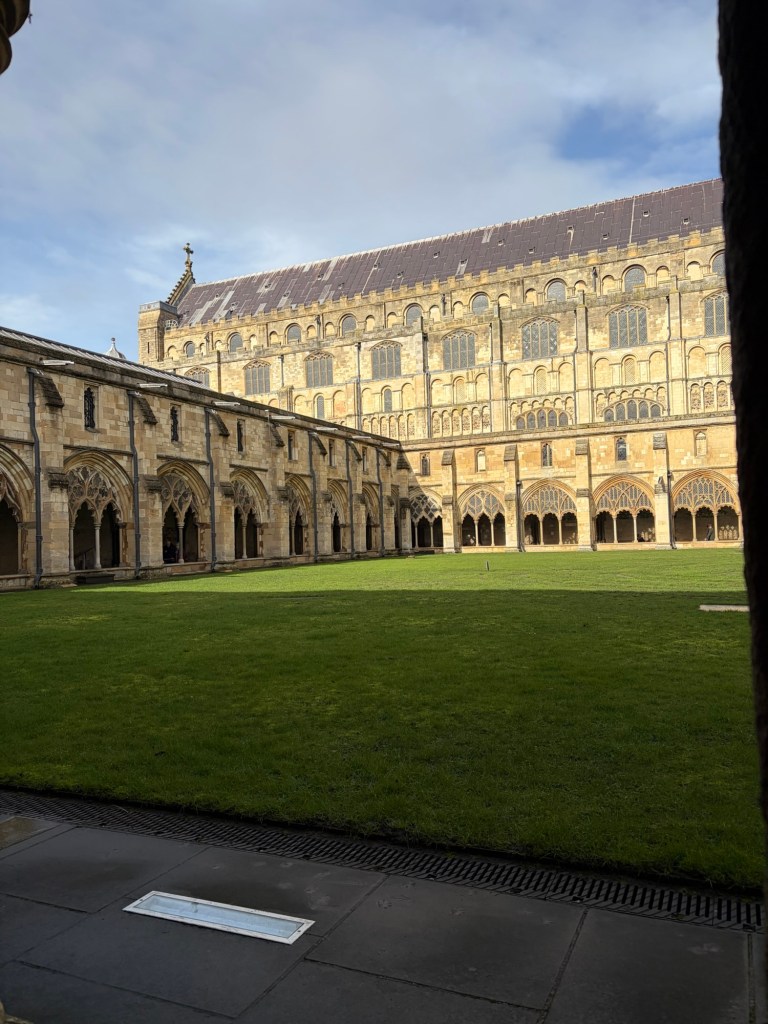
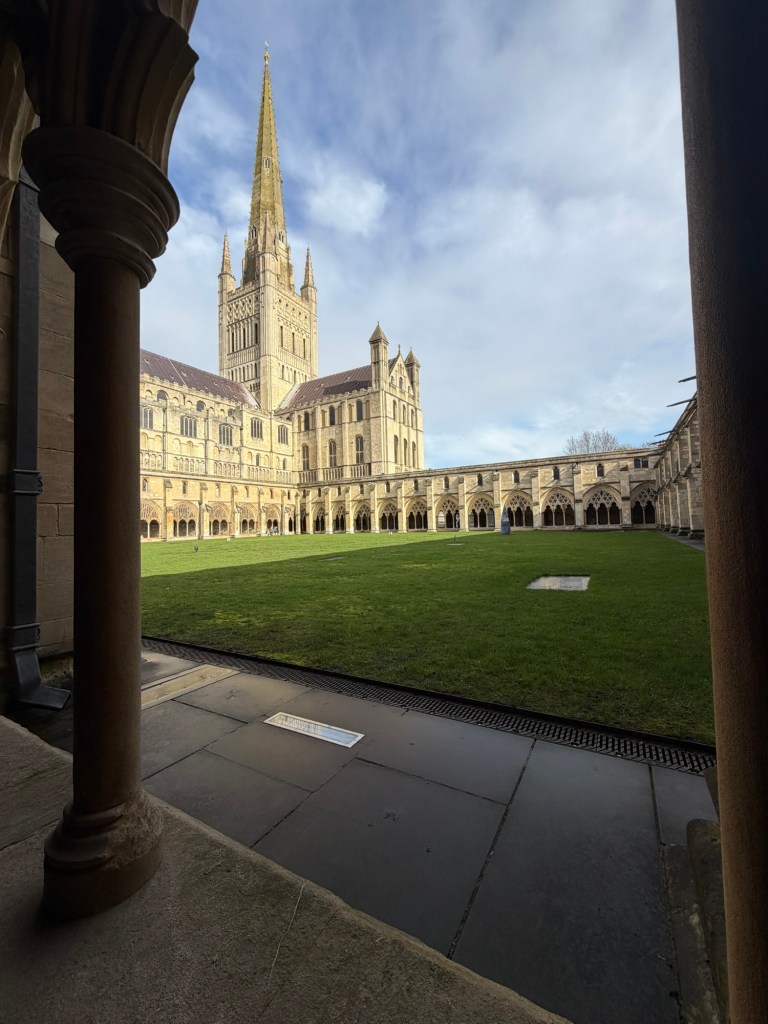
After this, we headed out and picked up the trail of our treasure hunt again. Initially, we stayed quite close to the cathedral, but then we headed a little further out. We got our first idea that the directions were not particularly accurate. We spent a lot of the day backtracking as we had overshot. We have since done two more Mystery Guides and the directions on those made a lot more sense. The first clue where we fell afoul of this seemed to direct us down an alley, but the clue was nowhere to be found. In the end we did find it. It was actually right across from the cathedral gate before we even got to the alley. The next clues where more of the same. The next one referenced a church. We figured that the clue was actually on the church or in the churchyard, but there was nothing at all that resembled what we were looking for. It turned out that the real clue was just across the road we had come out of to turn into the road with the church and about 200 yards before we got to the church. On a positive note, we did see things that we otherwise never would have seen, and we got plenty of exercise. In the end we walked more than twice as far the Mystery Guide indicated. Still, the weather was pretty nice in the end and there was always something to look at so it was not a hardship.
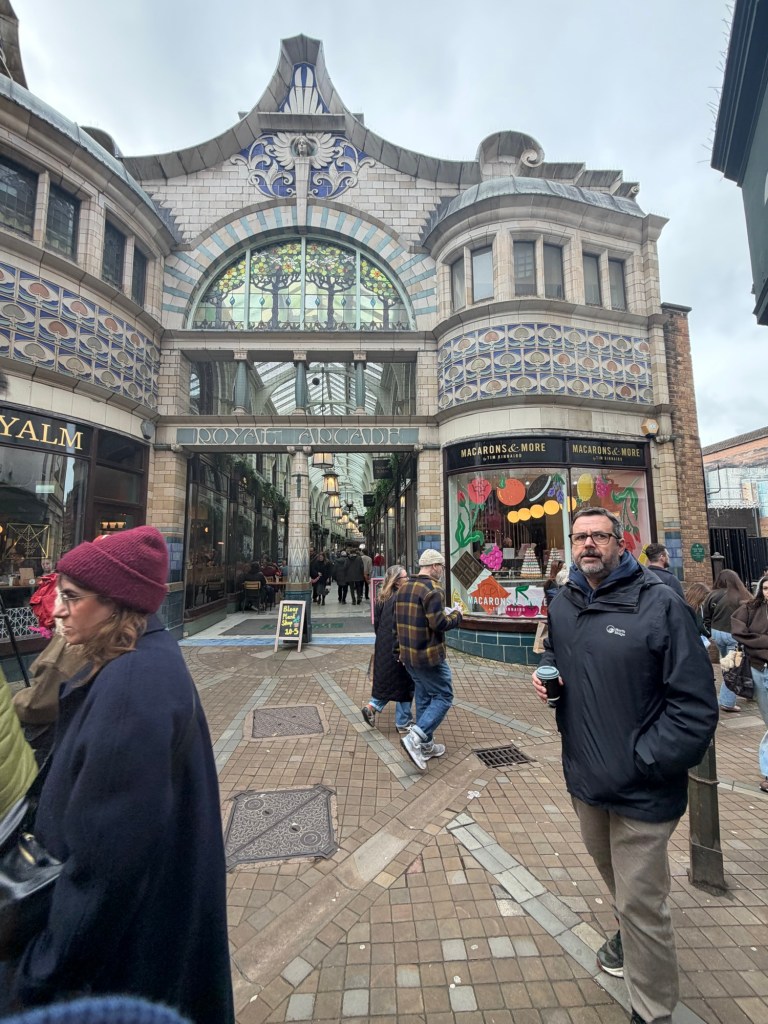
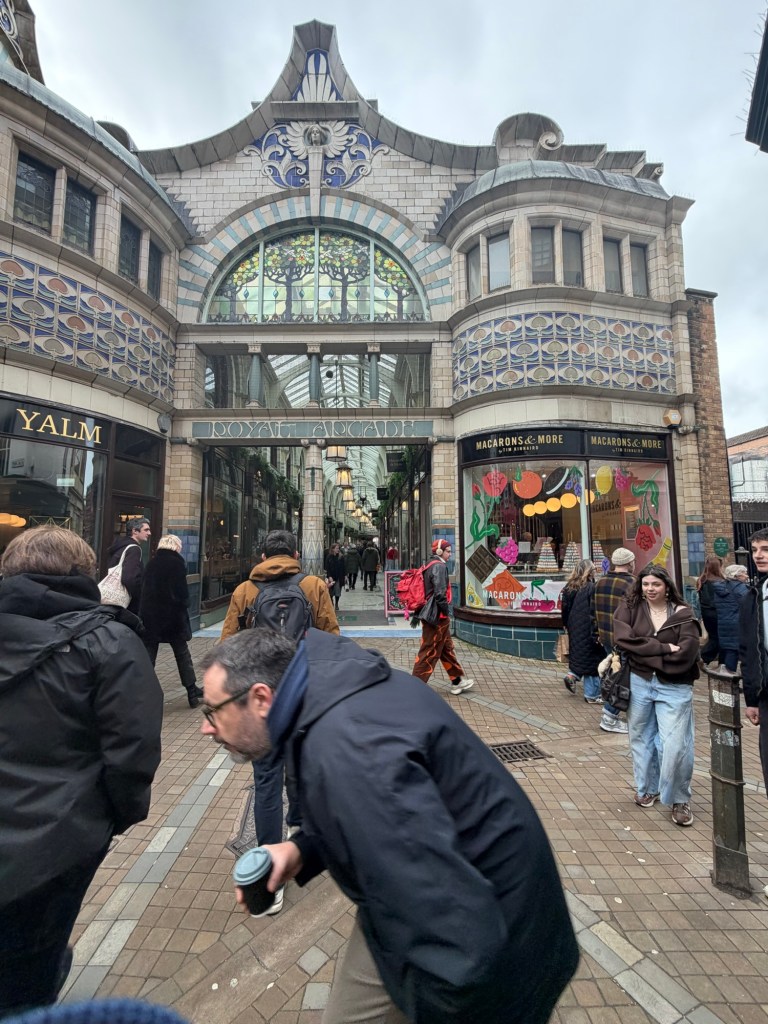
After those particular wild goose chases, we left the cathedral quarter behind and headed towards the civic quarter. We came across a beautiful Victorian arcade. This site has an interesting history. For a couple of centuries, it was home to a coaching inn, a tavern, a masonic lodge and then again, a hotel before it was knocked down in 1899 to make room for the Royal Arcade. After this we headed to the market square. The market was in full swing and actually looked very promising. It was a great mix of produce and artisan food and drink. There were a few stalls that sold clothes, but most of the market was dedicated to food. I had could happily have browsed for hours, but we had places to go and clues to solve.
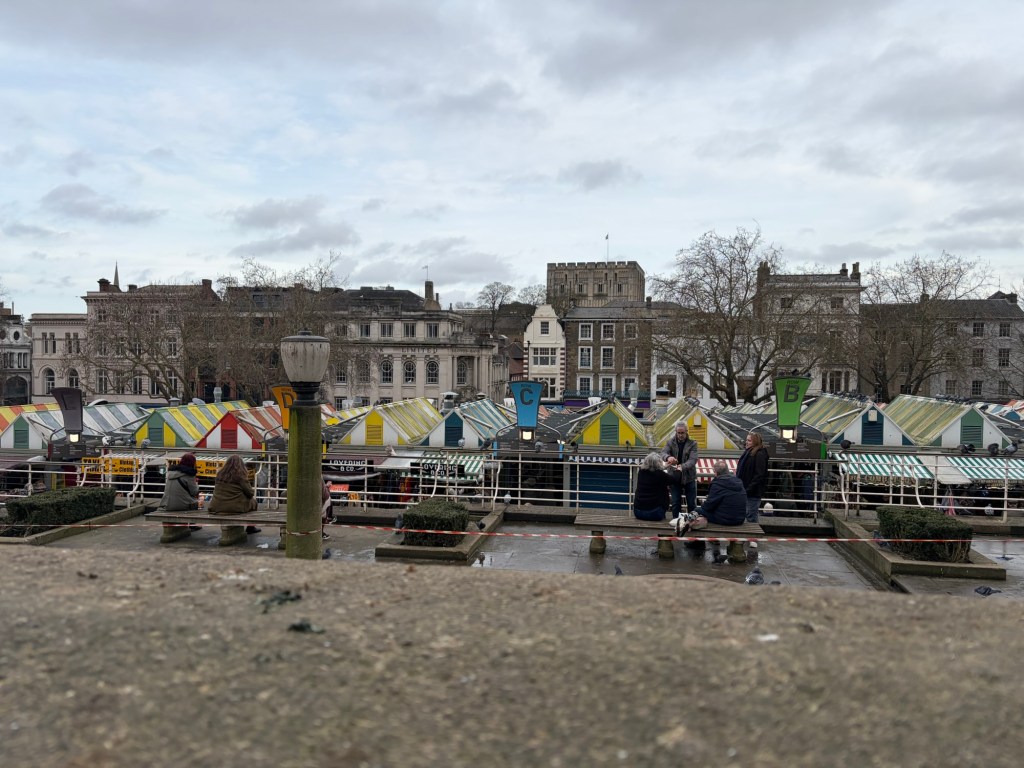
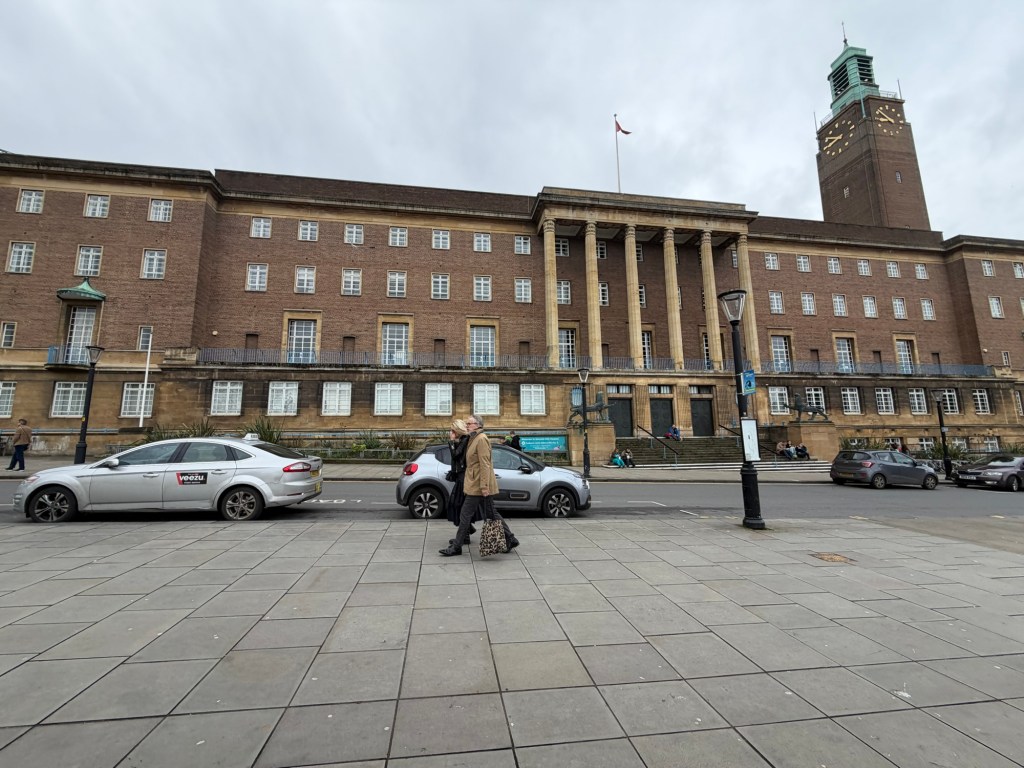
We then headed to the city hall. This time round the location was obvious and as soon as we got there, we knew that we had found what we needed. However, we had to find symbols, transpose them into letters and as long as we put them in the right order based on where they were found, it then created a phrase. Some of the symbols were tiny, but we did find everything in the end and ended up with the correct phrase, which then helped us to eliminate one option from the book. The city hall is higher than the market square and this gave a great perspective. We then quickly had a look at the Guild Hall, which is a gorgeous building.
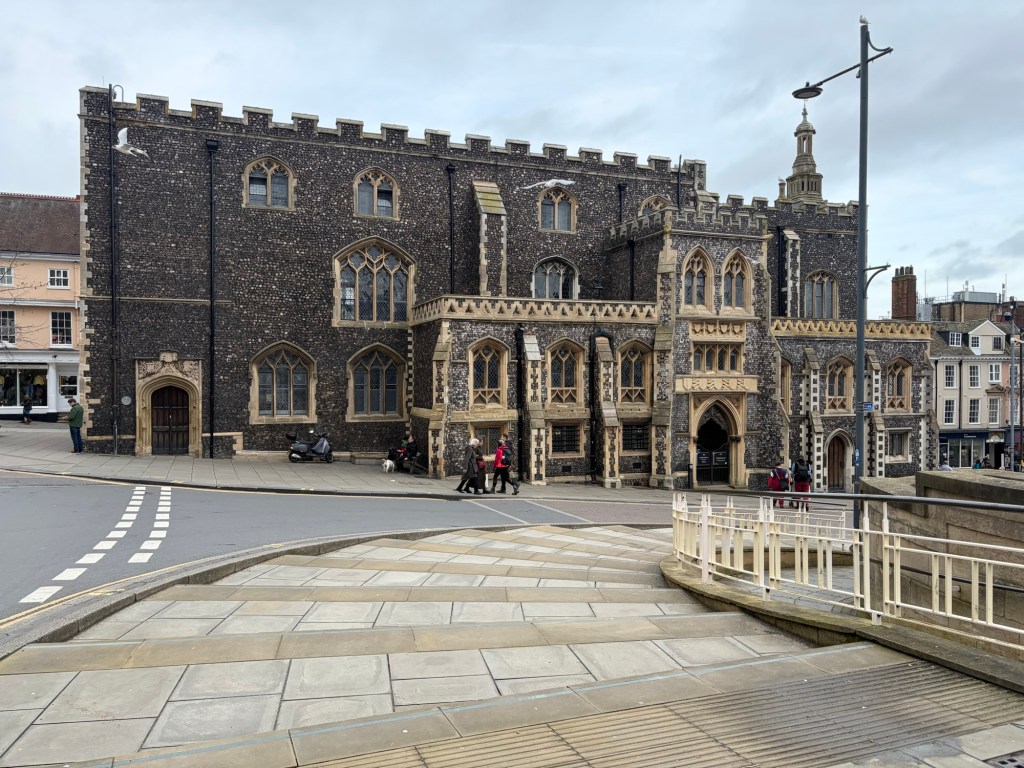
We then embarked on the final wild goose chase of the day. Again, it looked like we needed to go down a road and then find another road. However, the road we wanted as actually right opposite the start of the road. We headed a long way up the road, but what we saw did not correspond at all with the directions. This turned out to be very profitable though. By then, breakfast was a distant memory, and we had walked a fair few miles. On the way up, I had noticed an interesting restaurant called Waffle House. Once we had established that our clue was not along this road, we decided to have a stop for a late lunch. This place is obviously very popular as there was a line outside the restaurant. We were happy to wait. It was well worth it.
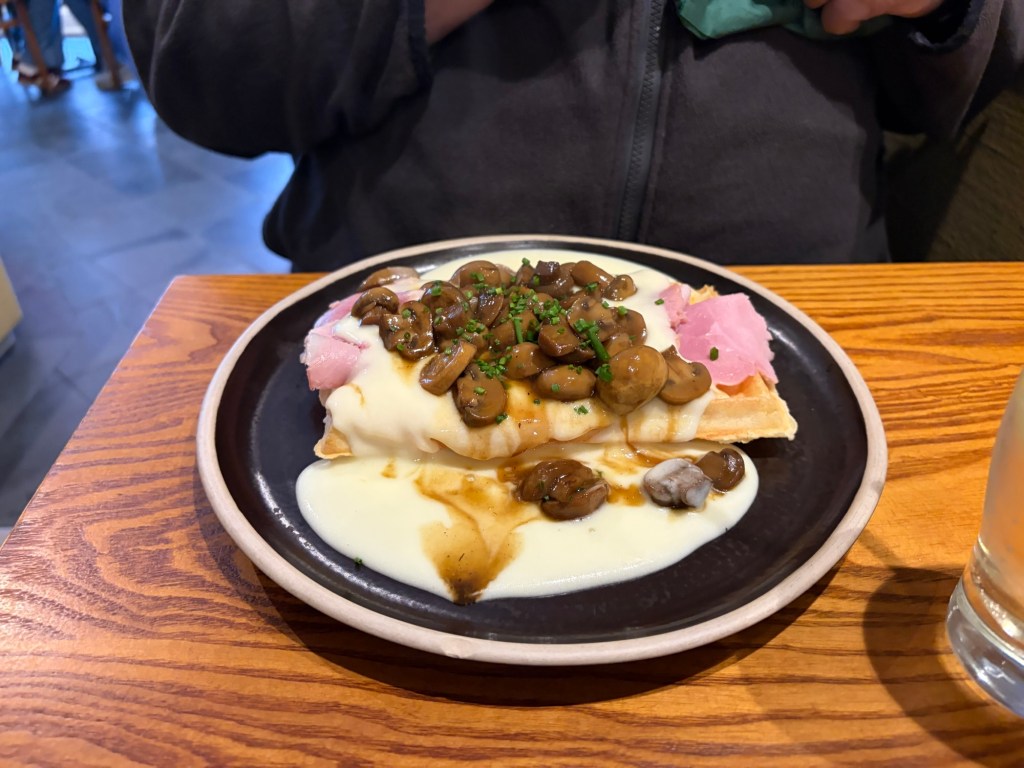
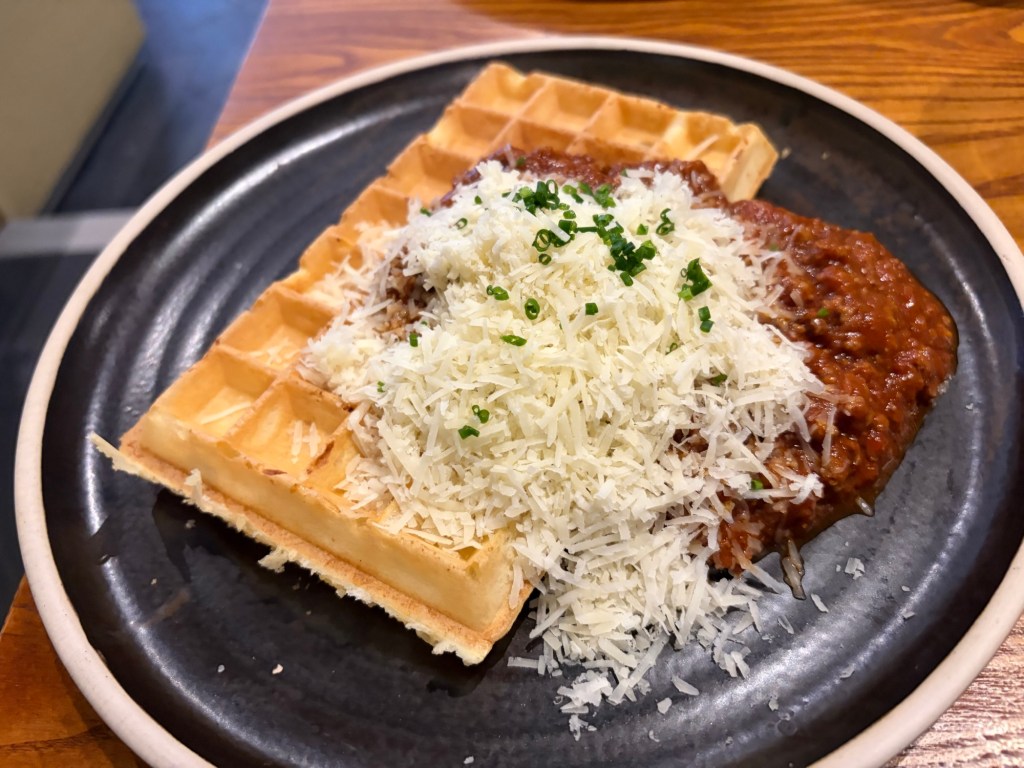
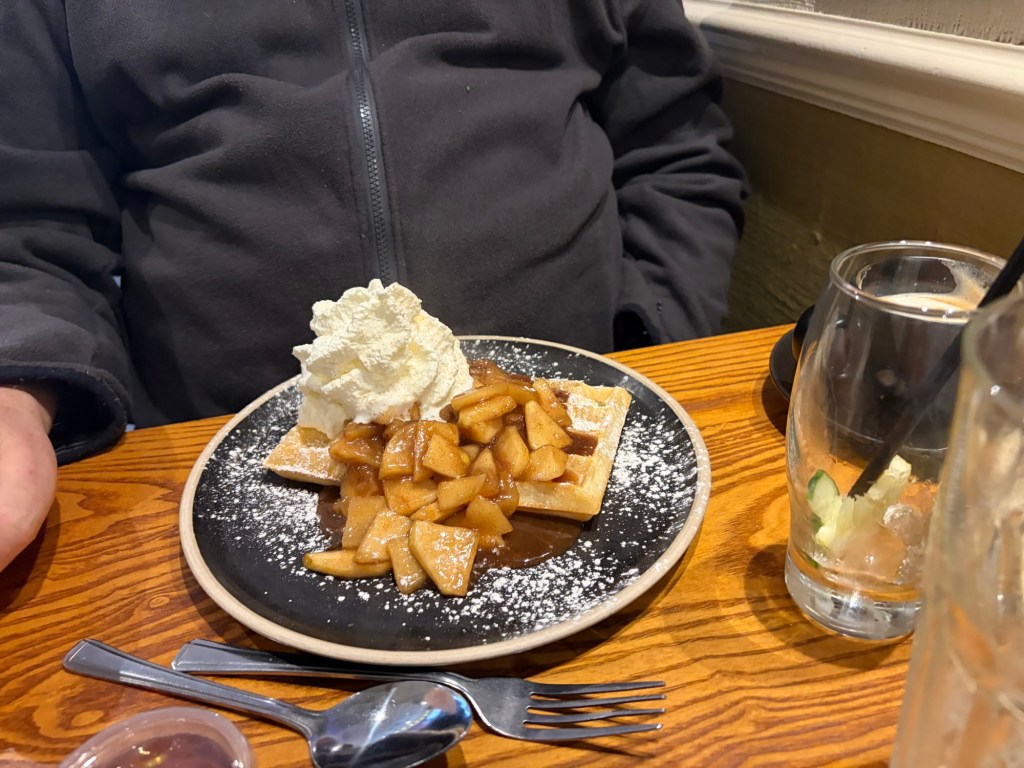
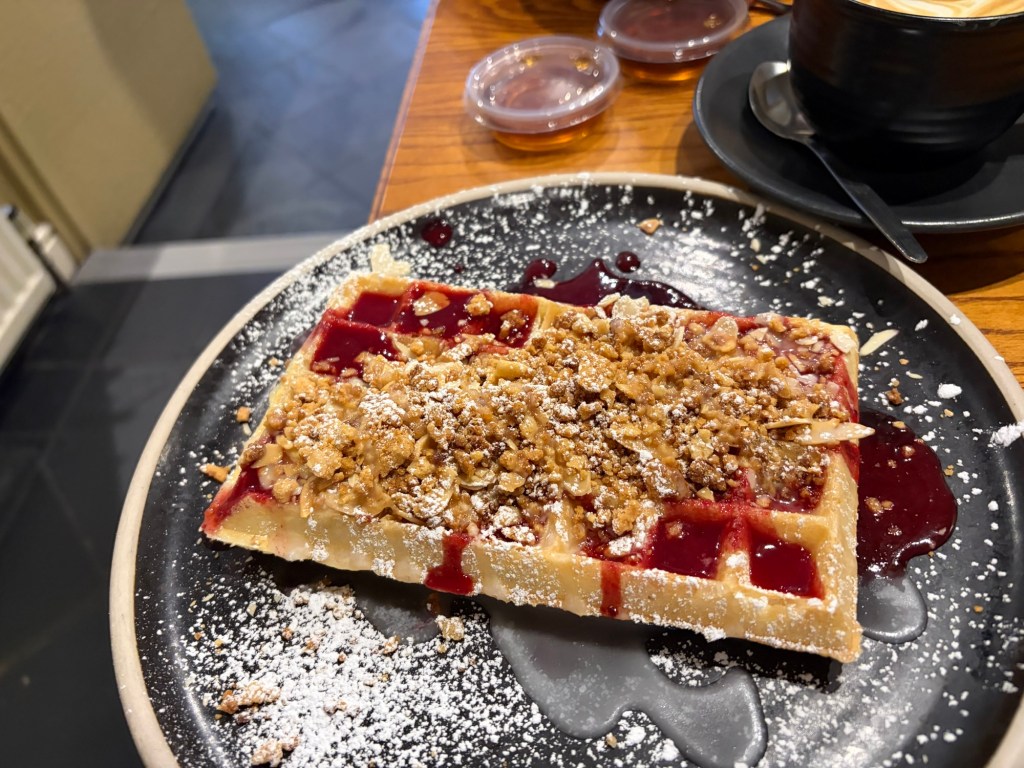
They have quite an extensive menu, but what we were after were waffles. They had a good variety of savoury and sweet waffles. We had a savoury waffle each. Graham went with a waffle with ham and cheese sauce and button mushrooms, and I had a waffle with organic Bolognese sauce and parmesan cheese. Graham had a cucumber and elderflower Norfolk cordial and I had a lemonade. We still had some room for dessert. Graham had a Dutch style apple waffle, and I had a cherry Bakewell waffle. We both had a flat white. After this, we were full.
We decided to retrace our steps to try to find the next clue. We did eventually find where it was meant to be, but we did not find the actual thing we were supposed to look at. The alley in question was only short. We went up and down a couple of times, but there was nothing that could have corresponded to the clue. After we had completed the treasure hunt, I did check the link with the picture clues, but I was still none the wiser. However, we managed to piece the answer together from the additional clues at the back of the book.
After this, we decided we were done for the day. We were only just halfway through the book. We still had the next day to play with and decided we would pick this up again the next day. We retraced our way back to the cathedral and then we found the most direct route back to the hotel. When we got back to the hotel, I set an alarm and then we had a nap. Once the alarm went off, I had a quick shower and put the Collabro hoodie on that I had bought in Lichfield. Then I headed back to the cathedral. When I got there, it had started to rain again. Thankfully, it was not raining very heavily as we had to wait a little while to be let in. I was talking with a group of young people in front of me who did not have tickets. The concert had shown as sold out for weeks, but they had been advised earlier that day to check for tickets at the entrance. They were next to me when I had my ticket checked and they were indeed lucky.
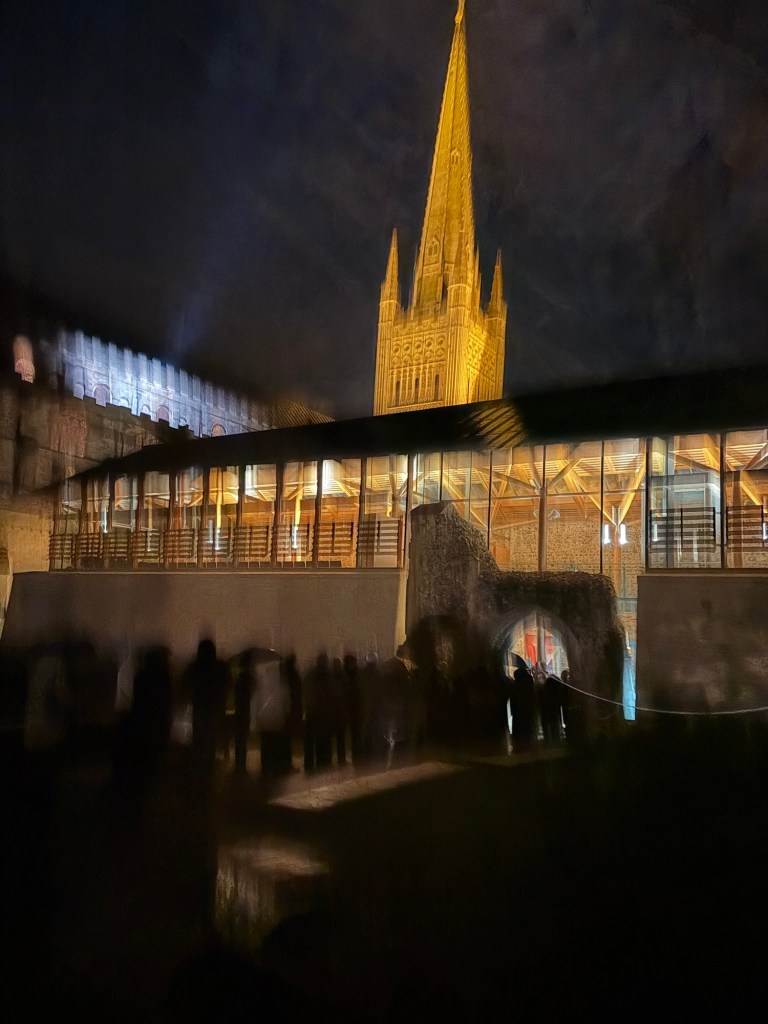
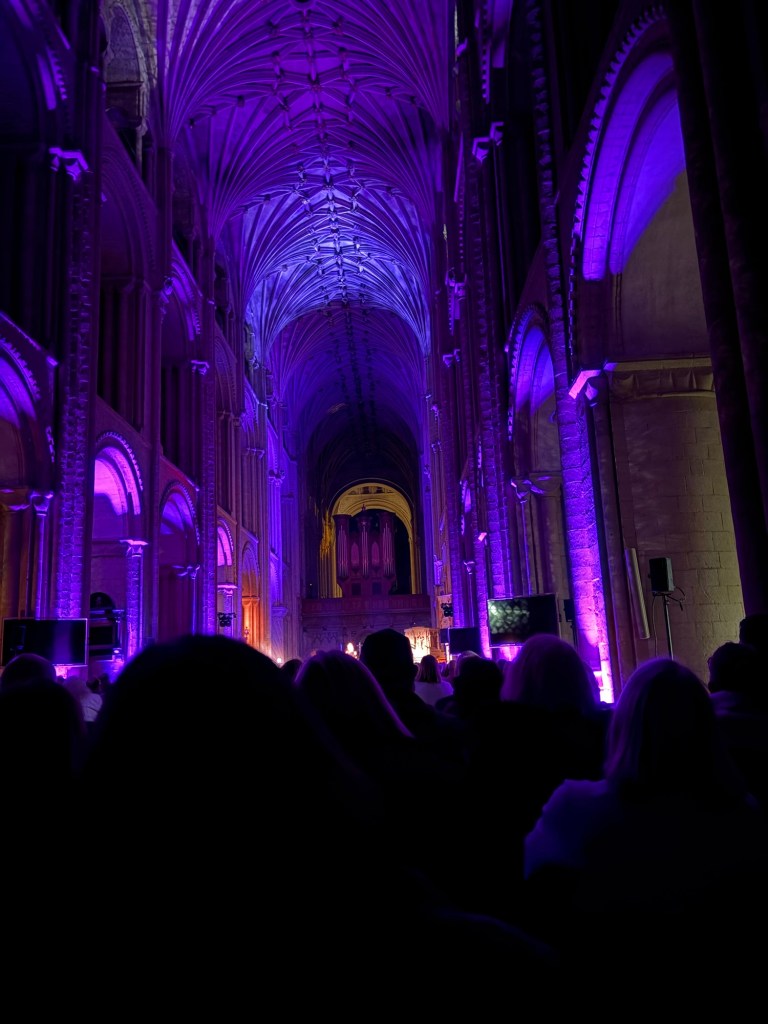
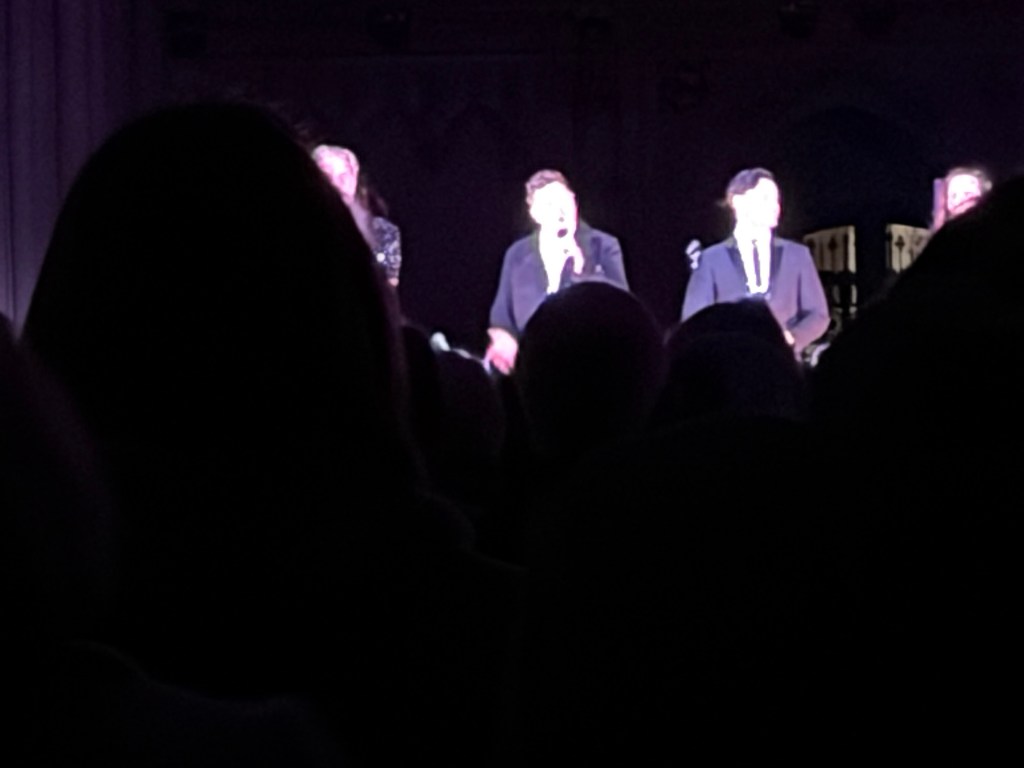
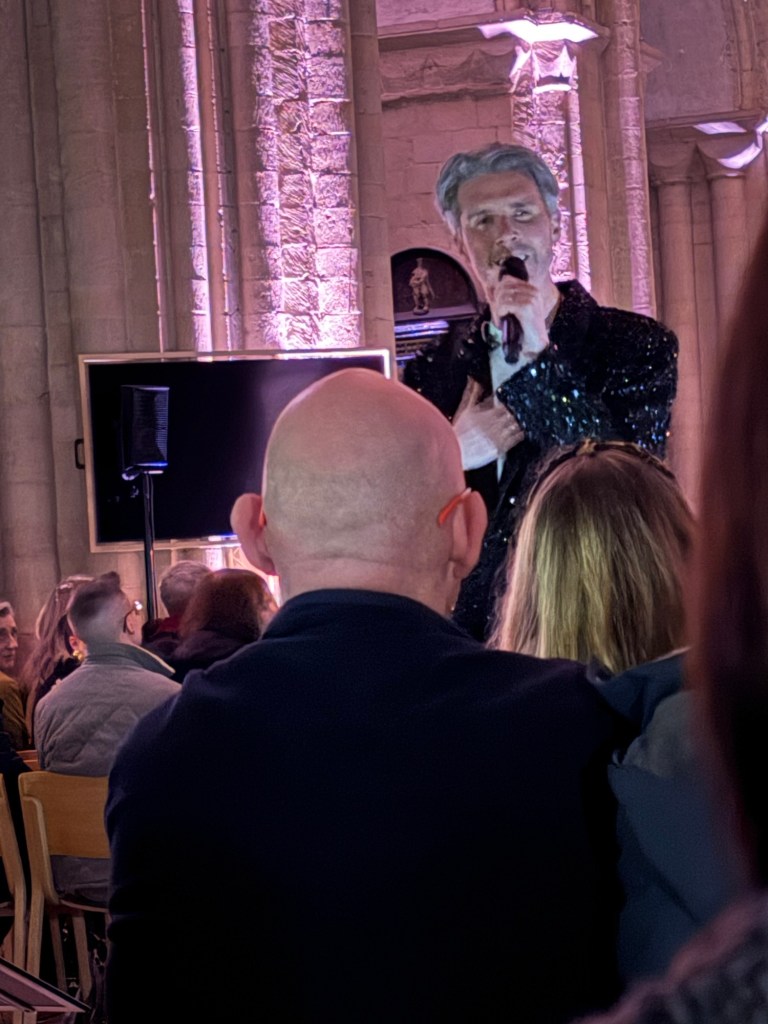
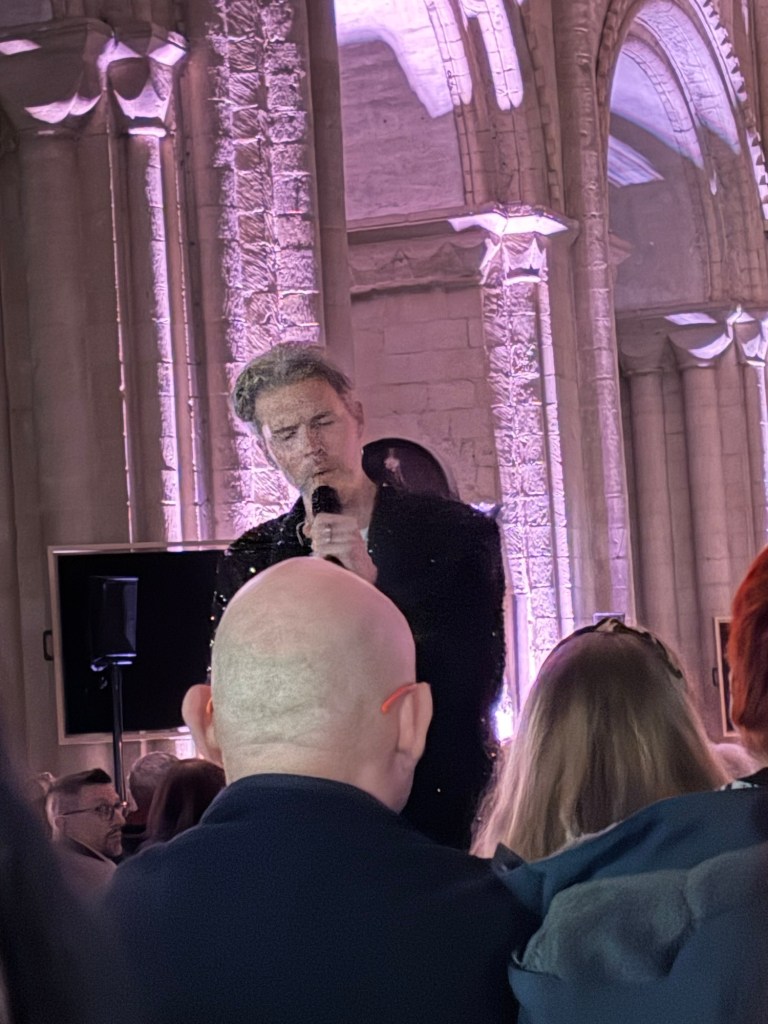
The concert was amazing again. The acoustics at Norwich cathedral were slightly better than at Lichfield. I was a little concerned before the concert as on the cathedral website, it stated that the concert was due to end at 21:30. In Lichfield, it started at 19:30, too, but went on until 22:00. In the end, this only finished at 22:00 as well and the setlist was identical. There were things that were different. Collabro like to tell little stories in between the songs and they had changed. One of those new additions made me very happy. They did confirm that they were back for good and would announce what else they were planning very soon. That was music to my ears. The second thing that was different that for one song in the second half of the concert, they came to join the audience. This was also a nice touch.
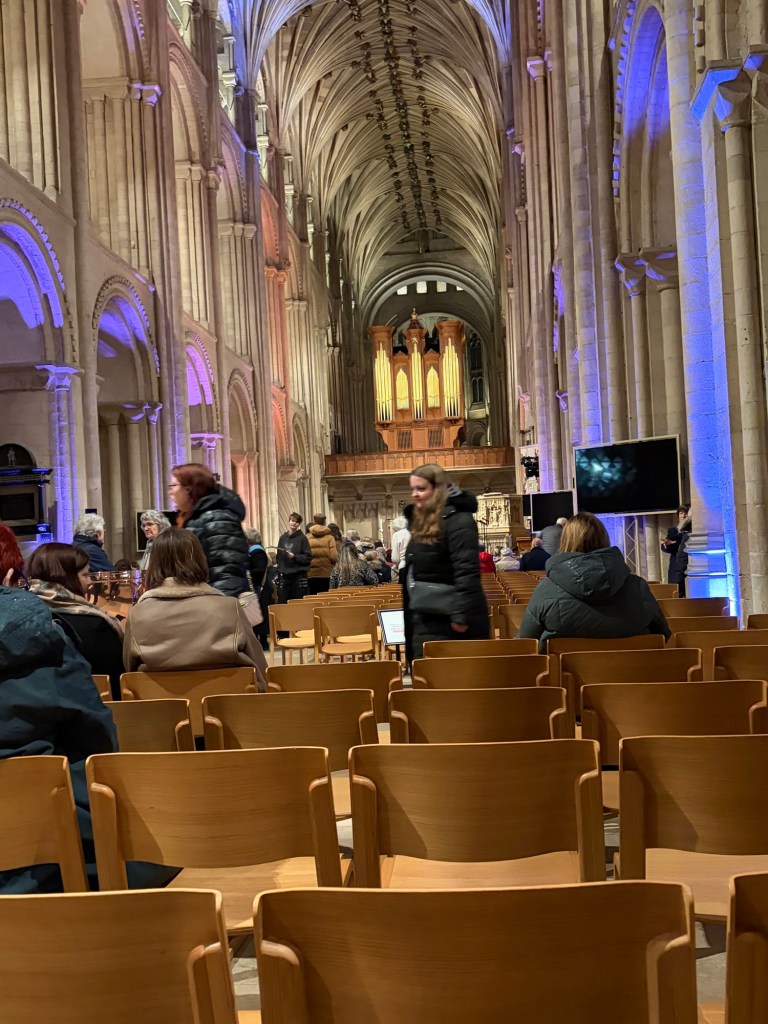
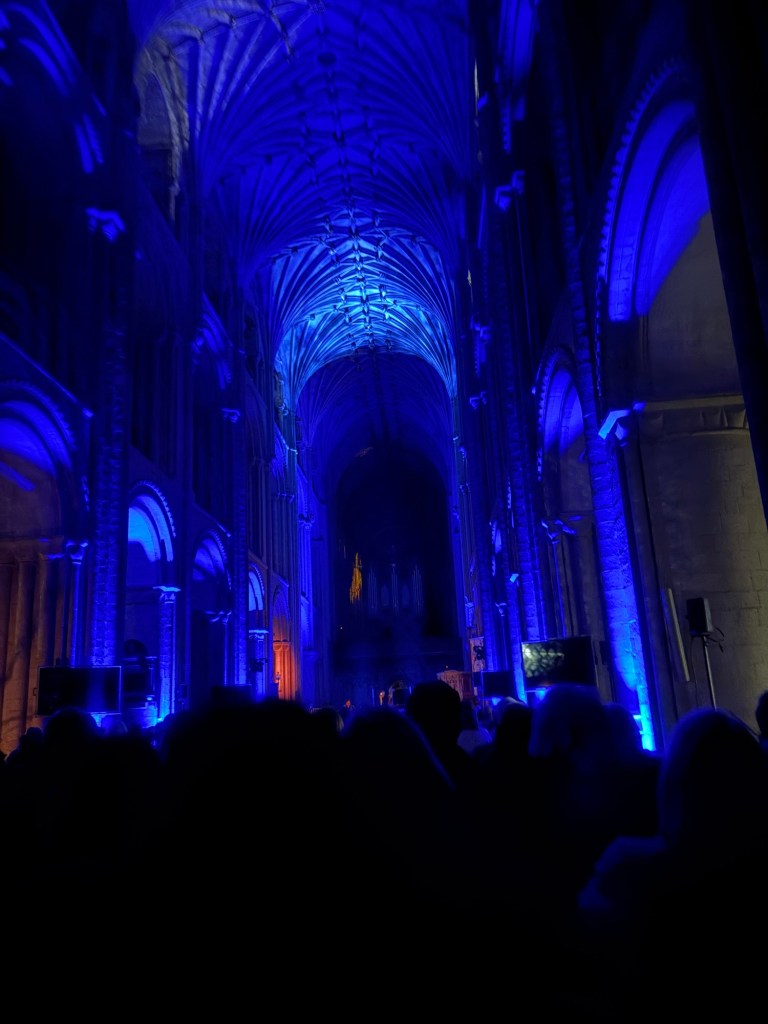
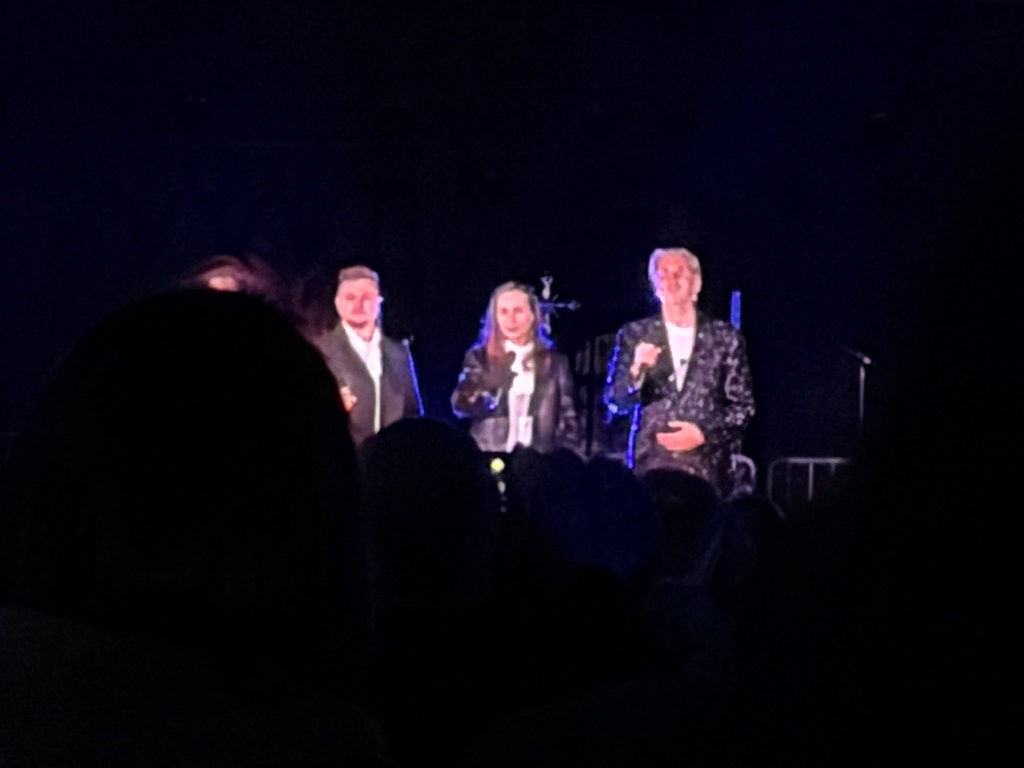
After the concert, I headed straight back to the hotel. I got ready for bed and then read for a short while, but soon I was fast asleep.


Leave a comment